Children’s Chat: Nurturing love takes work!

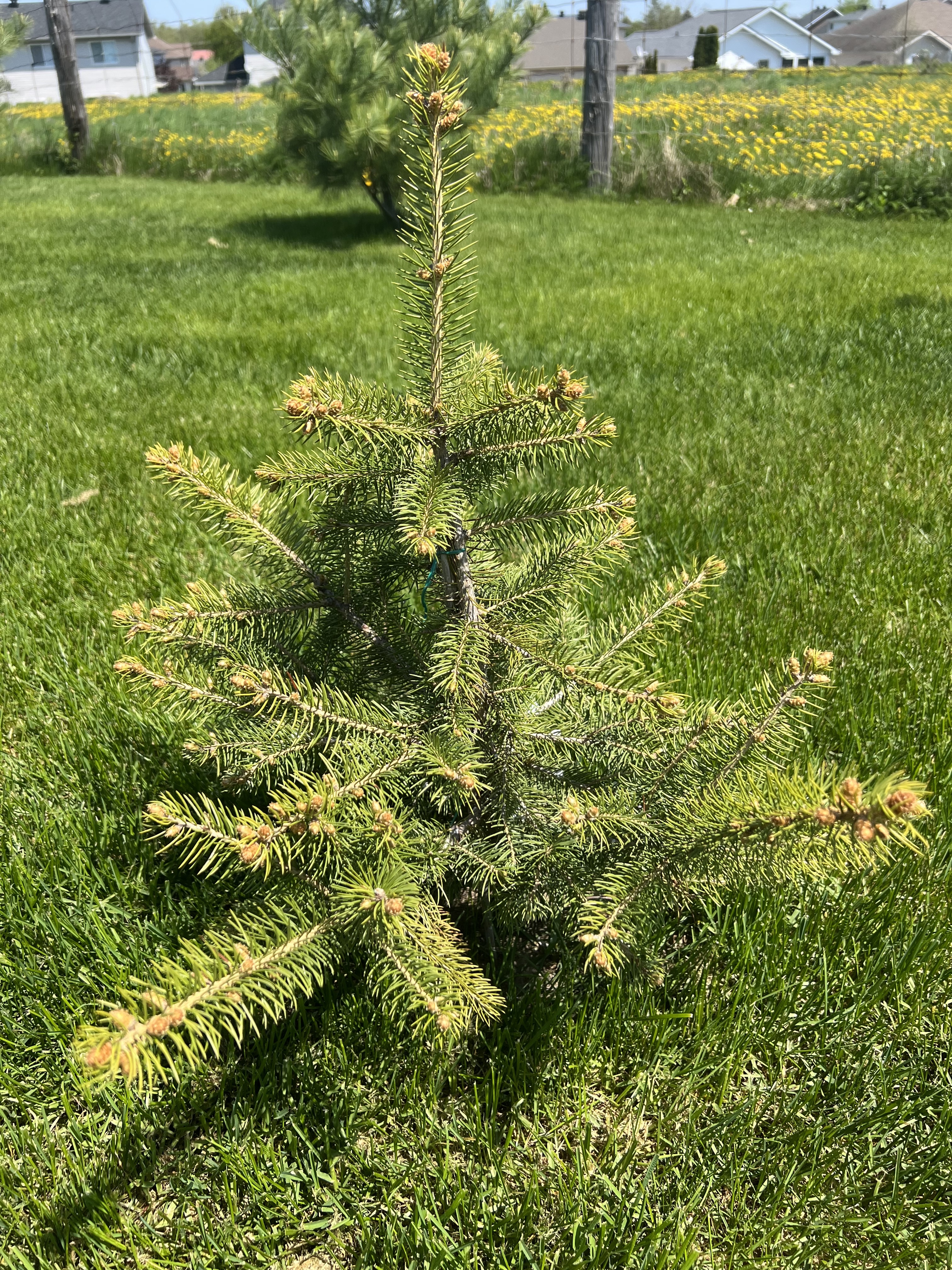
The only one that made it from seed (photo by Martin Malina 13 May 2023

Years ago, my daughter received a package of ten seeds — ten spruce tree seeds.

So, we found a large pot, filled it with good soil and planted the seeds evenly apart in the pot. We followed the instructions on how to care for growing these seeds. We watered the earth. We left the pot in the sun.

But later that year, we noticed only three seedlings coming out of the earth. Only three of the ten seeds sprouted and began to grow.

The following year, I transplanted the three saplings into separate pots so each would have its own space to grow. But, alas, over several days we left them in direct sunlight outside for too long! Two of the three saplings turned brown and died.

Only one of the ten seeds that we had originally planted, made it. Today, it is about three feet tall and growing well in our backyard (photo above). It has a good chance of maturing even though I still give it extra water from time to time.

Today is Mother’s Day. Specifically, though we give thanks for our mothers we also express thanks for all the caregivers in our lives who love us and nurture our growth. Growing flower or tree seeds can remind us that nurturing love takes a lot of work!

Nurturing love is NOT planting a seed and just leaving it alone. Nurturing love, which is God’s love, means hard work and trusting that the seed of faith within in us all will grow.

My daughter and I, admittedly, were a bit lazy at times growing and caring for those ten seeds. Sometimes we didn’t do it the right way. We made some mistakes along the way.

But I am grateful that every time I can look at that one spruce tree that did make it I am reminded of both the hard work it takes to grow seeds to life, and the gift of life and love that God gives.

Here are some packages of flower seeds. You can give them to your moms or other caregivers. Help them plant the seeds this Spring. Take care of them. And watch them grow!

Let us pray: Dear God, thank you for the gifts of love and life. Help the seeds of love and life grow in me. Help us all learn to trust in those gifts to do their job in time. Amen.

On the path to finding our life

On the way, toward the truth, to find life (photo by M Malina on the Braeside-McNab trail, May 2023)

Yet again, what we read in the bible is not easy to grasp. And this time, from the lips of Jesus himself. Jesus says to his disciples, “I am in my Father, and you in me, and I in you.”[1] Is this poetry? Is it mere abstraction?

Now, I know in this congregation there are engineers and mathematicians. The logical empiricists among us might argue that metaphysics doesn’t mean anything worthwhile. Who could blame them? “I am in my Father, and you in me, and I in you.”?

What we can understand, however, is that central to the Gospel of John is the identity of Jesus. Who is Jesus? Now that he is alive and no longer dead? And the Gospel of John suggests that who Jesus is cannot be untangled from who God is. “If you’ve seen me, you’ve seen God”, Jesus basically says in the verses leading up to today’s Gospel reading. But here Jesus goes further. Who Jesus is cannot be unravelled from who we are. In effect, Jesus answers the question of our identity. Basically, he says, “Who we are in God is who we are.”[2]

By now our empirical minds are overheating! For, have we seen this truth with our own eyes? Can we verify it with evidence? What does it mean that our true self is “in God”? Because, all in all, humans do not give good and consistently faithful witness to God. We have not lived out of our core identity in God. And because there appears precious little proof of the holiness of humanity, how can this be true: “We are in God”?

When I had my recent dental cleaning appointment, the x-rays revealed that a filling on a back tooth was cracked. The filling itself was first put in when I was a child, decades ago. After looking carefully at the x-ray and then at the tooth itself, the dentist wanted to schedule another appointment as soon as possible to replace the old filling.

I had to believe her. But I had to confess I wasn’t so sure. You know, if it ain’t broke don’t fix it. From my perspective, I had no pain or discomfort at all, going to the dentist. I was leaving her, apparently, with a problem now that needed more fixing. So, I was a little bit cynical.

In fact, I recalled the last time one of my old fillings was replaced, it required a couple of follow-up visits to adjust the bite. In other words, replacing a filling likely meant several days of discomfort eating solid foods before the teeth were realigned.

Now, believing the dentist wasn’t irrational. I could have examined the x-ray myself and asked the dentist to explain what she saw. I could have educated myself and employed technical knowhow to determine for myself the condition of the old filling and tooth. So, it’s not about science versus belief. It’s not about something that can’t be known.

I had to trust her, that not only what she said to me, but years of first-hand experience and full-time work of being a dentist gave the proposition credibility. Just because couldn’t ‘see’ the truth of the matter about my tooth with my own eyes didn’t mean it wasn’t true. 

Paul, in the Acts of the Apostles, visits Athens in Greece where he recognizes all manner of shrines and temples dedicated to all manner of gods. But one shrine catches his attention. It’s an altar dedicated “to an unknown god”.[3] And that’s the one that he uses as a springboard to describe the one God who created heaven and earth.

This inscription to the ‘unknown’ God is appropriate because, as Paul says, this God is not bound by human-built, material constructs. God is not bound in any one place. So, where is God? God resides in every human heart turned to faith. For, “in him we live, and move and have our being.” God inhabits the whole earth, all that God has made.

What does bind us together—the Father, the Son, and us all—is the Spirit of God’s love. Love. Twice in the Gospel today, Jesus refers to “my commandments”, in the first and last verses of the text.[4] 

Specifically, when Jesus refers to his commandments, we must recognize Jesus’ own definition of the Law—the Great Commandment: He says, “You shall love the Lord your God with all your heart, and with all your soul, and with all your mind. This is the first and great commandment. And the second is like it: You shall love your neighbour as yourself. On these two commandments depend all the law and the prophets.”[5]

And on the night before he died, Maundy Thursday, Jesus reiterates this “new” command by instructing his disciples to “love one another just as I have loved you.”[6]

Jesus promises his disciples that though he will leave them in body, he will not leave them “orphaned.” It’s interesting Jesus uses the word, “orphan” which is here another word frequently mentioned in the scriptures. Throughout the scriptures when orphans are mentioned it is often in the context of the mission of justice to care for the widows and orphans.[7]

As Jesus promises his disciples an Advocate to help and be with them, the mission of God is planted in us to be “little Christs”[8], advocates, to those who need our presence and help.

Though we cannot see the full truth of God’s presence in all—including in us—though we cannot always get what we see, or feel the love of God, doesn’t mean God is separate from us, doesn’t mean God has abandoned us. God is with us. God loves us. 

And so, when we love ourselves, when we love the earth and when we love others, we will know God is with us. Cesar Chavez once said, “It is my deepest belief that only by giving our lives do we find life.”[9]

The Easter message is wrapped up in that line: Only by giving our lives in love, as Jesus did, do we find life. 


[1] John 14:15-21

[2] Richard Rohr, “Upending the Social Order” Freedom from Shame (Daily Meditations, www.cac.org, 8 May 2023)

[3] Acts 17:22-31

[4] John 14:15,21

[5] Matthew 22:37-39

[6] John 13:33-34

[7] See Deuteronomy 14:29; Proverbs 23:10; James 1:27

[8] A term used by Martin Luther and C.S. Lewis.

[9] Cited in Robert Ellsberg, ed., All Saints: Daily Reflections on Saints, Prophets, and Witnesses for Our Time (Crossroad, 1997), p.180. Cesar Chavez was a 20th century American labor leader and civil rights activist.

From Monday to Saturday

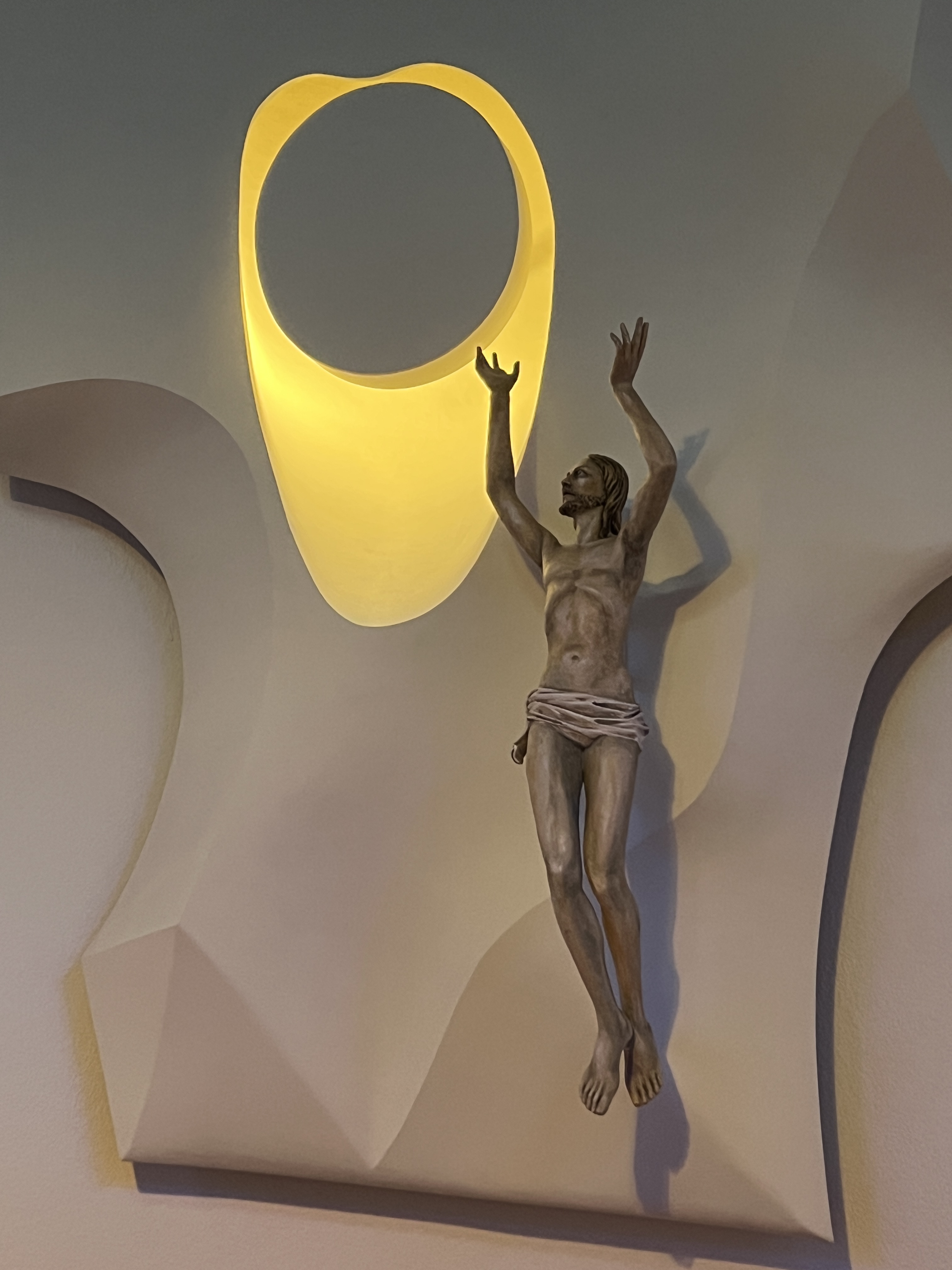
In the chapel at Queen of Apostles, Mississauga Ontario (photo by Martin Malina 2 May 2023)

We are: “God’s own people, in order that you may proclaim the mighty acts of him who called us….”[1]

This address from Peter oozes confidence. Here is a description of a people boldly going where no one has gone before! – To believe that what you do, even the smallest action, matters. In this confidence, then, there is meaning, hope and joy.

Or maybe you are like many whose confidence is shaken. Maybe you’re not so sure. Well, you’re not alone. I’ve come to believe that so much in the world today shakes our confidence. Maybe even snuffs it out.

I like the way Cameron Trimble puts it. She writes that in recent years, “we have experienced economic meltdown, climate countdown, racial throwdown, political breakdown, technology showdown, and religious letdown.”[2]

No wonder the mere suggestion that people of faith have something positive to offer our world today falls on deaf ears. When we are tempted to think, “It doesn’t matter, nothing we do matters,” then we know we’re in trouble. The church has a crisis of confidence to deal with.

What pulls the rug from under our own feet? Would we face what it is that keeps us from living out our faith in confidence?  

Is there a way to rebuild that confidence?

“In my Father’s house there are many dwelling places.”[3] It is a mental picture that Jesus draws for us in the Gospel for today. It’s not a physical house, one that we can walk into and look around right now. The space is not material. It is a vision Jesus paints before us.

And more than that, it is a vision to which each of us belongs. Jesus says, “I go to prepare a place for you … I will come again to take you to myself.”[4] A vision to which we belong, lies before us.

And here is another reason why we might fail in believing what we do matters. Because this vision lies ahead of us, we may think that what we’re doing now doesn’t really count, that our work is inconsequential. We can’t or won’t hold the vision, the big picture, before us. Therefore, we don’t appreciate the value of the smallest work, our smallest action.

But what we do now is part of God’s vision. As people of faith, who believe in God, we trust that the future will be good. We hope that things will eventually work out. And we want the future to reflect that vision of God.

Our confidence grows when we regard our present work as building toward that vision. “The future will be different if we make the present different.”[5]

And that is why every time we come to church to worship, what we are doing by being here and engaging the experience of worship is declaring that hope: that whatever happens now, in all that we do from Monday to Saturday, is linked to the vision of God. So, everything we do, 24-7, flows from a heart of faith.

As part of the agenda of the Eastern Synod Deans’ meeting, one evening this past week the group of us visited a Lutheran Church in Markham, near Toronto. The congregation treated us to a fabulous meal. We listened to the stories of several of the newcomers who are now members there, from Hong Kong and Ukraine. They spoke of displacement from their home country, their struggles in war zones, their immigration to Canada and how they have settled in the past year. 

One constant theme from all the testimonies we heard—and we heard many Chinese and Ukrainians—was the central place that the church had in this turbulent period of transition in their lives. The congregation was intentional to welcome them, support them, and accompany them in meeting their needs and giving them joy and hope for the future.

Everyone was engaged now in this larger vision. Members were living out their faith in every way imaginable: cutting grass, cleaning toilets, preparing meals, delivering furniture, etc. They were living out that vision—that bigger picture of the future and present of God’s kingdom.

One member of the congregation—his name is Max—came to Canada from Bermuda decades ago. He started up a Toronto moving company. Recently he delivered furniture driving in his white van to the homes of Ukrainian and Chinese newcomers to Canada. 

Max told us the story of bringing a single mattress to a house address on one of his workday delivery runs across the city. When he knocked on the door, first nobody answered. So, he waited a few moments before trying again. Then, he saw it: A face slowly rising above the windowpane of the door. And when the newcomer to Canada saw the mattress leaning against the door, the smile and joy that sprouted on their face warmed Max’s heart. He said in that moment he knew he wasn’t just delivering a mattress. He was doing God’s work.

During our visit to the Markham church last week, there was one word that was never once mentioned in all the testimonies we heard from newcomers, the pastor, the council members, board members, church members. The one word all of them never said was “volunteer”. Nobody there was ‘volunteering’. Instead, they were living out their faith as disciples of Jesus. Discipleship.

I think we need to practice not using the word “volunteer” in the church. We don’t need volunteers. That language compartmentalizes our life into separate boxes: A Sunday box; a work box; a play box, a leisure box, a hobby box, etc. The church doesn’t need volunteers. The church needs disciples. We need to see all our work that everyone does—in the church, in our lives—as our discipleship, an extension and expression of our faith which changes over time but still is part of it.

In the Gospel text today, Jesus talks first about knowing God and believing in God. But it’s not just Thomas that doubts. Philip, too, has trouble believing just the spoken words. “[Don’t tell us about] Show us the Father”, Philip demands.

And Jesus answers, if they don’t believe by the words he says, “then believe me because of the works themselves.”[6] Belief sometimes needs action to start the whole ball rolling. Often belief is not the best starting point to God. It’s the doing. The action, first, will lead to a stronger faith and relationship with God. The action will grow the community of faith and strengthen relationships of faith.

As if to underscore this truth, Jesus takes it to the next level. He says something audacious and, frankly, very hard to believe—that the person of faith will do “even greater works than these”—than what Jesus ever did![7]

“Greater works”, from the context of the early church, refers to the ever-widening circle of the church’s mission to the Gentiles[8]—to those who fall outside the traditional religious circle of the day. We must translate that missional dynamic into our world today. 

I think I witnessed a present-day example of the vision of God in Markham earlier this week. We’re not going to do exactly the same thing they are doing. The point is the attitude and heart and disposition they bring to church life. And I pray we as Christians and people of faith can catch the Spirit of the living God, to live into the future which is ever hopeful and expansive.

It may start by simply asking the question: “What do we care about—beyond ourselves?” As a congregation, a community of faith, what do we care about—beyond ourselves? And can we do that, together?

In closing, I want to return to the original vision in this Gospel text—the roominess in the house of God. A Lutheran theologian, Robert Jenson, suggested that God’s roominess described here relates not so much to the space, but to the time, God has for us.[9] God is roomy. God has all the time in the world for us.

All of it belongs, even everything we do from Monday to Saturday. And God is ever-patient with us. God is always opening for us ways to live out the gift of faith in our lives. 


[1] 1 Peter 2:9

[2] Cameron Trimble cited in “Fly Loose: Transitions”, Richard Rohr, Daily Meditations (www.cac.org, 5 May 2023)

[3] John 14:2

[4] John 14:2-3

[5] Peter Maurin, cited in Daily Prayer for All Seasons (New York: Church Publishing, 2014), p.114

[6] John 14:8-11

[7] John 14:12

[8] Donald Senior, “John 14:1-14” in David L. Bartlett & Barbara Brown Taylor, eds., Feasting on the Word: Preaching the Revised Common Lectionary Year A, Volume 2 (Kentucky: WJK Press, 2010), p.471.

[9] Cited in Cynthia A. Jarvis, ibid., p.469.

“From Monday to Saturday” – a sermon by Rev. Martin Malina for Easter 5A

Open door policy

Jesus identifies himself with a gate. The word, ‘gate’, appears several times in this Gospel text today.[1] Unlike “bread”[2], “light”[3], “vine”[4]—all natural and organic analogies created by God— “gate” is the only “I am” saying by Jesus in the New Testament that is built by human hands. 

That’s significant. Because unlike bread, light or a plant a gate is not meant to be the central focus of what is going on around it. A gate is merely a way through on a journey or intention that begins before approaching it and leads to somewhere else after leaving it. It is functional, serving a larger purpose. 

It is meant to be experienced. You experience passing through a gate, and what it signifies: a means to an end, a transition from one place to another. Today we receive an image to help us move into places of resurrection.

During the Easter season we consider being the presence of the living Christ to the world today. We hear the Easter message of new life in the conclusion of this Gospel text today; Jesus came so that “we may have life and have life abundantly.”[5]

A biblical professor of mine from my seminary days talked about it this way: The bouncing ball over time. The ball starts its journey by being dropped to the earth. 

God, in a sense, takes this direction or movement — first down:

“Christ Jesus, who, though he was in the form of God, did not regard equality with God as something to be exploited but emptied himself, taking the form of a slave, being born in human likeness. And being found in human form, he humbled himself, and became obedient to the point of death—even death on a cross.”[6]

That’s downward movement. The first trajectory of the divine movement comes down to earth. And it is on the ground that the first disciples witness and experience the human Jesus for the first time in history, in first century Palestine. 

As time moves forward, the ball then goes up, up in the air, off the ground and into the realm of abstract analogies, mental constructs, images, metaphors. The ball is flying in the air, to the degree that it is now our minds that must re-present Jesus who is no longer in the flesh, on the earth, a human being. 

But do these analogies leave us ‘up in the air’? Does Jesus remain merely an abstract notion? When Jesus says, “I am the gate” he’s also the “true vine”, the “light of the world”, the “good shepherd”[7], the “resurrection and the life”[8], the “way, truth and the life”[9] and, “the bread of life” as well. It’s not the image or metaphor that is the most important; it is the person of Christ it points to.

The gate image, because it is a thing, reminds us that Jesus must become real to us again today, in the flesh, in our experience. The ball will land, must land, on the ground again.

In other words, we are free to ‘see’ Christ in others and in the world today. We have to understand our context, too, for the message of Christ to have life. We don’t live in 1st century Palestine. And, to be fair, we no longer live in an agrarian-based society, as it was in the ancient world when the bible was first written down. 

In the middle of the 19th century, 84 percent of Canadians lived in what we would define as rural areas. But today, almost two centuries later, it is flipped: Some 82 percent of all Canadians live in cities. For the vast majority of Canadians today, agrarian images no longer carry the same weight, as far as meaning goes.

So, what would a contemporary gate look like today? Not a gate in the country, let’s say, but a gate in the city. A city gate?

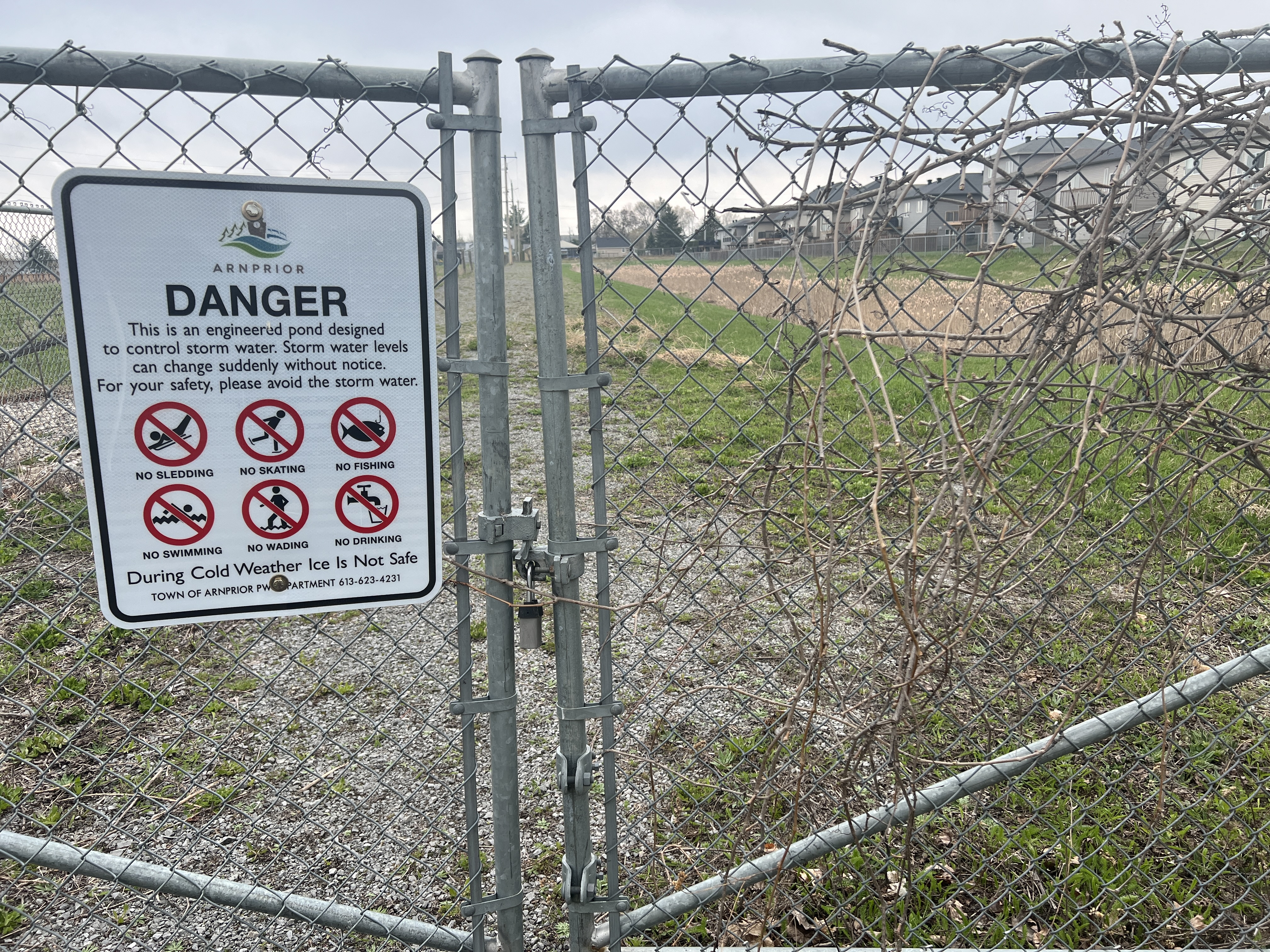
When we consider gates in our backyards – the chain link fences dividing up suburbia – but also the gates keeping a city safe – checkpoints, guard houses, toll stations, prisons, the locks on the Rideau Canal. One thing about these city gates are that they are not constructed to be easily crossed, whether we are talking about regulating water flow, children playing in the yard, border crossings or prisoners in jails. It’s not a walk in the park.

Also, it takes time going through gates today. In fact, these city gates require significant effort. Procedures. Passcodes. Keys. Questions. And hopefully the right answers. Going through some gates can pose a threat, even present a degree of danger. 

The term ‘gatekeeping’ today is intimidating. It suggests the role of being a bouncer at the door—asking for credentials or proof to those wishing to enter, testing the veracity of the traveller’s claims. I think we live in a world today where gates are built to make it harder to open than to close. To open them takes more effort and time.

Among people of faith, too, I think we are tempted to keep Jesus inside. And so we close the gates of our hearts, and the gates—physical and mental—that keep matters of faith preserved. The result of this strategy, sadly, is to exclude, control and/or force everyone ‘inside’ to conform.

But Easter changed all that. Easter means that Jesus is alive, not dead. Easter means that Jesus has gone into the world, and lives in every corner of it. Easter has opened the gate, so that Christ is released out there.

While modern city gates are normally designed to control or stem traffic flow, the gate of Jesus is easily opened. More often than not, it’s stuck open. It’s harder to close it than it is to open it. Jesus’ gate is more about a free flow of traffic in and out. Whoever enters by me will be saved and will come in and go out and find pasture.[10]

The community, the reign, the shepherding of Christ if you will involve relationships defined by the grace, freedom and love of God—the freedom for welcome, acceptance, and even the freedom to leave. This freedom of movement from outside to inside and inside to outside is the open-door policy of God’s reign. 

When the church remains a place where all people are free to come and to go, we remain true to Christ who is this gate, who is this place of transition. It might not always be easy to go through either way, because of the blocks we create, we place on ourselves. But Jesus doesn’t block the way. When we would rather close the gate, Jesus opens it. The One who is the gate is faithful and beckons us through to the fullness, the abundance of life beyond.


[1] John 10:1-10

[2] John 6:35-48

[3] John 8:12; 9:5

[4] John 15:1-5

[5] John 10:10

[6] Philippians 2:5-8

[7] John 10:11-14

[8] John 11:25

[9] John 14:6

[10] John 10:9

“Open door policy” (sermon by Rev. Martin Malina)

From broken to broken – God’s grace at the holy meal

Yes, indeed this chapter is typical of the Lukan narrative style.[1] Because the story is resolved and reaches its climax around a dinner table, around a meal.

One of the stand-out activities of Jesus’ ministry throughout the Gospel of Luke is eating. I’ve mentioned this before, that there is some kind of reference, or at least implied, to “eating” in every one of the twenty-four chapters of Luke. And Jesus is at the centre of it all. 

Some notable examples—Jesus is born in a feeding trough for animals.[2] Jesus is accused early in his ministry of being a glutton and a drunkard.[3] What is worse, he eats with all the wrong people![4]Then, he shares the Passover meal with his disciples the night before he died.[5]

So, it’s instructive that in the resurrection story about the walk to Emmaus[6] that, in the end, it’s not Jesus’ teaching—significant nonetheless—that opens their eyes. It’s not his physical presence—significant nonetheless—that opens their eyes. It’s Jesus’ breaking and sharing bread with his friends.[7] It’s his blessing of food. In this sharing of bread at an ordinary table, we catch a glimpse of “Jesus’ transformative kingdom.”[8]

It’s when Jesus takes what he is going to eat, breaks off a piece, and shares it with everyone else gathered at table. It’s like he’s taking the conventional expectation—that when someone comes to the table, they’ll keep for themselves the food placed before them. Jesus, again, turns upside down everyone’s expectations. There’s this self-giving, from a heart of love, that offers not what is perfect but what is broken. To everyone.

Which is not how I instinctively operate. If I’m going to share something, especially food, I want to make sure I’m offering my guest and those whom I serve the best pieces, the biggest, the best-looking off the grill. In other words, I’m looking to give the very best of what I can give. 

But not Jesus. Jesus does not exercise his mission based on performance and perfection. Jesus’ action invites us, maybe challenges us, first to receive and accept what is less-than-ideal in and around us.

A man dies and goes to heaven. Of course, St Peter meets him at the pearly gates.

St Peter says, “Here’s how it works. You need 100 points to make it into heaven. You tell me all the good things you’ve done, and I give you a certain number of points for each item, depending on how good it was. When you reach 100 points, you get in.”

“Okay,” the man said, “I was married to the same woman for 50 years and never cheated on her, even in my heart.”

“That’s wonderful,” says St Peter, “that’s worth three points!”

“Three points?” he says. “Well, I attended church all my life and supported its ministry with my tithe and service.”

“Terrific!” says St Peter, “that’s certainly worth a point.”

“One point? Golly. How about this: I started a soup kitchen in my city and worked in a shelter for homeless veterans.”

“Fantastic, that’s good for two more points,” he says.

“TWO POINTS!!” the man cries. “At this rate the only way I get into heaven is by the grace of God!”

St Peter says, “Come on in!”

God is gracious and merciful, despite our imperfect efforts to catch God’s attention and despite our belief that we have to earn our way into God’s favour.

From broken to broken. From broken—meaning despised and rejected, what Jesus suffered himself on the cross—to broken; meaning, touching what is broken within us. In the holy meal, Jesus touches what is broken in our lives and in need of healing and in need of being made whole again. Bread broken. The Body of Christ given—broken—for you. And everyone else.

The Holy Communion magnifies the truth of grace, a truth that we don’t ‘see’ in each other normally in our compare-and-compete world. Jesus takes the initiative to find us on the road—on our journeys—and approaches us because we are beloved children of God. Not because we have accomplished something grand. The disciples on the road felt as failures; the past three years were all for nothing, it seemed. But despite their, and our, brokenness and even because of it, Jesus approaches us with love.

Within our historic Christian faith, we affirm that all humanity bears the imprint of the Divine[9], that we are made in the image of God. This is the starting point for drawing forward our sense of dignity. This is the intrinsic value that is ascribed, not earned, based on our essence in reflecting a good and loving God.[10]

When we start with the grace of resting in our dignity—despite what is broken within us— then the truth of our identity flows forward to embrace those around us. We re-spect them, the word ‘respect’ means “to see a second time”[11], to take another look. To see the good.

A colleague who teaches a two-year confirmation class concludes the program by announcing a final exam. Each student must take the three-hour exam after which the pastor takes up the answers with each student.

As you can imagine, the students get quite anxious and nervous leading up to the exam. All kinds of reasons are presented why some can’t participate. The pastor gently but firmly persists and insists. With a twinkle in his eye. This moment will define and determine the student’s standing in the church and with God for the rest of eternity!

At first the students are shocked when after the written test is completed and handed in, the pastor in dramatic fashion rips up the paper without even looking at any of the answers written down, and unceremoniously deposits the shredded pieces into the recycling can.

Grace doesn’t demand perfection as a condition for belonging to God’s reign. Grace doesn’t insist on getting it right before you receive the gift of Jesus’ life in yours. Grace doesn’t put conditions on anyone coming with an outstretched hand to the table.

Our lives begin and end in the love and grace of God. Whatever our good efforts, and however we try to get it right, this will make a difference and open up ‘airspace’ for God’s grace to flood in. But we can’t control the outcome. And sometimes we need Jesus to break in when we can’t break out when we are stuck, likely more often than we think. In the end it is the freedom of God’s agency to show mercy and open the eyes of our heart.

You are welcome to partake of this Holy Meal. And next time you connect at the table in person or by watching online, take a good look—and maybe a second look—at who is there beside you also receiving the gift, the grace, also a beloved child of God. Will you ‘see’ them with renewed vision? As beloved children of God?


[1] Luke 24

[2] Luke 2:7

[3] Luke 7:34

[4] Luke 5:29-31 “Why do you eat and drink with tax collectors and sinners?”

[5] Luke 22:1-23

[6] Luke 24:13-35

[7] Luke 24:30-31

[8] Eric Barreto, “Commentary on Luke 24:13-35” in workingpreacher.org (23 April 2017).

[9] Genesis 1:27

[10] Christ Heuertz, The Sacred Enneagram: Finding Your Unique Path to Spiritual Growth (Grand Rapids Michigan: Zondervan, 2017), p.17

[11] Richard Rohr, “Everyday Pilgrims” in Daily Meditations (www.cac.org, 10 March 2023)

From broken to broken’ sermon for Easter 3A (Rev. Martin Malina)

Lightning – Life in Christ

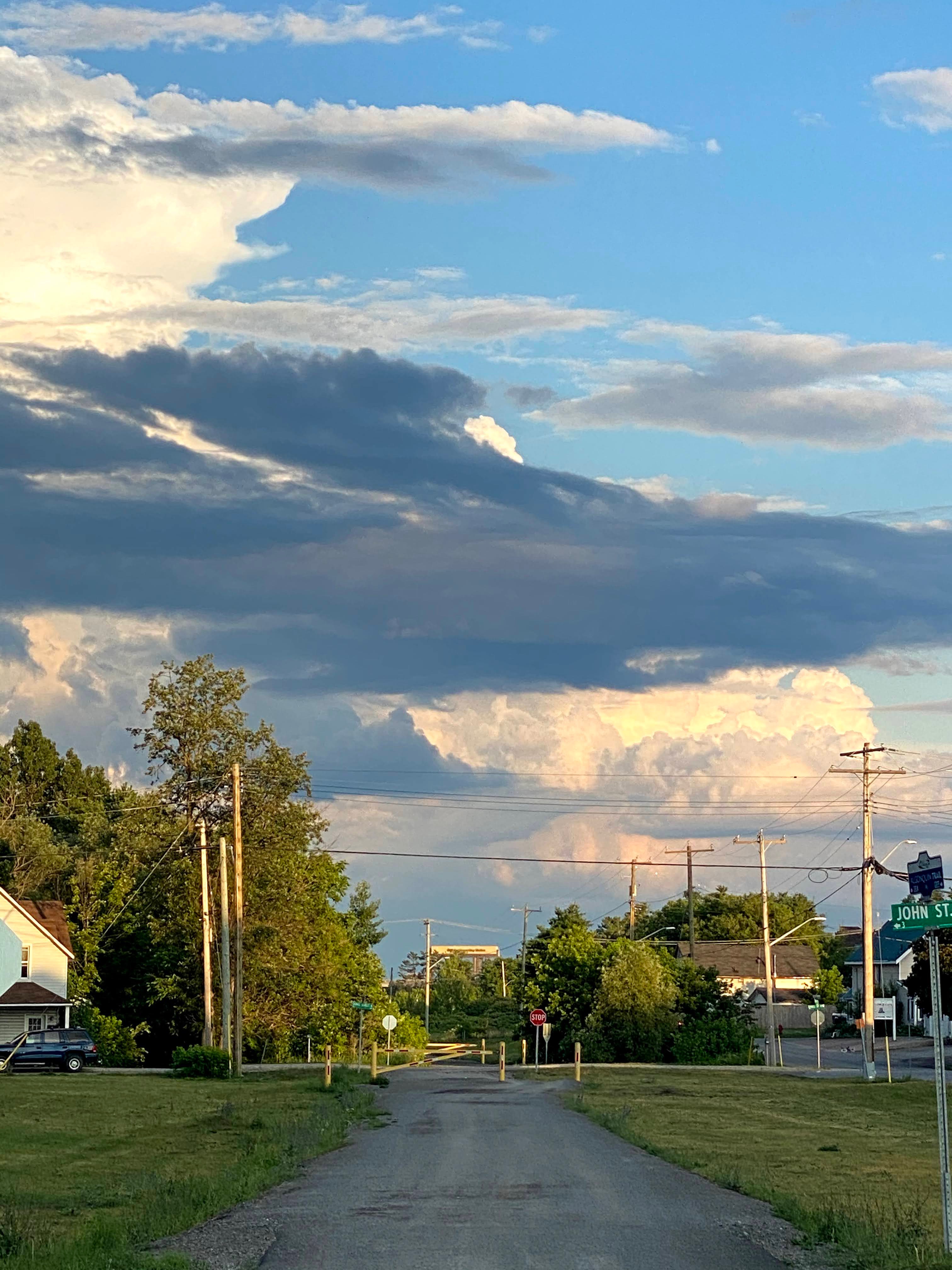
Lightning will strike (photo by Martin Malina, Arnprior, June 2020)

I’ve found myself reading more children’s stories over the past few years. In the simple language and images not only do I gain insight into a perspective from children, but I also find deep wisdom in the writing.

There is a genre of children’s literature known as transition stories. Focused on the in-between moments that cause young people stress, topics range from bedtime to moving, from separation anxiety to grieving, and more. [1] These books help children grow and mature into accepting the reality of life we all face, no matter our age.

How do we make those transitions in life—transitions that are significant milestones? From living with someone for decades and then you lose them. From one job to another that is completely different. Moving to another country on the other side of the globe. From good health to illness. We may find ourselves at a station of life where we’ve gotten off one train, and we are waiting for the next one to arrive.

How do we make those transitions? And how do we make them well?

Today’s gospel reading is a transition story too.[2] From the night of that first Easter morning, to a week later. From fear to faith. From the disciples not knowing what to do, to being given a big job to do. 

And, like the first disciples, we cannot make a significant transition by ourselves. We cannot shepherd ourselves through our own transitions. We rely on others—family, friends, pets, a community of faith. Who is in your relational circle? 

How do our relations help us? For one thing, we rely on our shared stories—common interests, aligned perspectives, similar and dis-similar life experiences. And when we share those stories—when we are heard and when we can listen—we discover meaning. We may even unlearn or face our fears. In the sharing of stories, we discover meaning in life’s transitions. We may, like the disciples and in the awareness of Christ’s living presence with us, greet a renewed purpose for life.

Books and films whose main characters are children or young people impress me when, at the onset we meet a young child, innocent, immature. But by the end of the epic adventure or quest they undertake, facing seemingly impossible odds and dangers, they have become strikingly mature and adult. It causes me to pause and reflect on how much they have changed to come into their own.

Last week I preached about the power unleashed at the death of Jesus. And, at his resurrection, the great power of love overcame the world’s powers of violence, fear, and hatred. This resurrection power was not just for Jesus, but for all people in Christ for all time. Recall that when Jesus died and rose, “the tombs also were opened, and many bodies of the saints who had fallen asleep were raised. After [Jesus’] resurrection they came out of the tombs and entered the holy city and appeared to many.”[3]

The power of the resurrection was also then given to the disciples in the upper room on that first day: “When he had said this, he breathed on them and said to them, ‘Receive the Holy Spirit. If you forgive the sins of any, they are forgiven them; if you retain the sins of any, they are retained.’”[4] This is incredible. It is a great gift to receive the power of the Holy Spirit and to have the capacity to exercise it.

What strikes me is that the power of resurrection resides in the disciples with purpose to make a positive difference in the world. The responsibility now lies in them to affect the world for good.

Easter is not just about the individual miracle in Jesus’ life. It is a miracle for all of us.

Jesus’ life is a grace and a gift to us now. The purpose of Jesus’ life is not so much to arouse empathy but to create empowerment.[5] In other words, Jesus is not particularly interested in increasing either your guilt or your devotion, but rather, in deepening your personal capacity to grow, to transition, to make the passage into a fuller, wholesome life.

That power resides in us.

We find ourselves in what is sometimes called the shoulder season of Spring—the in between winter and summer. It is a transitional time, weather-wise. In one short week we went from going through the worst ice-storm in Ottawa since 1997 to 20-degree, summer-like temperatures. During that ice-storm I even heard thunder and saw flashes of lightning.

Lightning occurs, of course, primarily because of conditions from above—the charged air-mass and weather system moving over the land and coming from somewhere else. Most lightning strikes are from cloud-to-ground. The power of God occurs from the start because the Spirit moves into our space.

But does lightning always strike only from the sky down? 

While most lightning is initiated by downward leaders, upward discharges are also possible, occurring almost always from towers, tall buildings, or mountain tops.[6]

When I consider the power of the resurrection unleashed by the empty tomb, when I consider the gifting of that power to forgive, to love, given to the disciples, I think of lightning as a good metaphor.

Because the power of God is a two-way street. It cannot be complete without being connected to God’s power. It cannot be complete without our participation in the powerful activity of God in the world.

We are given the Holy Spirit to make a difference. Having life in Christ’s name means we have the power. The Spirit has been given to us in Christ Jesus. We are connected to Christ. Thanks be to God, who by the power of Jesus’ resurrection, empowers us to be Christ’s presence in this world we inhabit today.


[1] Sundays and Seasons, Daily Resources 16 April 2023

[2] John 20:19-31

[3] Matthew 27:52-53

[4] John 20:22-23

[5] Cynthia Bourgeault, “A Transforming Passion” Daily Meditations (www.cac.org, 5 April 2023)

[6] Upward discharged lightning

A sermon for the 2nd Sunday of Easter, Year A (Rev. Martin Malina)

Simple enjoyment: An Easter Sunday sermon

New Life Springing Up All Around (photo by Martin Malina, Kootenay River BC, July 2019)

Happy Easter!

Now, did you know that Easter is not just today — one day? Easter lasts fifty days, from Easter Day through to the Day of Pentecost, which this year is on May 28.

And, for that matter, every Sunday in the year — even during Lent — is considered a ‘little’ Easter, a mini feast of the resurrection on what Christians have called the first day of the week.

The primary theme of Easter is resurrection. Jesus Christ is alive, raised from the dead. We, too, share with Jesus life everlasting in our baptism. Therefore, new life is always around us and in us, of course. But we don’t always notice it.

Admittedly, with all that’s wrong in us and in the world today, it’s not easy to focus our attention on the new life springing all around us. That’s why we need to hear the Easter proclamation over and over again: Christ is risen! Christ is risen indeed! Alleluia!

Maybe it’s too simple a thing. Our minds want to complicate the message of Jesus’ resurrection with debates, controversies, stipulations—and we end up thinking we need to do a whole bunch of mental gymnastics. In order to believe we think we need to have every question about life after death figured out, solved.

And yet for over two thousand years Christians have believed in the presence of the living Lord Jesus, and expressed their faith in resurrection and new life, despite the evils and troubles in the world.

During the Holocaust in the last century over six million Jews were murdered by the Nazis. In a part of the city of Warsaw in Poland, called the Warsaw Ghetto, an inscription was discovered years later carved into a wall in the home of a Jewish family. It was a prayer, a statement of belief and an expression of faith: 

“I believe in the sun even when it doesn’t shine; I believe in love even when I don’t feel it; I believe in God even when God is silent.”[1]

I wonder if, today, we need to renew our faith in the truth and wonder of the resurrection. I wonder if we need to narrow our focus and try not to complicate the simple practice of belief and faith, despite the temptation to do so.

A couple of decades ago a scientist, David Quammen, published a book probing the far-reaching effects of extinction. This is, admittedly, a broad and expansive topic with many implications: the climate crisis, evolution, species diversity, etc.

In order to understand ‘extinction’, David Quammen studied not every species that ever became extinct throughout history, no. He studied a single species, the dodo bird, the last of which died on an island in the Indian Ocean in 1681.[2]

Any pursuit of the mind or soul, whether in science or in the life of faith, begins on as small a scale as possible. “The way to the many is through the one. Loving all things starts with loving one thing.”[3]

How do we practise focusing our attention and simplifying things, in the first place?

In the midst of all that is, good and bad, let’s take a deep breath and take a good, long look and listen around us. Have you been outside this weekend? What’s one thing you notice in nature and in the change of the seasons?

We know nature can’t be speeded up. We may want it to! —especially given the sluggish arrival of Spring this year. And still we are reminded again of the natural pacing of things. The crocuses, the tulips, the buds on the trees and blades of grass will soon emerge with fresh, new greening. This is both the reality of nature, and the nature of reality. 

But we are often at odds with the natural pace of life. Nature and reality happen often at a much slower rhythm of life than we’ve come to know for our own lives. Consider the nine months of pregnancy, periods of incubation, weather systems, growth, ripening — these are all teachers for us.

Thomas Aquinas, the great Doctor of Theology from the thirteenth century, defined prayer as the “simple enjoyment of the truth.”[4] The truth is, like nature, what is real. We don’t live in a fantasy world—the world of ‘what if’s’ and the world of ‘could-of, would-of, should-of.’

Easter is real. And the truth of new life and resurrection is to be celebrated and enjoyed: The simple enjoyment of the truth.

We can’t enjoy this reality when we are speeding. Because of the instant culture in which we live—instant results and same-day delivery—we’ve rather lost this art of simply enjoying the truth.

I now drive an electric car (EV). Driving an EV has opened my awareness to the simple enjoyment of the truth. The greatest enemy to the range of a battery-powered car is increased speed over time. As a friend who also now drives an EV told me recently: “the speed limit is your friend.”

I’ve experienced a conversion of sorts. I used to not think of driving over 120 kms/hour on the expressways. Now, I average well under 110. Why? To extend my range. Not an easy lifestyle adjustment. Yet, slowing down—ironically—has made me realize how much time I actually have.

Of course, we’ve always known that our energy consumption increases the faster we drive—no matter whether your car is powered by fossil fuel or electrons. The faster you go, the more fuel you burn. It’s always been true. The speed limit has always been my friend. I’ve just noticed it now with the EV probably because I don’t have the same level of ‘convenience’ filling up anywhere. I’ve had to confront some limitations to engaging our culture of hyper, hurried, hustle.

With a positive result for me. When I slow down, I pay attention to what has always been true, right there before my very eyes.

When we slow down, when we narrow our focus, we expand the field of vision before us. We notice in another person, for example, things we may have missed when we’ve hurried past them in the hallway. We reconsider and see again their true needs. We listen better. We don’t just rush to conclusions but recognize what they really need and who they really are.

Who is your neighbour? Where is new life beckoning around you now?

New life in Christ is here! It has already happened. And continues to happen all around us, all the time! 

Easter doesn’t magically remove evil and all the troubles in the world today. Easter is not waving a magic wand and making our suffering disappear. The living Lord is not some cosmic superhero that solves all our questions with a snap of a finger.

The simple enjoyment of the truth is the presence of heart, mind and soul seeing God in the real, the natural: the breath, the heartbeat, the love and the good that is always around us. Let us rejoice today in this most blessed gift!

Christ is risen! Christ is risen indeed! Alleluia!


[1] My translation, from “Karfreitag 7 April” in Der Neukirchener Kalendar 2023 (Neukirchener-Verlagsgesellschaft, 2023)

[2] Cited in Belden C. Lane, The Great Conversation: Nature and the Care of the Soul (New York: Oxford University Press, 2019), p.40-41.

[3] Ibid.

[4] Cited in Laurence Freeman, “Conditions for Breakthrough” in The Art of Waiting (Singapore: MedioMedia, WCCM, 2022).


The power of love: A Good Friday sermon

The Tree of Light (photo by Martin Malina in Gillies’ Grove Arnprior, 15 March 2023)

In Matthew’s account of the Passion, there was an earthquake not only on Easter Sunday when the rock blocking the tomb was opened.[1] But there was a spectacular earthquake at the moment of Jesus’ death two days earlier. The emphasis on rocks and hills is consistent with Matthew’s storytelling.

During the past season of Lent we have visited the mountains which were significant places of Jesus’ life and ministry—the five mountains of temptation, beatitudes, feeding, transfiguration and the Mount of Olives. Indeed, Matthew is the Gospel of mountains. But today, we can go no farther. 

Today, on Good Friday, Jesus makes his solitary journey of death. It’s his alone to make. He is deserted and abandoned, left alone to make the final crossing from life to death by himself. He is the Son of God who has followed his call to the end. This is the final step on his earthly path.

And we watch from a distance, from the foot of this final mountain: It’s the hill outside the city gates, called Golgotha.

The mountains have something to say in Matthew’s narrative. And today, we witness the incredible power unleashed at Jesus’ death. The death of Jesus is a force that cracks open the foundations of the earth. Literally.

The earth shook, and the rocks were split.[2]

We would think the rocks that cement the very structure of mountain ranges are impregnable, unbreakable. How can the physical make-up of igneous rock be split open? What power is this?

In the world of The Lord of the Rings by J.R. Tolkien, the Dwarves are the masters and hewers of stone. They live in the bowels of the mountains mining for precious, valuable metals. 

In a scene from the recent season-one prequel of the Rings of Power TV series, a young Elrond the Elf enters the Dwarven kingdom, later known as the Mines of Moria. But instead of getting a warm greeting from his old friend the Dwarf Prince Durin, Elrond receives a cold welcome from him. In order to remain in the Dwarves’ company, Elrond invokes an ancient rite, a competition to see who can smash more rocks with a giant hammer. Exhausted at the end of the dual, Elrond concedes when he fails at breaking his last rock into smaller pieces.

This is fantasy, of course. In the real world, average human beings don’t go around splitting apart large boulders of rock. Rocks cannot be split by the force of our hand alone. 

The mountains and rocks—symbols of majesty and glory on earth—bind all creation and all creatures together. We all share the same earth, despite all that divides us. The mountains and rocks which hold all together, have something to say to us this day. Because the earth itself grieved when Jesus died. The earth broke its heart open. What are we to make of this?

Perhaps we can consider all that contributes to death in our world, all that serves only to divide, separate and isolate us from each other: Violence, fear, anger, hatred. These are the rocks that seemingly cannot be broken, destroyed. Violence, fear, anger, hatred form part of our human condition that appears on the surface as insurmountable, impossible to overcome. These are the rocks that form the foundation of human character, human nature and society. It seems.

The effect of Jesus’ death exposes the rocks for what they are. The power of everything that separates us from God and from one another is destroyed. Jesus’ death destroys the power of death. Violence, fear, anger, hatred—the recipe for human division—are rendered impotent in the face of God’s love and mercy. The power unleashed by Jesus’ death is greater than anything imaginable or created by our own hand.

No longer are we separated from God. The death of Jesus inaugurates an age where fear and death will be no more.[3] This is God’s justice at work, here. We are united, brought into everlasting union with God through Christ.

It is ironic that the chair Pilate sits on is called the judgement seat. From the judgement seat, Pilate renders the final verdict upon Jesus.[4] It is ironic because in the end it is Jesus and his Father who renders not judgement but justice, not retribution but reconciliation. This is God’s justice at work.

What is righteous, what is good, what is just, what is loving—this is the power unleashed at Golgotha. Jesus died, not to change God’s mind about us; Jesus died to change our mind about God. God is all about reconciling creation—including us—to one another in a holy union. How we view God now must change because of Jesus’ death.

God is not a judge who brings punitive judgement, punishing us for what we did. We may be punished, yes, but not for our sins. We are punished by our sins. The consequences of our sins continue to bring us suffering for which we alone are responsible. Jesus’ death exposes those rocks in our lives that keep us shackled, imprisoned, stuck, and bound.

But Jesus’ death also splits open those very rocks so that we can now turn every new day to a God who loves us beyond any measure of our own undoing.

Thanks be to God. Thank you, Jesus, for what you did for us.


[1] Matthew 28:2

[2] Matthew 27:51

[3] Revelation 21:4; see also Romans 8:35-39

[4] Matthew 27:19

“The Power of Love” by Rev. Martin Malina

The fifth mountain: Travel lightly, let it go

Connection to heaven (photo by Martin Malina by the Kindersley Range, BC, July 2019)

Twelve-step programs for recovery, founded in the early 20th century by Bill Wilson has evolved to healing journeys not just for alcoholics, but for anyone struggling with addiction. I was just listening to a podcast of someone suffering from depression who started a group at his church called “Twelve steps for normal people.”[1] It’s become that effective for anyone who wants to recover, heal, and grow.

This orientation towards personal well-being is important, because healthy individuals mean healthy faith communities, and vice versa.

It’s the first of the twelve steps that launches us on the path of recovery for anything.[2] It teaches us how sin in general is overcome not through personal willpower or by control. We open our hearts to God’s healing more by recognizing, right at the start, that we are powerless to overcome.

For example, we don’t become charitable by willpower, by saying to ourselves, “Be charitable!” Rather, we recognize the moments when we were totally uncharitable. And we first need to weep over them. That’s what confession is: acknowledging and admitting our limitations.

The way we stay on the path with any authenticity is to experience our incapacity and our failure to do something even good. This is the genius of what Paul calls “the folly of the cross”[3]

Constant failure at loving, for example, is actually what keeps us learning how to love. Nineteenth century saint, Thérèse of Lisieux (1873-1897) called it her “Little Way”. She writes in her letters how it was failing to love every day that kept her on the path of love.[4]

We hear today the fifth and final tip for the Lenten journey: Travel lightly; let it go. How do we do that?

Even before he gets to the last mountain on our Lenten journey—the Mount of Olives[5]—Jesus had already shown his openness to expressing grief. At the death of his friend, Lazarus, Jesus wept.[6]Then, as he approached the city and made his way up to Jerusalem for the last time, the Gospel of Luke records that Jesus “wept over it.”[7]

On the Mount of Olives, the day before he died, Jesus weeps when he prays: “Not my will by Thy will be done.” In the Garden of Gethsemane, all the Gospel writers describe Jesus in a state of great agitation and distress. Luke writes that “In his anguish … his sweat [or tears] became like great drops of blood falling down on the ground.”[8] In the Psalms for Lent and Holy week, we read the words Jesus himself prayed: “I cry to you, O Lord,” and “my eye is consumed with grief.”[9]

Jesus cries. What about you?

In our culture, we tend to be ashamed of crying, especially in front of others. Many of us may have been raised not to show our tears. We may have learned that tears show weakness and make us vulnerable. Therefore crying is not appropriate in the context of religious piety and public discourse.

The Gospels tell us otherwise. You will notice in the readings for this Passion Sunday the emphasis on the ‘face’—the human face. Tears, of course, emerge from our eyes and are displayed on our face. Our face reveals what is true in our hearts and who we really are.

“I did not hide my face from insult and spitting,” the prophet declares, “therefore I have set my face like flint …”[11] And, the Psalmist prays what Jesus prayed during his passion: “Let your face shine upon your servant; save me in your steadfast love.”[12]

Showing your face, is showing both your grief and your love. Showing your face is an act of love. There is a relation between the depth of our love and a corresponding sense of grief. “It is the depth of our love that determines the intensity of our weeping.”[13]

In his book, Faces: The Changing look of Humankind, Milton Brener presents a detailed study of the way in which the portrayal of the human face evolved in history.[14] Noting that 90 percent of emotional communication is non-verbal, most of this non-verbal communication is expressed through the face.

What is surprising is that there are virtually no faces in prehistoric art. Its subjects are mainly animals. And where there are humans, all the figurines are headless; and where there is a head, though there may be hair there is no face. When faces do begin to appear they are expressionless, schematic and non-individualized.

A major change occurred in the sixth century BC, incidentally about the time we have some of the earliest scriptures written down, where portrayals of the face give way to a more individualized, varied and emotionally expressive and empathic presentation. 

Today we may miss the revolutionary impact the scriptures had on the first readers and listeners of the sacred text. Imagine the shock reading and hearing about human faces! The very mention of, indeed emphasis on, the face of Jesus—and the prophets, the Psalmist and the followers of Jesus—speaks to the importance of expressing emotions in the life of faith. And the life of God in Christ.

Our hearts are the dwelling places of God. Yet, all of them are made of fragile glass. Tears signify the fragility of the heart. They expose the brokenness and vulnerability of the soul.

When words fail to express what we feel, tears are a tangible, trusted way, of addressing our pain and our sorrow. Through weeping, we learn not just by speculating, analyzing, explaining it all away. Tears are the word-less “articulation of our grief, the wording of our desire.” Some would say that our tears are the “only way into the heart.” And therefore, tears are a great gift.

While our tears reflect our surrender, our conversion, our turning to God, they also point us to new patterns of learning and living.

When we let go, with tears, we share something of ourselves with another. Letting it go means sharing. “Love learns to share things.”[15] There’s a literal side to “letting go.” One who is practised in letting go spiritually, emotionally, will also let go materially. We release and surrender whatever we’ve been grasping onto tightly in our hearts. 

Ultimately our tears symbolize an opening to new life. They speak of a promise. As Jesus’ tears promised resurrection, our tears signify the journey to rebirth and healing. 

“When we admit our hopelessness and desperation, when we recognize that we have ‘hit rock bottom’ in ourselves as well as in our relationships with people and with God, we also discover the compassion of a God” who became vulnerable on the cross. When we can’t any longer, God will.

Tears open upon the wound, and ironically God enters through this very wound and brings healing to the soul and to the world. God enters through the wound in our heart not just to comfort, but more to identify completely with us in an act of infinite compassion.

The Passion of Christ is therefore the Com-Passion of God. God has undergone the vulnerability of death on a cross. The more profound and intense our tears, the more abundant God’s eternal mercy. The deeper the abyss of our human brokenness, the greater the grace of heavenly compassion.

On this last mountain—the Mount of Olives—we witness Jesus’ tears. We pray with him, and in him. And in our surrender and release, we too await with hope the sure promise of a new way before us.


[1] I invite you to listen to a 13-minute podcast episode featuring Jeff Dafler, a recovering alcoholic and author of the book Psobriety: A Journey of Recovery through the Psalms. In the podcast, Jeff takes a look at Psalm 88, and discusses what he calls “the gift of desperation,” which allows those struggling to move toward hope and redemption.

[2] The Twelve Steps

[3] 1 Corinthians 1:18

[4] Thérèse to Sister Geneviève, December 24, 1896, in Thérèse of Lisieux: General Correspondence, vol.2, 1890-1897, trans. John Clarke (Washington, DC: ICS Publications, 1988), p.1038.

[5] Matthew 26:30

[6] John 11:35

[7] Luke 19:41

[8] Luke 22:44; see also Matthew 26:37-38 and Mark 14:33

[9] Psalm 130:1; 31:9

[11] Isaiah 50:6-7.

[12] Psalm 31:16

[13] John Chryssavgis, Chapter Seven “Silence and Tears” In the Heart of the Desert, Revised; The Spirituality of the Desert Fathers and Mothers (World Wisdom, 2008).

[14] Cited in Iain McGilChrist, The Master and His Emissary: The Divided Brain and the Making of the Western World (New Haven: Yale University Press, 2018), p.257.

[15] John Chryssavgis, ibid., Chapter Eighteen “Encountering God”

The fifth mountain; Letting it go (sermon by Martin Malina, Passion Sunday 2023)

The fourth mountain: Let someone in

Bridging Kootenay (photo by Martin Malina, Kootenay River BC, August 2019)

What are the stories we tell about people? Is it, that we know and believe the story about someone more than knowing who they really are? This distinction is important because the stories we tell ourselves have power over us. The stories about others often determine our opinion of them.

Jesus’ words and actions show that the stories circulating in Palestine in the first century about others were insufficient and lacking, or even false and untrue.

The woman caught in adultery.[1] The blind man.[2] The woman at the well.[3] These are stories from the Gospels we’ve heard on our Lenten journey.

The woman caught in adultery – what would you say about her? What is the story about her? She was not faithful, she had problems, she broke the marriage law and therefore deserved punishment and death.

The blind man – what would you say about him? What is the story about him? That he sinned, that there is some moral justification for his physical disability, that either he or his parents must be blamed. 

The woman at the well – what would you say about her? What is the story about her? That she kept secrets, a Samaritan, an outsider, not ‘one of us.’

Jesus’ action in all these cases reveals the problem, not with the persons themselves but with the stories about them. Jesus changes the story about them. He reverses the process: Before coming up with a story about someone, Jesus directs us first to get real with them. He first redirects our attention away from the stories in our heads, and brings us down to earth, literally. 

In the story of the blind man, Jesus bends down to the ground picks up some dirt, spits on it and puts mud on the man’s eyes. In the story of the woman caught in adultery, Jesus bends to the ground and writes something in the dirt not once but twice. Right from the beginning of creation and the scriptural story, the earth, the soil, is primary to its growth and healing.[4]

Creation, including you and me, needs a concrete connection to the ground, especially in life (and not only in death). In all the stories we tell about others, we need to be reminded time and time again that we all come from the same source. We are all created in the image of God. We are all made from the dust, and to dust we shall return.

Our transformation, our healing, creation’s healing, comes from the touch of Jesus as he brings our attention down to the ground upon which we live and the ground we share with everyone else.

He draws our attention away from the mental constructs we have created – the prejudices, the stories, the biases, the inflated opinions—about someone, and draws our attention instead to the person they really are as beloved by God.

These are all stories that swirl around us and others. But once we do get to know people ourselves, experience them ourselves, open our hearts to them, we find, more often than not, how untrue and unreliable these ‘stories’ actually are.

The fourth mountain on Jesus’ journey to the cross is the Mount of Transfiguration. On this mountain, you will recall from Transfiguration Sunday several weeks ago, Jesus was transfigured before his disciples. The disciples—Peter, James and John—had to experience for themselves the person of Jesus, fully human and fully divine.[5]

The Mount of Transfiguration represents for us the place in our lives where we, too, are invited to experience Jesus for ourselves. Yes, we may know all the stories about Jesus. We may recite the Gospels from memory. We may even say all the right words. Yet, the transfigured and risen Christ today invites us to experience and get to know God, personally. For God is present with us in communion with Christ Jesus. God is with us now on our journey. Let’s open our hearts to Jesus.

How does this happen? The tip for the journey on this Fifth Sunday in Lent is: Let someone in.

Last week I made two phone interviews with people involved in welcoming Ukrainian newcomers into their homes, following the Russian invasion over a year ago. One couple I talked to are hosting a family on their property in New Brunswick, near Saint John. And the other couple in their late 70s hosted a young family for several months in their basement in Kingston, Ontario.

In both scenarios, the hosts invited someone who was in crisis, complete strangers from the other side of the world, into their lives. In both scenarios, the hosts told me how good it felt to respond in concrete ways to help those in immediate need despite the social awkwardness, the cultural miscues, the disruption of personal space, the uncertainty of the future, and despite the profound language barrier.

Despite all the reasons they could come up with for not putting themselves in that position, they still did it. They let someone in. And they were and are being transformed human beings. Even if only their awareness and minds were broadened and deepened in love for themselves and others. They are creating a new story with them.

Sometimes we need help when we get stuck in fear, when we are scared to let someone in. We need someone to come alongside us in our own anxiety and stress to help us confront our fear. There’s the short video clip I watched on social media about a man standing at the foot of one of those moving escalators you see in airports.

The man stands hesitantly as swarms of people get on the escalator around him. At first you wonder why he’s just standing there, blocking the way for some others in their hustle. But then we realize he is scared. Most of the people ignore him, dismiss him as someone ‘with a mental problem’—the story about him, right?

Then, someone from the crowd—an older man—comes alongside him, stands beside him for a while. Calmly he then says to him, “Just one step forward. And another. You are on the ground. Your feet stay on the ground. Another step forward.” And he repeats this instruction while holding the man’s elbow, gently guiding him forward.

Simple, loving, concrete needs. And responses. The older man who offered help to the man locked in fear was letting someone else in, and vice a versa. The man stuck in fear experienced for himself the start of another story, a better one, about himself and the world around him. And that was made possible because someone refused to believe in the old story about another who is caught in debilitating fear. 

In healthy relationships, people let each other in. Or try. Or take the risk to let them in. And when we stumble, who comes comes alongside us? Who gives us opportunities to let them in? Who will we come alongside, and let them in?

When we let someone in—into our hearts, into our space—we begin a journey, a journey of positive change in our lives. And we are encouraged to move on until we reach the last mountain—the fifth and final—on our journey with Jesus to the end.


[1] John 8:2-11

[2] John 9:1-17

[3] John 4:5-38

[4] “…a stream would rise from the earth, and water the whole face of the ground—then the Lord God formed man from the dust of the ground, and breathed life into his nostrils the breath of life; and the man became a living being.” Genesis 2:6-7

[5] Matthew 17:1-8

The fourth mountain: Let someone in (Rev. Martin Malina)