Pass the salt, please and thank you

With gratitude to Diana Butler Bass, this sermon’s words are in large part borrowed and adapted from her September 29, 2024, blog: Sunday Musings entitled “Grateful – and salted”.

At this time of year, the gardens are being cleared. And the very last of the Fall flowers still blooming, like our marigolds at home, are giving their final, glorious bow.

Marigolds bowing out
(photo by Martin Malina 11 Oct 2024)

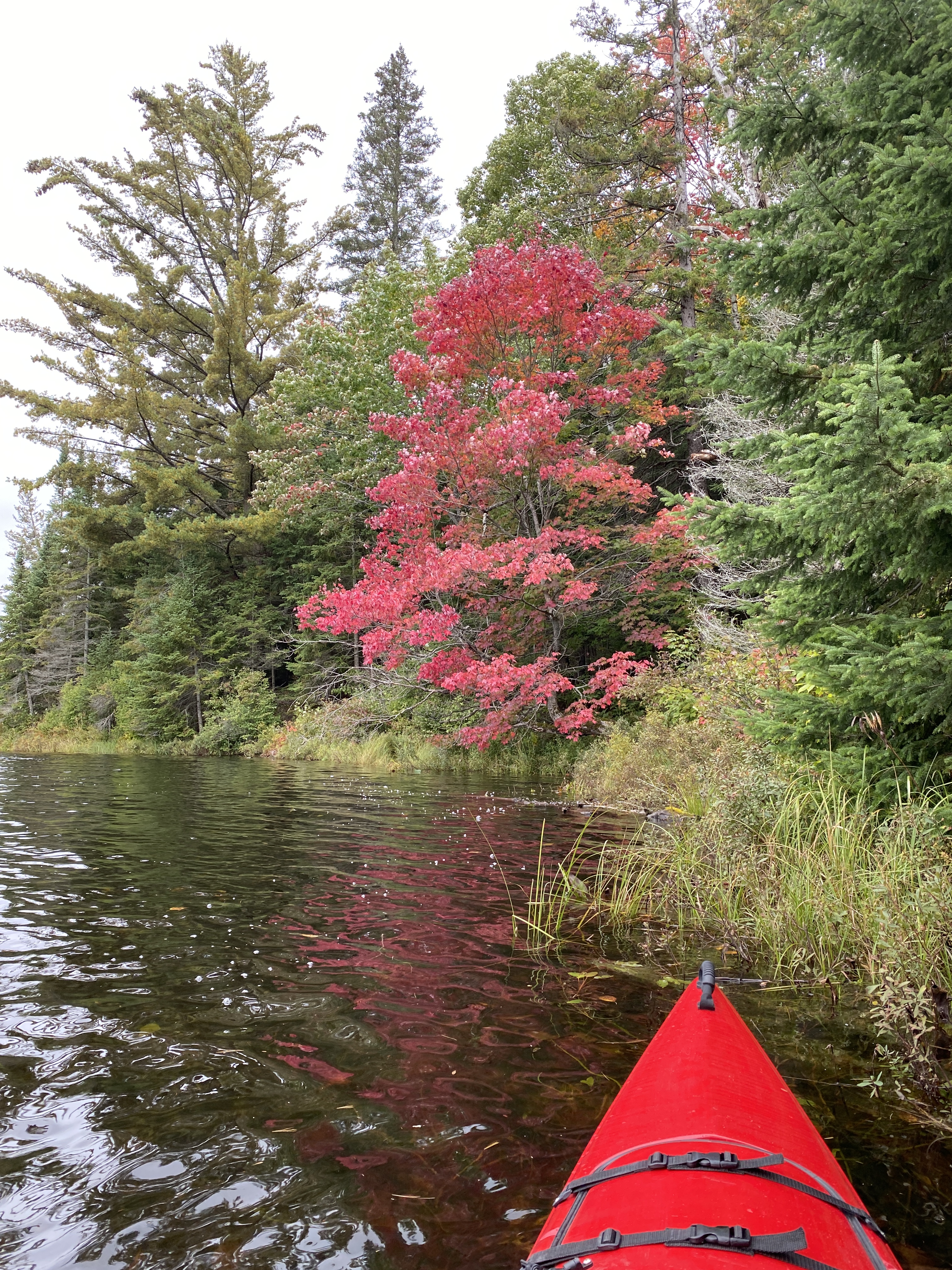
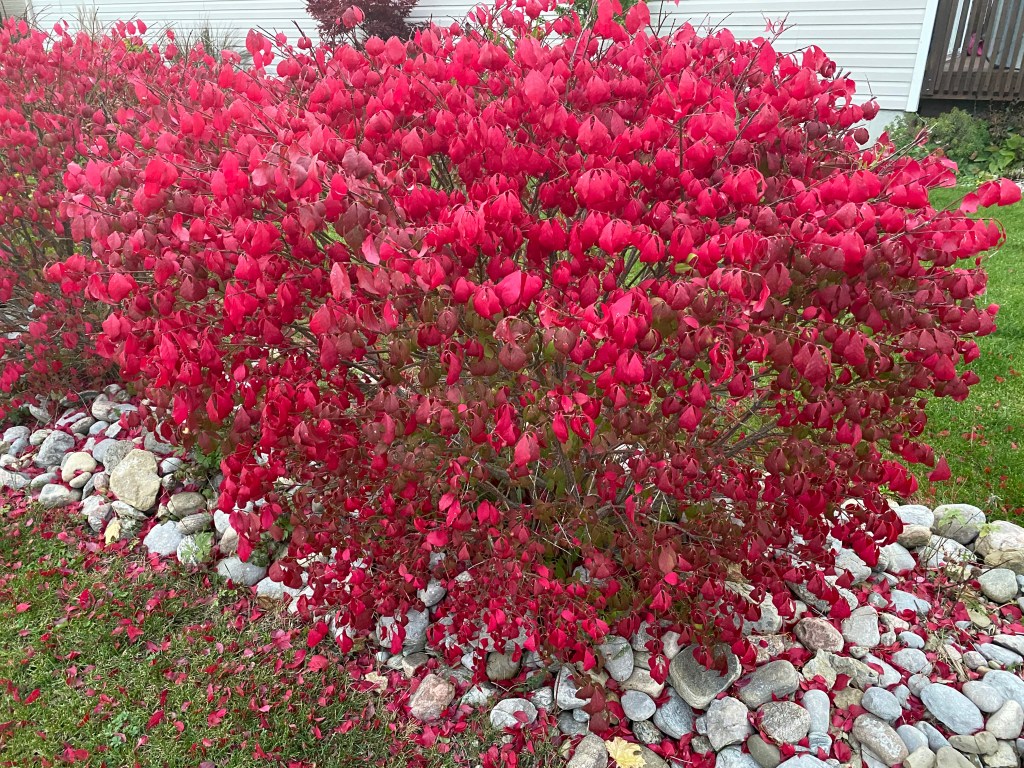
Autumn is a time for thanksgiving.

Paths of gratitude (photo by Martin Malina 30 Sept 2016 in the Arnprior Grove)

Thanksgivings are usually said at table. In the kitchen at home and at the altar for the holy meal in church. Indeed, the very word, Eucharist, means thanksgiving. Good food tends to make one’s heart thankful, eh?

I like to cook. But I don’t watch any cooking shows. American theologian and writer, Diana Butler Bass, however, confesses in a recent blog that she’s a cooking show fanatic. She loves Top ChefChopped, and pretty much everything on the Food Network. She even likes Halloween Baking Championship. Do you watch any of these?

She claims one of the things that frequently happens on these shows is that the judges will criticize chefs for not putting enough salt on their food.

Judge Geoffrey Zakarian will say, “This needs salt, man.” Or Top Chef host Tom Colicchio says, “There’s not enough salt. You need to learn to season your food. That’s basic.”

You might recall the Gospel text from a couple of weeks ago, when Jesus encouraged his disciples to be like salt (Mark 9:50). Now, please notice Jesus didn’t say or mention pepper. No. Not pepper. Be like salt.

Because pepper is a spice.

When you put pepper on a chicken breast, you’re not getting the taste of the chicken breast. Instead, you’re getting the oil from the cracked pepper on top of the chicken breast. Pepper adds pepper flavor to enhance or complement the chicken. That’s how spices work. They add their flavor to ingredients.

But salt is not pepper. Because it is not a spice. Salt is a mineral. It’s found all over the world, at the edge of the sea, in caves where there was once water. When this mineral — salt — is added to food, something extraordinary happens. Almost like a miracle.

When salted, food undergoes a number of chemical reactions that change the texture and flavor of the food from within. Pepper adds spice on the outside but salt changes the food from the inside out.

We often think of spiritual practices like gratitude — or meditation or prayer — as if they are pepper. Maybe you already have a pretty good life, generally happy, successful, or healthy. We are blessed. Spiritual practices, we presume, give some additional flavor. Value added.

Peppering gratitude is little like sprinkling thanks on top of our blessings. We add a bit of extra spice to give those good things a bit more flavor, an extra kick.

But that’s not what spiritual practice aims at doing, at least not according to the Gospel.

In recent years, science has discovered that practising gratitude is not like seasoning life on the outside. Instead, genuine gratitude, deep gratitude, is more like salt. It changes us from within.

Diana Butler Bass cites a headline from the Washington Post some years back: Can gratitude help you recover from a heart attack? The article said absolutely yes. Indeed, gratitude will actually change your heart.

The piece reported that if people who had heart episodes practiced gratitude through or in advance of that heart event, those patients had better outcomes than people who weren’t practicing gratitude. Medical researchers, psychologists, and social scientists have studied gratitude in relation to heart attacks and a number of other conditions and diseases — and they’ve found that gratitude is not only good for your heart but pretty much every other part of you, too …

Gratitude is really, really good for us.

Scientific studies have shown that gratitude blocks toxic emotions, envy, resentment, regret, and depression. If you have a strong sense of being grateful, it changes the way your brain functions.

Practicing gratitude strengthens empathy, courage, and compassion. It strengthens resilience and gives us a greater capacity to connect with others in community. This is life-changing stuff. Not just religious window-dressing. Thankfulness is not a flavor we add to life.

Rather, gratitude is like the salt of spiritual practice. Gratitude comes from within and changes you from within. We humans possess, yes, have a capacity for an innate inclination to say thank you, to recognize the giftedness of life.

But that innate sense gets clogged up by other things. By cultural biases, negative experiences, worries, and our own doubts and fears. All kinds of stuff spoils innate thankfulness.

And so, we need to practice gratitude — pay more attention to it, be more intentional about gratefulness, purposefully add it to our lives. Gratitude is like salting food, bringing what is deep inside to the surface, intensifying the best flavors of our lives … Everything gets tastier.

Jesus said, “Have salt in yourselves and be at peace with one another” (Mark 9:50). That relationship between a heart of gratitude and healthy relationship is deeply and profoundly true. If we live a life that is salted with gratitude, it opens us toward the world and toward one another in peace.

Brother David Steindl-Rast, a 98-year-old Benedictine monk, gave a TED talk on gratitude that has been viewed almost 10,000,000 times, making it one of the most watched talks ever recorded. His wise words amplify those of Jesus — Have salt in yourself and be at peace with one another.

Brother David said,

If you’re grateful, you’re not fearful. And if you’re not fearful, you’re not violent.
If you are grateful, you act out of a sense of enough and not a sense of scarcity, and you are willing to share.
If you are grateful, you are enjoying the differences between people and are respectful to everybody.

And that changes the power pyramid under which we live.

I think that’s exactly what Jesus says in the Gospel for today. The power pyramid under which we live is the thing that makes us anxious and ungrateful. It is what embitters our souls. “Is not life more than food, and the body more than clothing? … Consider the lilies of the field … Yet I tell you, even Solomon in all his glory was not clothed like one of these” (Matthew 6:25-29). Fear, worry, scarcity, and bigotry sap the flavour from life — as we try to survive in what is really a truly unfair, unjust, and cruel world.

“But strive first for the kingdom of God” (Matthew 6:33). And where is that kingdom of God? Later in the Gospel, Jesus says that the kingdom of God is within you (Luke 17:21). Gratitude draws out the good that resides within us. The gift of God.

Deep inside, we are profoundly aware that God has gifted the whole of the universe, that this life is a gift, and our lives are surrounded by gifts. This is the kingdom of God. And that changes everything.

With gratitude for what we have received, we look to the hunger needs around us. In 2023, the number of people in this city visiting the Ottawa Food Bank nearly doubled since 2020 (Ottawa Food Bank, 2024). These statistics describe in no uncertain terms Ottawa’s food security crisis. Gratitude flowing from our hearts leads us to feed the hungry and the poor, being therefore at peace with everyone.

We are doing our small part, here from Faith Lutheran, by our Faith Garden. Today we give thanks for this garden and its faithful stewards. A couple of our members who have worked in the garden this year will now share some brief words witnessing to the saltiness in their lives.

Courtesy of Faith Ottawa Lutheran, 2024

Have salt in yourselves. Be at peace with everyone. And live in hope. Thank you.

References:

Butler Bass, D. (2024, September 29). Grateful – and salted. Sunday Musings. https://dianabutlerbass.substack.com/sunday-musings/grateful-and-salted

Ottawa Food Bank. (2024). Charity intelligence [website]. https://www.ottawafoodbank.ca/hunger-in-ottawa/charity-intelligence/
Baptismal Thanksgiving

9You visit the earth and water it abundantly; you make it very plenteous; the river of God is full of water. (Psalm 65)

Last month, there was unprecedented flooding in eastern Libya from cyclone Daniel which roared across the Mediterranean. In Libya alone, thousands are missing and feared dead.

Where in some places the earth is arid and in desperate need of water, so many regions are being inundated with deadly amounts of too much water.

Water is like thanksgiving. It’s not just about one weekend in October to call to mind all those things for which we ought to be thankful for. It’s not even about being thankful only when we feel like it, or when conditions in our lives warrant it, or when we pretend to be.

Psalm 65 comes from a section in this book of the bible that are mostly laments, or prayers of anguish and petition for help in the midst of untold suffering. Nearly a third of all the Psalms are laments. And we sing Psalm 65 in the midst of all these laments.

The challenge before us is to consider thanksgiving in the midst of all that life brings. Our practice of thanksgiving may be a genuine response to the good in our lives, yes. But, as Diana Butler Bass suggests in her book on gratitude, thanksgiving is an ethic.[1] And therefore, must be a discipline. Something we work at despite the circumstances of our lives.

Thanksgiving is about practising gratitude in the moment. So, the practice of thanksgiving is not about some over-arching, theoretical conclusion about one’s life—whether it’s good or bad, or whether things have gone your way, or not. It’s not a one-time public observance as much as it is a quiet, continuous attitude towards life in general.

It’s more about learning to recognize each moment, good and bad, as holding the promise and potential of God’s loving presence. Thanksgiving is about paying attention to the grace of God now. And leaving everything else—thoughts, biases, prejudices, pre-conceived notions—leaving all that behind to embrace what is, without judgement.

There’s nothing better than being submerged in cold water to bring you into the present moment. What is the first thing you recognize when someone emerges out of the water after a surprisingly refreshing and perhaps unexpected dip: Their eyes are wide open. There’s no other place your mind, body, and spirit can be when the impact of water wakes you up to the moment.

Baptism is about water. Our tradition has been these tiny fonts. But Martin Luther—the great reformer of the 16th century—preferred full immersion. That was his bias, and for good reason: The whole body is involved, not just the head. Water brings us into the present moment.

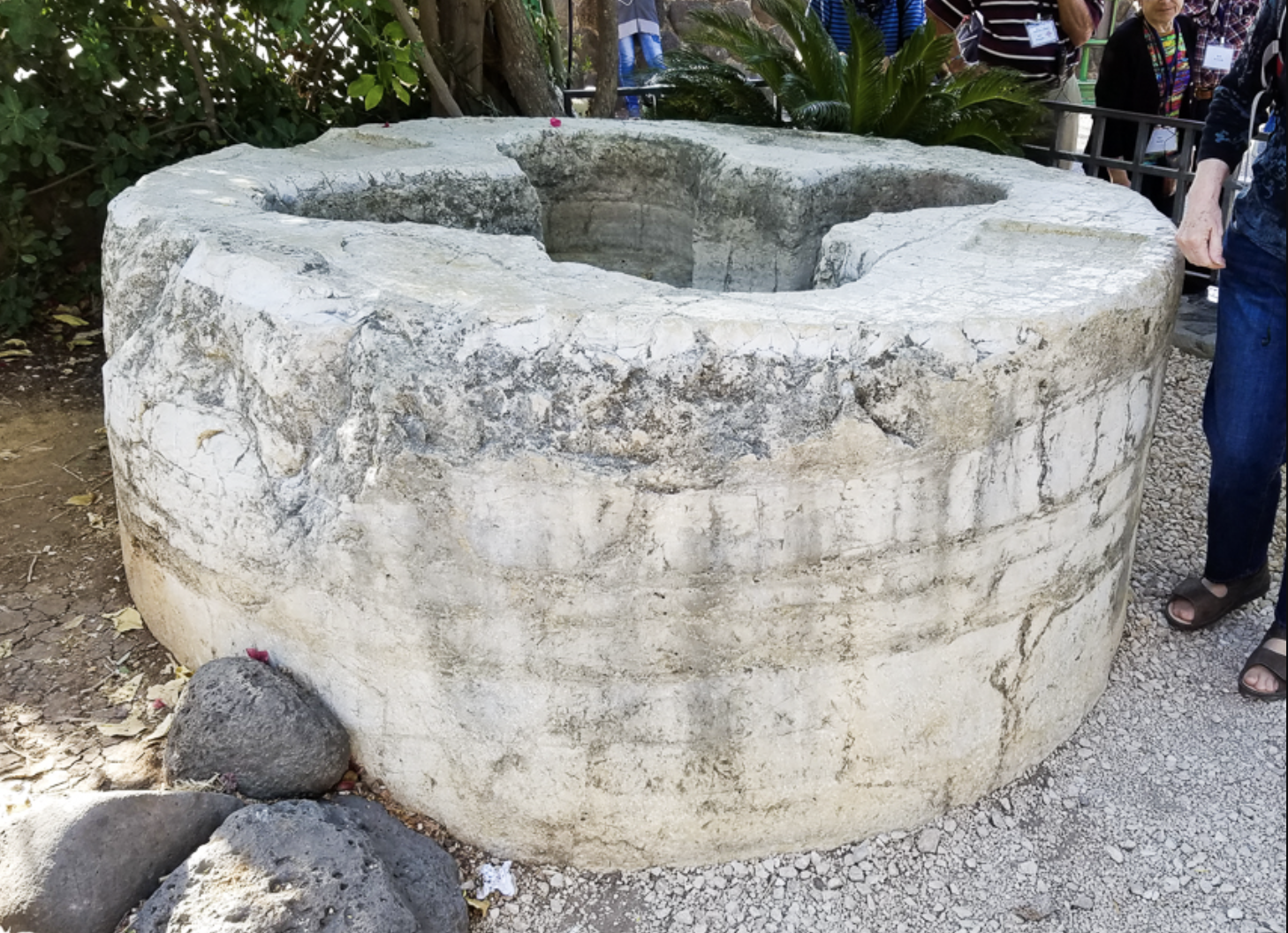
There’s a stone baptismal font on the northwestern shore of Lake Galilee that I visited years ago. It dates to around the 5th century. What I like about this font is that the opening is shaped in a cross. This font is also deep enough for someone to be fully immersed in the water.

The baptized would have to sit down in one of the four sections and make the confession of faith before being submerged in the water. The font was in a church right beside seven springs whose water flows strongly, gushing to the surface.[2]

Baptism is one of the two sacraments in the Lutheran Church. The other one is the Holy Communion whose Greek word, “Eucharist”, means the “Great Thanksgiving”. Both sacraments are thanksgivings. We engage God and reality with hearts trained in thanksgiving, facing whatever direction our life has taken us.

The four directions of Indigenous spirituality support this wholistic approach to our work of thanksgiving. For example, in the smudging / sweetgrass ceremony, you pray turning to face all the compass directions: east, south, west, north. And facing each direction one offers a prayer of thanksgiving[3]:

When you face east, you are thankful for all good things that come from the east, typically the gift of the sun and its light and warmth that keeps life going.

When you face south, you give thanks for times of healing and restoration in your life, signified by the warm winds which blow from the south.

When you face west, you give thanks for our ancestors, those who have gone before us, those who have passed beyond the horizon into eternal life; we are all headed west towards the setting sun of our own life.

And finally, when we face north, we give thanks for the gift of wisdom because the north wind is always angry; hard things come from the north, and therefore we are encouraged in the path of discernment and wisdom.

Thanksgiving underlies all the directions of our lives, not just one or the other.

In a life of thanksgiving, we embrace all experiences. We meet all challenges with grace. We are present to each moment, realizing it is all grace. That is thanksgiving. It is a giving it up, a releasing of the heart into the ocean of love and life that holds us all.

American Indigenous theologian Randy Woodley expresses it best. He describes the sacred power of giving oneself over to nature. I can relate, when I’ve gone camping and slept in a tent on the ground, sleeping by the waterside or a river running over rapids nearby:

“Sleeping in the bosom of nature is not the same as sleeping in the safety of one’s own home. Not at all. As you lay your body down to become one with the Earth, reality shifts. In that state, you can sense that God, Creator, is listening to the intentions of your heart. Whatever the mysterious power is behind creation, it softens one’s mind. Great Mystery unscrews the tight lids of the jars of certainty that you hold too tightly, too fiercely. You realize, sometimes even trembling, that something greater than yourself is meeting you.

“There, in the restful unknown world between sleep and wakefulness, you give yourself to those elements, to Spirit, in the kind of vulnerability a newborn to the world must experience.

“As I dozed off into the realm of sacred beauty next to that stream, I listened to how the water responded to each rock, to every branch protruding from the creek bank, and to the swirl of every curve as it “meandered past me and into some other creature’s nap. With each contact, the water had a particular note and registry of sound.

Over the rocks, around the curve, and down the path of its sacred water journey. Sacred sleep. Sacred water. Sacred life.”[4]

It’s okay if you don’t feel thankful this weekend, for whatever reasons and burdens you carry with you. It’s okay, because while you don’t feel it now, you will someday. Religion is never a one-time, one-off, experience. It is something that grows, organically, in your heart through the good and the bad. And there will be times when the gift emerges with joy.

For Thanksgiving is a process, an attitude and a practice. It is a river that continues to flow deep within giving life and love.


[1] Diana Butler Bass, Grateful: The Transformative Power of Giving Thanks (New York: Harper One, 2018)

[2] In a Byzantine church at the Seven Springs of Tabgha. On the four directions in a Christian context, read Alexander John Shaia, Heart and Mind: The Four-Gospel Journey for Radical Transformation, Third Edition (New Mexico: Quadratos, 2021), p.183: “This form of the cross … was the shape that was venerated during the years these gospels were composed and it served–with rare exception–as the shape of the baptistry into the seventh century.”

[3] Raymond Aldred & Matthew Anderson, Our Home and Treaty Land: Walking our Creation Story (Kelowna BC: Wood Lake Publishing, 2022), p.28-29.

[4] Randy Woodley, Becoming Rooted: One Hundred Days of Reconnecting with Sacred Earth (Minneapolis: Broadleaf Books, 2022), p.16.

Baptismal thanksgiving — a sermon for Thanksgiving Day Canada by Rev. Martin Malina

The gifts of God for the people of God: Thanks be to God!

audio sermon “Gifts of God for the People of God: Thanks be to God!” by Martin Malina

Make a joyful noise to the Lord, all you lands! Serve the Lord with gladness; come into God’s presence with a song. Enter the gates of the Lord with thanksgiving and the courts with praise; give thanks …[1]

When things don’t go well, either we are faking it and being disingenuous. Or genuine people of faith are doing something else when they muster up the courage to give thanks amidst hardship. Which is it? And what is it—this quality of faith that I see in some who find themselves in dire circumstances? Yet they are able to draw on a deeper sense of God.

How can we be thankful? The hurricanes in Atlantic Canada and eastern seaboard of the southeastern U.S.; the ongoing war in Ukraine; the uncertainty surrounding a persistent, viral pandemic; political division like never before; a strained and depleted health care and public service industry. An economy pulled thin. As Pastor Doug Reble said last week: Difficult questions don’t offer easy answers.

How can we be thankful? Is it either /or? Either everything is peachy, so therefore we can give thanks? That the condition for thanksgiving is a perfect life, problem-free? No wonder there are so many atheists if that’s the way we think it’s supposed to be.

In the Olympic National Park in Washington State, it rains a lot. Nearly two-thirds of all the days in a year the mountains and valleys are covered by cloud and—in the case of the coast—marine fog. There are very few days when you can see for some distance.

Salish Sea Coast shrouded in marine fog (photo by Martin Malina, August 2022)

So, Jessica and I were thrilled when we were given a clear, sunshiny day to drive up into the mountains and hike into Hurricane Ridge, almost two thousand meters high. The vista from the top offered an expansive and impressive view of Mount Olympus to the south, and even Mount Baker far to the east.

The view from Hurricane Ridge – A clear day for Mount Olympus (photo by Martin Malina on Aug 12, 2022)

Mountains figure prominently in the Gospel of Matthew, which will be the focus Gospel next year. Stories of Jesus told by Matthew—important events in the life of Jesus— are told from the mountain top: The Mount of Jesus’ Temptation, the Mount of Beatitudes, the Mount of the Feeding of the Five Thousand, the Mount of Transfiguration and the Mount of Olives.[2]

The message of the Gospel, it seems, needs to be told from a five-thousand-foot perspective. We need some height to get the ‘big picture’. And yet, most of life is lived in the valley. Our perspective on life is viewed not from atop mountain ridges and airplanes thousands of feet in the air but from the ground, the bottom. Like in the Olympic National Park on the west coast—or the ‘wet’ coast—very few are the days in the year when the sky is clear and the mountains can be seen.

In the Gospel for today, Jesus tells his disciples: “I am the bread of life … it is my Father who gives you the true bread from heaven … which gives life to the world.”[3] They respond, “Give us this bread.” And we pray every week but especially on this Thanksgiving Sunday: “Give us today our daily bread.” 

The 16th century reformer, Martin Luther, wrote in the Small Catechism about this petition of the Lord’s Prayer. And in response to the question: What does this mean? Martin Luther writes: “In fact, God gives daily bread without our prayer, even to all evil people, but we ask in this prayer that God cause us to recognize what our daily bread is and to receive it with thanksgiving.”[4]

God gives daily bread without our prayer. Without our songs of thanksgiving. Without our joyful noise and gladness. God already gives it, gives us everything we need. 

When we stayed those nights on the coast of the Salish Sea at the north end of Olympic National Park, I would sit on the deck of our cabin overlooking the Strait separating Washington State from Vancouver Island. Every night was the same: The clouds shrouded the North Cascade Mountains far to the East. Sometimes the clouds were particularly white and puffy, reflecting the setting sun’s rays. 

But the last night we were there, the sky was clearer in the west where the sun was setting and shedding its brighter light towards the east. And that’s when I saw it for the first time in four nights: All along, we weren’t looking at puffy, white cumulus clouds to the East. We were looking at Mount Baker! That was a mountain there on the horizon line, not clouds! What we perceive when the fog lifts surprises us with a beauty that has always been there. We just don’t often recognize it as such.

Surprise, behind the fog (photo by Martin Malina, August 15, 2022)

That vision of God seen from below is a gift. Life and reality are so much bigger than us. Hope emerges from this broader vision. That vision from the ground can empower us to new heights in our own lives. “To recognize what our daily bread is,” as Luther wrote. And then, to go beyond satisfying just our own needs and wants. To perceive beyond the confines of our own difficult circumstances. And to strive toward that vision.

“Many people go without their share of daily bread. Throughout the world 690 million people are hungry. In Canada today, one in six children under the age of eighteen is food insecure. What about their daily bread? How can we share the bread of our tables with others?”[5] How can we touch the lives of others, in turn, with the love God would have us give, with thanks?


[1] Psalm 100, appointed for Thanksgiving Day in Canada (Revised Common Lectionary)

[2] Matthew 4, 5, 15:29-39, 17, 24.

[3] John 6:25-35.

[4] Cited in Donald W. Johnson & Susan C. Johnson, Praying the Catechism; Revised and Expanded Edition (Minneapolis: Augsburg Fortress, 2021), p.94-95.

[5] Susan C. Johnson, ibid.

True thanksgiving

Oxtongue Lake, Algonquin Highlands, 24 Sept 2021, photo by Martin Malina
“True Thanksgiving” audio sermon by Martin Malina

“Is not life more than food and the body more than clothing? … Look at the birds of the air …

Are you not of more value than they?” 

(Jesus, Matthew 6:25-26) 

This text is the Gospel assigned for Thanksgiving Day.[1] What I find curious is that on Thanksgiving we give thanks, normally, for the material things we have – shelter, food, and the abundance of physical blessings …

And I don’t hear Jesus saying that food and clothing are unimportant to people of faith. Jesus isn’t downplaying our material world. Jesus isn’t saying we should not pay attention to the ‘stuff’ of this world. 

Yet, Jesus seems to be saying more, here. That true thanksgiving goes beyond being grateful for what we have; that true thanksgiving is celebrating who we are: Look at the birds of the air … Are you not of more value than they?” 

In this text, Jesus draws attention to our hearts and seeks to build us up as beloved children of God, created in God’s very own image. We have, if anything, value in who we are and the faith we express “genuinely”; who we are is “more precious than gold.”[2]

I was reading about one of the quietest rooms on earth at Orfield Labs in Minneapolis. Originally these ‘dead rooms’ were built in the Second World War to test communications systems. Basically, you step into one of these rooms and it’s much more, or less literally, than getting a bit of peace and quiet away from a hectic, noisy day in the city.

A typical room you sleep in at night that is quiet measures about 30 decibels. Even when we perceive it to be quiet, there is still sound bouncing off walls and surfaces around us. But the ‘dead room’ in Minneapolis measures at negative (-) 9 decibels. In this room there is absolutely no echo as the walls of the chamber absorb any and all sound. The effect on a human being is startling, to say the least.

The longest anyone has ever lasted in this room is 45 minutes. All you will hear inside this room are your organs—your heart beating, air and blood rushing through your system. After about 30 minutes of only hearing your body normally functioning and nothing else, you will begin to hallucinate. The negative silence can drive you, literally, crazy.

When you remove any external source of sound, and only hear what’s coming from within you, it’s too much for us to handle. It’s like we cannot bear for long facing, confronting and dealing with what comes from inside of us when there is nothing coming at us from without.

It’s like at best we feel uncomfortable facing ourselves; at worst, we only see bad things inside of us—our sin. At worst, we would do harm by the negative and judgemental words we tell ourselves, and the habits we fall into that are often unhealthy. If it’s only about what’s inside of us would God take delight in us?

Living in a world where so much of who we are is defined and determined by our external circumstances presents a real challenge to our faith. Jesus knows this. If there is anything in the New Testament about which Jesus speaks harshly, or dualistically (either-or), it’s about money. “You cannot serve both God and wealth; you cannot serve two masters,” Jesus says in the verse immediately preceding the Gospel text for today. 

Jesus speaks absolutely about money because he knows what we are going to do. He already knows our natural inclination to place most of our worth and value on those external things. He already knows that we are primarily motivated by counting, weighing, measuring and deserving – these are activities whose motivation comes from outside of us. And he already knows that as long as we ally ourselves with this world of earning and losing, we’ll always be comparing, competing, envying, or climbing.[3] We will continue to be driven from without. And be continually restless and discontented. 

So, he says: 

“Is not life more than food and the body more than clothing? … Look at the birds of the air …Are you not of more value than they?”

Our value, our worth, is based not on what we have, but who we are. Not on bank accounts, investments, clothes and financial portfolios. And Jesus says this not only that we would love ourselves first, but so that we would confer the same value on others. So, our love and care for others is not based on what they have earned but on who they are in God’s eyes.

So, Jesus is about re-calibrating the engine of our hearts. Contrary to the lure of material wealth, success and meritocracy, the generating motor that keeps us going in this life is inside of us, where God’s Spirit indwells. The primary engine is neither a lure or a threat from outside us. Rather, we are drawn from within, where the Spirit nudges us and strengthens us.

We are of more value than the birds of the air. God does take delight in us, as we are. We are of more value without needing to store up riches on earth. Because we know we have an inherent dignity within, a dignity shared with all human beings.

“Deep calls to deep”, the Psalmist sings.[4] Our inner source is not to be feared nor tolerated nor ignored in our externally over-stimulated lives. And if ever you find yourself twisting in the winds of material concerns and worries, just stop to listen to your heart beat. Do you hear it now? Stop to listen to the involuntary rush of air, breathing into your lungs and breathing out. Do you feel it?

Our hearts continue to beat and pump blood, faithfully, even when we don’t notice. Our lungs continue to draw air, faithfully. We don’t need quiet rooms to appreciate that. Our inner source is beloved. And it is a gift. It is at this deeper level where we find our place and our true connection with others in this world.

A cause for humble and true thanksgiving.


[1] Matthew 6:24,25-34

[2] 1 Peter 1:7

[3] Richard Rohr, “We Cannot Serve Two Masters” in What Do We Do With Money? (Daily Meditations, www.cac.org, 20 September 2021)

[4] Psalm 42:7

Be a blessing

But remember the Lord your God,  For it is God who gives you power to get wealth, So that God may confirm the covenant that he swore to your ancestors, as God is doing today. (Deuteronomy 8:18)

It is popular to express thanksgiving with the words, “I am so blessed”. In fact my social media feeds are populated with this sentiment which expresses a gratitude for graces both large and small.

The gathering of dearly loved family to celebrate a birthday or anniversary … “I am so blessed.”

An ‘all clear’ diagnosis from a nagging health problem … “I am so blessed.”

The gift of money or financial support during tough times … “I am so blessed.”

The regular commitment from a friend to phone you when you’re having a bad day … “I am so blessed.”

Even as we count our blessings – and maybe these appear rather basic and simple in a year that has brought us so much upheaval and disruption – the message of the Gospel can challenge us, shock us.

The text from Deuteronomy mentions the ‘covenant’. The covenant between God and people was first established with Abraham. When Abraham received the promise of blessings from God, he was to do something with that. Yes, Abraham was ‘so blessed’, he can pray. His descendants would number the stars in the sky, so promised God. [1]But that blessing was meant to be given to others. God said to Abraham, “I will bless you so that you will be a blessing; and in you all the families of the earth shall be blessed.”[2]

We know what being shocked feels like. The pandemic has shocked our systems. And for people in various situations, the way the world has changed has asked from each of us something different. The pandemic has shocked our lives. So much so we are in survival mode and our top priority becomes self-preservation. 

Yet it is precisely at those times when we are knee-jerked into circling the wagons and narrowing our focus into self-centred strategies for living – for whatever reasons – we need to consider again how it is we live our faith. And who we are, really.

Because the truth is – and social scientists and psychologists have all corroborated these in findings – that “our most enduring happiness does not come from what we gain [for ourselves] but rather from what we give away, offering who we are and what we have to bless others.”[3]

The blessings we receive as individuals have a wider destination. The blessings given to us are meant for others, in some way. We, as individuals, are not the final repository of a blessing. If we feel ‘so blessed’, then we need to do something for others with that blessing. What we receive has a broader purpose, a destination far beyond our private interests alone. We may not even be able to comprehend right now the fruit of those seeds we plant.

The ancient story is told[4]of the seeker of Christ who yearns to travel far to encounter and experience the presence of Jesus. She believes she can do so by going to the Holy Land and retracing the steps of man Jesus, Son of God, who walked the earth over two thousand years ago.

But she realizes that the journey to Jerusalem will be expensive. She would need to ask for financial help and save money for many years before she could afford to go. Then, nearing the end of her life she finally has enough money to go on her ‘bucket list’ trip. 

As she exits her house to leave for her journey to Jerusalem she meets the cleaning service for her apartment. Normally he keeps his head down, carrying his supplies into the building. But this time, he looks up and calls out, noticing her suitcase: “Where are you going today?”

“On a journey,” she replies, “to meet someone special.”

“I have a wife and children who I haven’t seen for years. They live overseas. And my son is sick. Whoever you are meeting, ma’am,” the cleaner continues, “is very lucky to have you.”

The seeker stops in her tracks. She takes a deep breath, nods and turns around back into her house. She doesn’t go on her trip. She has abandoned her quest for the remote. Because she has just met Christ right outside her door. 

The next day when the cleaner comes into the building she stops him in the foyer and tells him. “I know someone who works for refugee sponsorship. I will give all I have saved for this trip towards applying for your family to see you face-to-face again.” The man listens to this news, with tears in his eyes.

“We must support the weak, remembering the words of the Lord Jesus, for he himself said, ‘It is more blessed to give than to receive.’” (Acts 20:35)

I pray that we can be a blessing to one another, and to the world that God so loved. 


[1]Genesis 15:5

[2]Genesis 12:1-3

[3]Ken Shigematsu, Survival Guide for the Soul (Michigan: Zondervan, 2018), p.136-137.

[4]Ernest Kurtz and Katherine Ketcham, The Spirituality of Imperfection: Storytelling and the Search for Meaning (New York: Bantam Books, 2002),  p.119,266; I’ve adapted it, so our modern ears can more readily access its meaning.