
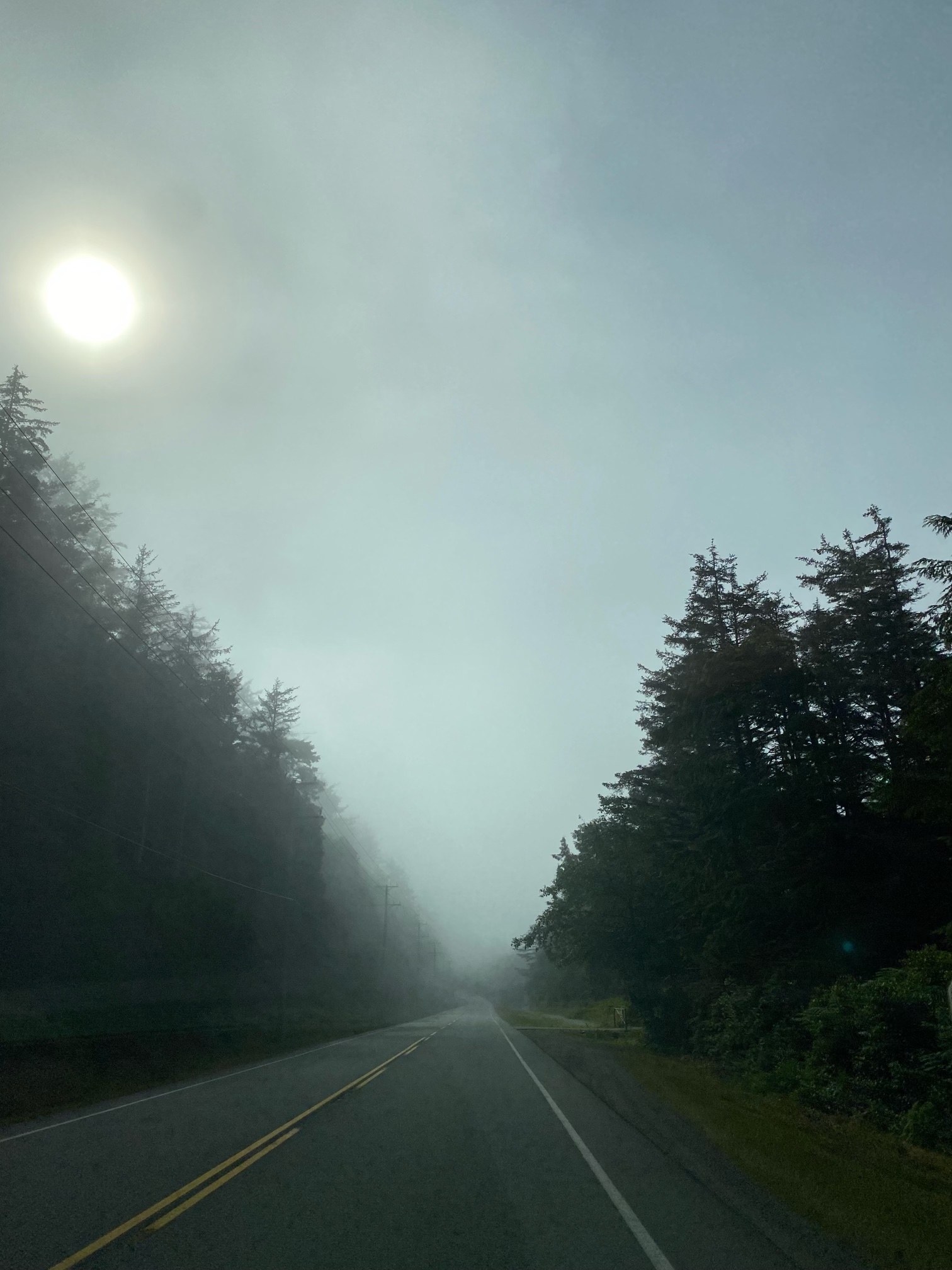
It is a dark night. The cedars drape over the narrow, rocky path, blanketing out what dim starlight shines from the sky above.
A pregnant woman travels with her husband through dangerous territory in a tyrannical age, on the road to Ephrath – a small town on the outskirts of Jerusalem otherwise known as Bethlehem.
Who is this woman with her husband travelling at night?
This story is familiar in the bible. It is Rachel, going where the Lord God commanded. But the story doesn’t end well for Rachel. She dies in labour, on that road to Bethlehem, giving birth to Benjamin. And Rachel’s husband Jacob buries her by the road. He erects a grave in her honour and memory (Genesis 35:16-26).
Generations later, the lamenting prophet Jeremiah picks up the image of Rachel’s tomb on the road to Bethlehem, when the Babylonian captives are forced to march by it into exile (Jeremiah 31:15).
Tonight, Mary and Joseph follow the same path (Luke 2). After passing Rachel’s tomb on the way, Mary would no doubt have remembered the story of Rachel’s tragic end.
When she and Joseph make their anxious way on a dangerous road in the night to be registered in Joseph’s birthplace, what goes through Mary’s mind? Would she, like the faithful Rachel before her, also die on this road in labour? Would she, despite saying yes to God’s call, fail like the captives on their way to Babylon?
That dark night on the dangerous road to Bethlehem no doubt challenged her faith. Anyone who traveled on that rocky, darkened path to Bethlehem was reminded of the often-difficult realities facing God’s people throughout history.
You may be on an uncertain path, this Christmas. Thinking you are nonetheless on the right path, you still question your decision. Because there are reminders along the way from past experiences and memories, that cause you to doubt. And even though you believe you are on the right path, it is dark and hard to see the way. And you question God. Is God even there? Indeed, we travel a dangerous road tonight.
Like the prophet Isaiah, we complain God is nowhere in sight. We cry, O God, “You have hidden your face from us” (Isaiah 64:7).
When we find ourselves in the dark, what do we do?
Like Mary and Joseph making their way on the road to Bethlehem in the night, we can’t wait for sunny days. We keep moving forward in the dark, little by little. Like Mary and Joseph, we move, trusting that whatever challenges we face are already solved. The answer is out there, somewhere in the dark. We just haven’t come across it yet.
Let’s not forget, much of God’s created world relies on darkness as much as light. We need not fear the darkness. For plants and trees, seed germination takes place in the darkness of the soil below the ground. It is in darkness that the roots seek nutrients (Coman, 2024).
We require darkness for birth and growth in the human world as well, not just the seed in the ground, but the seed in the womb, the seed in our souls.
In the dark lie possibilities for intimacy, for rest, for healing. Although we may find journeying in the dark fearsome or confusing, it teaches us to rely on senses other than sight. In the process we learn that darkness bears the capacity for good, gives birth to the good.
What do we do when we find ourselves in the darkness of our own making or what the world has done?
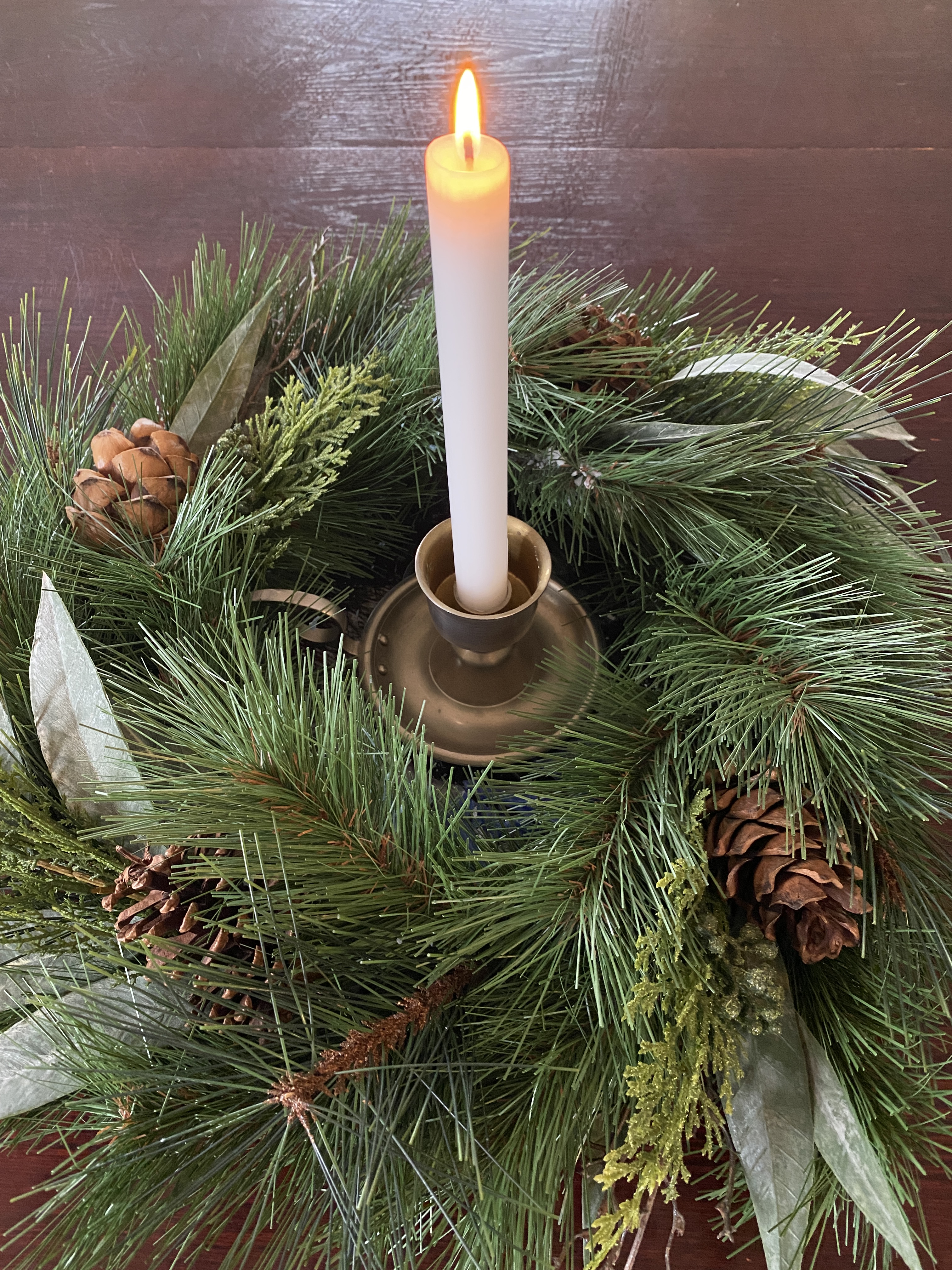
Our work is to name the darkness for what it is and to find what it asks of us. What does the nighttime call us to do? Does the darkness ask a wrong to be made right, for justice to bring the dawn of hope to a night of terror? Does it ask for a candle to give warmth to the shadows, or for companions to hold us in our uncertainty and unknowing, or for a blanket to enfold us as we wait for the darkness to teach us what we need to know?
We need not fear the darkness of this Christmas Eve. It is a holy birth, after all, we celebrate this night.
At home this past Fall we installed LED sensor lights on the outside of the house. Our yard borders on a town pathway that leads into a back field. Sometimes people will take a short cut and walk down that path which has no lighting.
After being installed, two of the three sensor lights worked properly, coming on when sensing movement and shutting off after a minute or so. But the third one would not shut off. It remained on, even during the daytime. And no amount of fiddling with the settings could I get that light to turn off, apart from shutting down all three of them on the same breaker.
It was the light that would not turn off, the light that kept shining in the day when we didn’t notice it. The light was on, even when we didn’t see it.
“God came to us because God wanted to join us on the road, to listen to our story, and to help us realize that we are not walking in circles but moving towards the house of peace and joy.
“This is the great mystery of Christmas that continues to give us comfort and consolation: we are not alone on our journey [in the dark] … Christmas is the renewed invitation not to be afraid and let him – whose love is greater than our own hearts and minds can comprehend – be our companion” (Nouwen, 2004).
“In these … days of darkness and waiting, it may indeed seem that [at first] God’s face is hidden from our sight. But the sacred presence is there, breathing in the shadows” (Richardson, 1998, pp. 1-3).
It is a call to faith, darkness invites. A call to trust in the dawn and the sun that never stops shining. A call to trust in those who come alongside to travel with us to Bethlehem.
On that first Christmas Eve, indeed Mary was reminded of how not so well things turned out for the faithful people who went before her on that dangerous road to Bethlehem.
Yet, if anything, Mary was reminded of how God is there, in the darkness, once again, trying again. Trying again with people of faith to make a place in their lives for the coming of the Lord.
If anything, Mary was reminded that she was indeed on the right path in the dark, going in the direction God was making ready.
Mary Oliver, in her poem entitled “The Uses of Sorrow”, wrote:
Someone I loved once gave me
a box full of darkness
It took me years to understand that this, too, was a gift.
In the Christmas story, God’s face is revealed. The stars in the night sky over Bethlehem shine on a tiny baby’s face. In the midnight hours of that first Christmas, God came into the world in the face of a baby. The dark night gave birth to the greatest gift ever.
Thanks be to God! Merry Christmas!
References:
Coman, S. (2024, December 4). Seeds of hope. Lutherans Connect. https://lcseedsofhope.blogspot.com
Nouwen, H. (2004). Advent and Christmas wisdom from Henri J. Nouwen. Liguori Publications.
Richardson, J. (1998). Night visions: Searching the shadows of Advent and Christmas. United Church Press.

 Raspberryman