Candleholders

We ran into a crisis that, in the end, wasn’t a crisis. In fact, it could not have conveyed the meaning of today more appropriately.

It was the crisis of the candles. Every year, weeks before All Saints Sunday, we do an inventory of the candles that we light in memory and in celebration of the saints we name today. Of course, every year there is a different number of people we remember, and therefore a corresponding number of candles. And sometimes, depending on our stock, we might need to order more.

So, there is a bit of stress, especially if we need to order more and time becomes a factor. This year, our dedicated altar care group assured me that we had enough candles.

But, there was a catch. We had used them before, probably during All Saints Sunday worship last year. Though these candles were all uniform and about the same length, they were not new out of the box. Pause.

When we discussed the situation, I wondered out loud about this belief we have when it comes to celebrations – that every individual deserves their own, unburned candle. It’s like the fact that many people, like myself, share a birthday with someone else in the family. Don’t we deserve our own day? “It must be tough,” some have commiserated with me, “sharing the limelight with someone else!”

Indeed, we tend to centre meaning on the individual. That’s a whole lot of pressure we put on ourselves – to make it or break it! We therefore value self-reliance and seek reward for our individual achievements and successes.

When our faith is dependent on ourselves, individually, we at the same time create a culture in which people have a hard time asking for help. We resist relying on and learning from others. We see that as weakness.

This is one of the lingering legacies of the Reformation. While Martin Luther brought the bible to the people and encouraged a personal engagement with scripture and sacrament, his legacy also individualized faith. The lasting consequence was to leave us believing everything important hangs on the balance of individual decisions.

Consequently our sense of community erodes and our connection weakens not only with each other on earth but with the “mystical union” (Prayer of the day, n.d.) we have with all the saints in heaven, in Christ.

When you grieve the loss of someone special in your life, for example, what do you believe about your connection with that loved one right now? To what degree is the relationship over? And, if you believe it isn’t over, how has that relationship changed?

On All Saints Sunday we counter the tendency to individualize everything, and affirm instead that we stand on the shoulders of those who have gone before us. We light candles that have already burned before! In our baptism we unite with all the saints on earth and heaven. As Luther famously said, we belong to the priesthood of all believers, in every time and every place. Each of us belongs to and is part of something much bigger than ourselves.

The foundation of our faith is not our individual decision to follow Christ but rather our confession of being held in the communion of all the saints whose foundation is Jesus Christ. Our faith is not alighted on the merit of our own individual efforts. Our faith is lighted up because the flame has always been shining and showing us the way, going before us all.

My brother tells of a recent mystical experience of connecting with our dad who died five years ago. His telling of the story is published in the recent edition of “Eternity for Today” (Malina, 2024):

“I was going through a rough week,” he writes, “questioning a lot of things. It was two o’clock in the morning, and I had been tossing and turning in bed for hours. Just as I was finally drifting off, there he suddenly appeared before me, unquestionably my dad. I jolted in surprise. His smiling and jovial face had never seemed so vivid and warmly familiar.

“And he told me something I so needed to hear, words which not only encouraged me, but also affirmed my faith in an inter-connected universe where the eternal and material dimensions weave together in undetermined ways, where God’s love in Jesus binds us all in heaven and on earth: ‘Be at peace. Don’t be afraid. Just keep going. One step at a time. I am with you. God is with you’” (p. 30).

Even and especially when we grieve our losses, we discover other ways we are connected. We may even be able to affirm that the relationship is not over, it has only changed. And maybe then we discover new roles and new ways of being in relationship.

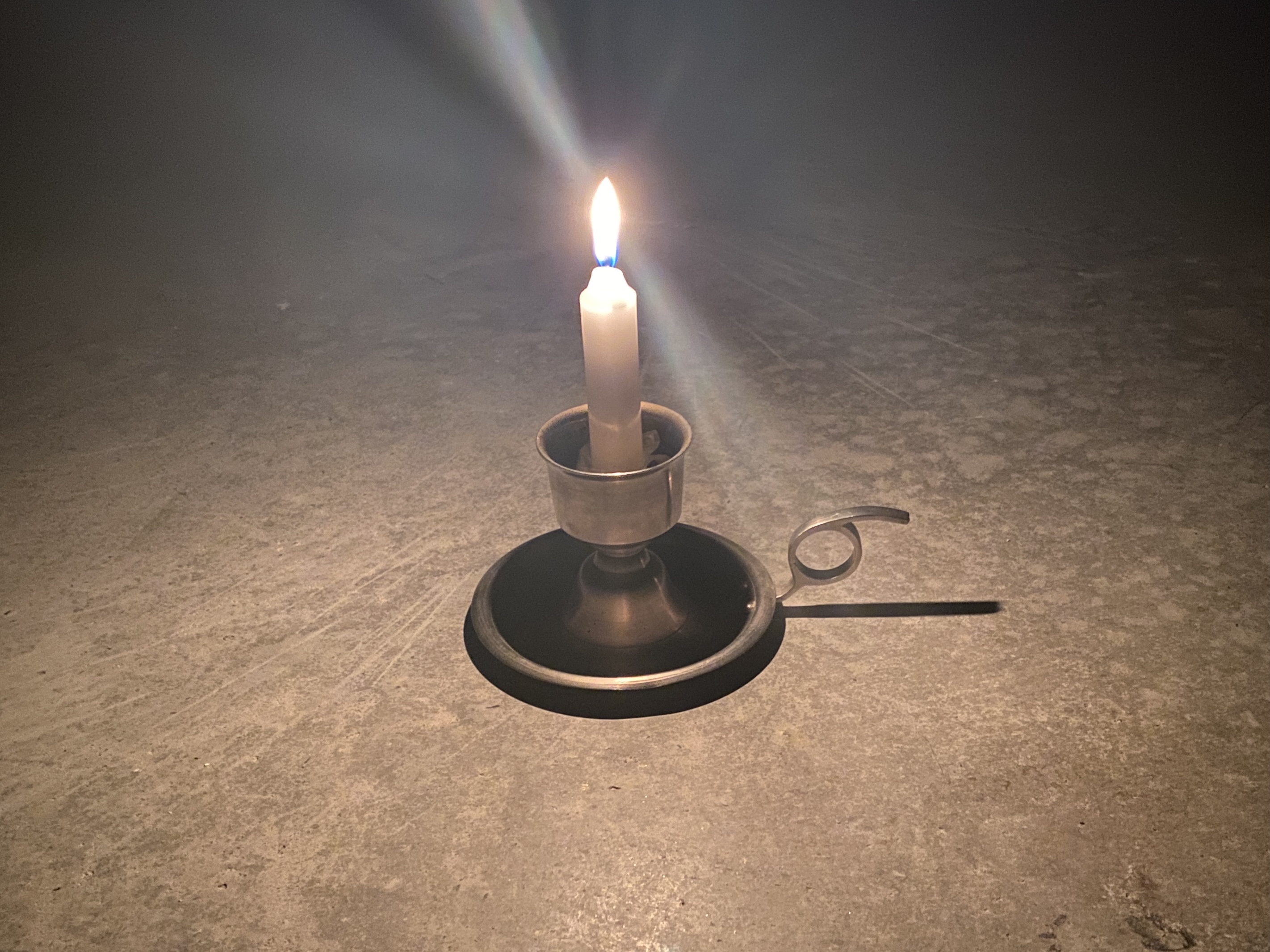
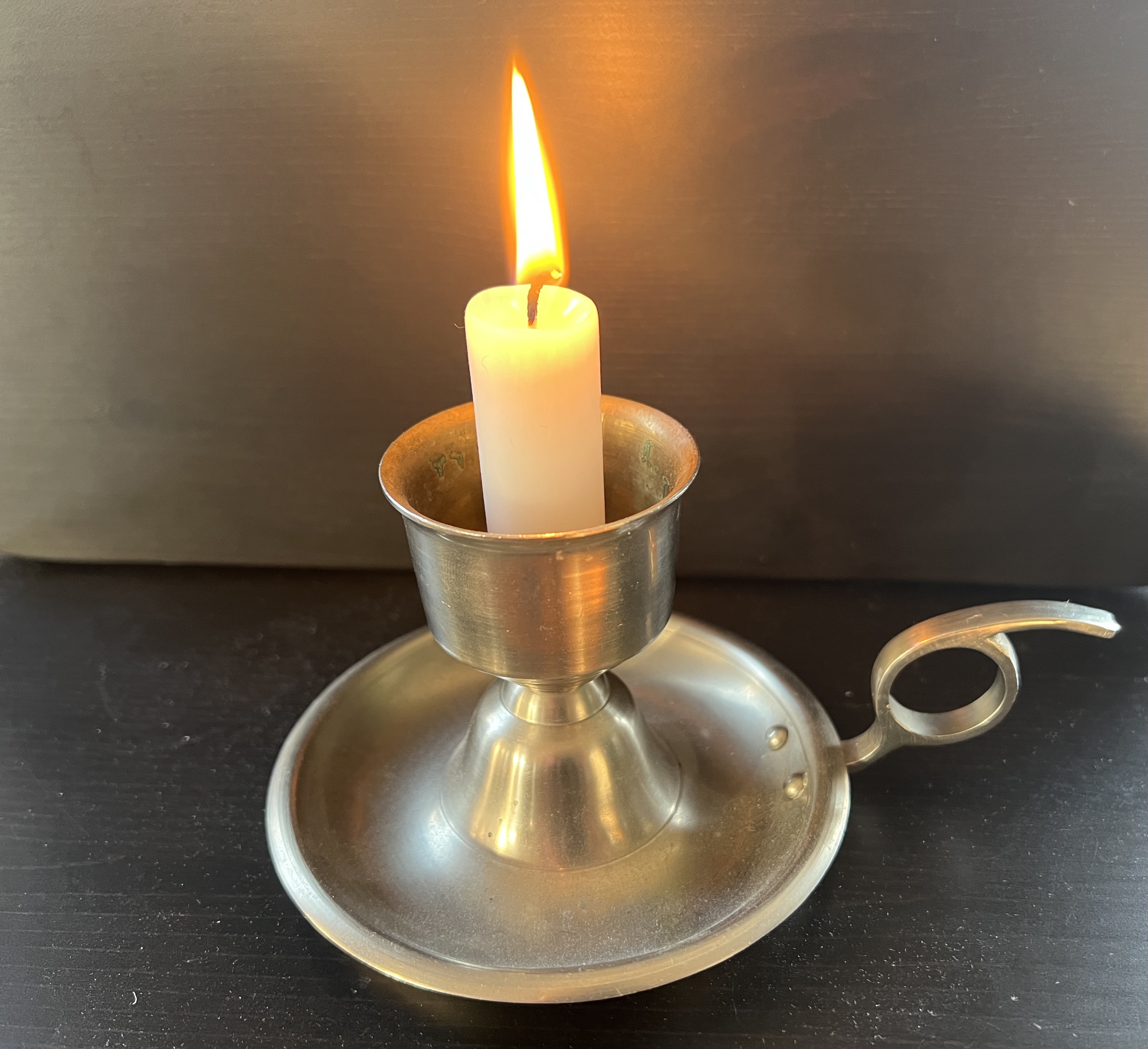
In their book, “Beyond Saints and Superheroes”, authors Allen Jorgenson and Laura MacGregor challenge readers to re-envision our identity in community to be like candleholders rather than trying to be the light ourselves (MacGregor & Jorgenson, 2023).

So, we hold others, especially those unlike us with needs different from our own. And we empathize with them. But true empathy is “not about imagining how you would think or feel in the given situation. Rather, it is about imagining how someone else feels in the situation they are in” (Morris, 2018, p. 171).

This shift in thinking moves us out of our individual self-preoccupation to an other-centred way of thinking. To do this, we first practice simply—but perhaps not easily—just being with another rather than compulsively doing for another. When we can simply hold space with others, the tiny flame has oxygen to breathe, so the light of Christ can shine brightly for the world to notice.

When we practice just being with someone else, we love them by meeting them where they are at. When they have that sense of being seen, that they matter. In that space of grace, then, we recognize the light of Christ which, although it may appear fragile and small, actually gives enough light in the night for all to see.

Listen to the words of Professor Jorgenson who wrote this poem called “Candleholders” :

“Yesterday was All Saints’ Sunday at church and candles lumined the nave to honor the departed, the beloved, the beleaguered.

“We were invited to light one for a soul deep in our heart, and I walked to the altar and lit a candle in honor of you… sadly missed…

“The candles were variously held by brass, by glass holders. Some votives sat free. I took one of these and tipped it toward the Christ light. As it flamed, I breathed a prayer of thanks. I set you – on fire – into a bed of sand, imagining holding your hand once again, but no, you were grasped by grains of sand without number.

“I pondered you then, with all the saints: each one different, each one the same, each one broken, each one whole – together a circle of support.

“As I made my way back to the pew, I thought I heard you say:

“Today is All Saints Sunday, but each day is holy, as are we, as we hold each other and so the Christ” (MacGregor & Jorgenson, 2023, pp. 110-111).
References:

MacGregor, L., & Jorgenson, A. G. (2023). Beyond saints and superheroes: Supporting parents raising children with disabilities: A practical guide for faith communities. Mad and Crip Theology Press.

Malina, D. (2024, October 22). My dad in my dreams. Eternity for Today: Daily Scripture Reading for Reflection and Prayer, 60(4), 30. Evangelical Lutheran Church in Canada.

Morris, S. (2018). Overcoming grief (2nd ed.). Robinson.

10,001 smiles: a sermon for All Saints

The war continues in the middle east, in lands long considered ‘holy’. The violence there today has confounded us, saddened us, grieved us to the core. Even though many here may not have close connections to the region, we nevertheless feel a great and unresolvable human travesty continues to happen in a place that feels anything but holy.

Even pithy old sayings don’t seem to make sense anymore. Have you ever used this one: “Those who cannot remember the past are condemned to repeat it.”?[1] As if the problem can be solved merely by knowing more facts about history.

We are coming to realize, however, that the solution is not just knowing more. Rather, we need to learn how to know. What version of history? Whose history are we listening to? There is more that needs to happen than defending a certain point of view, right or wrong, if this conflict will ever end.

This is probably why Albert Einstein, the greatest mind of the 20th century, said decades before the current conflicts in the Middle East first erupted: “Imagination is more important than knowledge. Knowledge is limited. Imagination encircles the world.”[2]

Jesus’ preaching doesn’t satisfy the analytical, rational mind. The Beatitudes are not easy to understand from a rational perspective.[3] How can the poor be blessed? How can the reviled have their reward? How can the peacemakers lead the way to the kingdom of God? Our rational world is at complete odds with the meaning of blessing and saintliness.

If you asked someone today to describe people who are saintly, they probably wouldn’t respond by quoting the Beatitudes. More to the point, we have a pretty good idea of what makes a blessed life: Blessed are the rich … Blessed are the sexy and glamorous … Blessed are the powerful … Blessed are those who get everything they want … Blessed are those who are famous …[4]

The paradoxical style of Jesus’ teaching instead activates another part of our minds and hearts— the intuitive, imaginative mind. It’s a knowing that the heart knows full well even if the left brain can’t contain it. You have to experience the love of God yourself. The solution is having a change of heart.

Today is the festival of All Saints. The Protestant reformation made the bold claim that we are all saints. Martin Luther said this is possible because at the same time we are all sinners.[5] Maybe it’s not easy to understand this. But at the heart level, it is because all the saints in history were also all human beings living a very human life. They made mistakes. They weren’t always faithful. They were afraid, anxious and angry at times. They had their passions and desires.

Yet the truth is, despite their sin, even because of their sin, these saints were beloved by God. It is a simple truth when before we engage our minds, we open our hearts to it.

Saint Bonaventure taught that we are each “loved by God in a particular and incomparable manner …”[6] Other saints of old, such as Francis of Assisi, taught that the love of God for each soul is unique and made to order. And that is why any “saved” person feels beloved, chosen, and even ‘God’s favourite’. God’s love is always and precisely particular, and thus intimate.

Many people in the bible also knew and experienced this specialness. Yes, ‘secret’, or even ‘hidden secret’ is what King David[7] and other saints of old—such as Saint Paul—called this special, particular love of God for them. The love of God is not something you can explain. It must be personally experienced: Because God seeks and desires intimacy with each human being.

And once we experience such intimacy, we forgive ourselves. We know our sin, our shortcomings. We have failed. Yet, at the same time, we are unconditionally loved. Once we experience such intimacy, we recognize it in the other. It is not a selfish love, not a what’s-in-it-for-me mentality; that’s the calculating left-brain, analytical side, again.

Rather, it’s a generous, giving kind of love based on the vision, the expansive imagination, of God’s love for all people regardless their skin colour, their religion, their political ideology, etc.

Today we not only name the new saints, baptized in the last year, we also remember our beloved saints of old. An important part of marking All Saints is recalling to our imagination those who have made a difference in our lives, people who took the time to teach us and show us—maybe even from childhood—that we are deeply loved by God.[8]

How do we remember someone? What is their legacy? More importantly, how does their legacy affect your behaviour, your being, in life today? So, I ask you to bring to your mind a vision of your loved one. What do you see?

The late American writer Brian Doyle wrote a poem about his sister. And her smile is what he remembers about her—seen in his mind’s eye. He writes a poem entitled, “Ten Thousand Smiles”:

“I was just calculating that my sister, whom I have known for 700 months, which is nearly three thousand weeks, which is nearly twenty thousand days (which is a remarkable number of days when you think about it; I mean, that’s a stunning heap of pain and laughter), has smiled at me roughly 10,000 times, give or take a few thousand. Now, did she also occasionally snarl and shriek? O yes she did.

But ten thousand smiles, that’s a remarkable number of smiles, and I want to stay with the smiles here. Q: what are the cumulative effects of so many smiles? Can you get smile burns? Can your interior warmth go up a point after so many smiles? Does each smile register somehow permanently in you, like a scar? Can you get smiling scars?

We can see the effect of smiles on faces, the cheerful lines that smiles cut in skin after years of use; do smiles also get cut into people who have been smiled upon? If everything we know about everything is hardly anything, could smiles be food?”[9]

God smiles at each of us. That’s the vision of God we must hold on to. God’s face turns to us in Christ and we are welcomed with arms outstretched. When our hearts find their home in the love of God for each of us, we are indeed, all of us, saints in Christ.

Pastor Ted told me of an “accident” that happened during the worship service one All Saint’s Sunday service in a former parish of his years ago. The white pillar candles were all lighted in a row on the altar—remembering each one of the saints.

As the candles burned down during the service, he realized with growing concern the problem: There was a draft coming across the altar. And the candles were too close to each other. It had been a busy year. The flames from the candles, therefore, conspired to melt the wax in an accelerated, agitated fashion. By the end of the service the melted wax pooled quickly into one amorphous blob covering most of the altar.

All of it belongs to the One. It may be hard to believe. But God’s love overcomes whatever is between us, whatever separates and divides us. In our common humanity, like all the wax pooling together on the altar, we find our unity in the Creator who lovingly made us all in God’s image.


[1] The quote is attributed to writer and philosopher George Santayana.

[2] “What Life Means to Einstein: An Interview by George Sylvester Viereck,” The Saturday Evening Post, October 26, 1929: 117.

[3] Matthew 5:1-12; the Gospel for All Saints Sunday, Year A (Revised Common Lectionary).

[4] Diana Butler Bass, “Unexpected Saintliness” Sunday Musings (Substack: The Cottage /Diana Butler Bass), 5 November 2023.

[5] simul justus et peccator; simultaneously saint and sinner.

[6] Cited in Richard Rohr, “God’s Passionate Love” (Daily Meditation: http://www.cac.org, 22 October 2023).

[7] Psalm 25:14

[8] Lindsey Jorgensen-Skakum, “Blessed Saints” Eternity for Today (Winnipeg: ELCIC, 1 November 2023).

[9] Brian Doyle, “Ten Thousand Smiles” The Kind of Brave You Want To Be (Minnesota: Liturgical Press, 2016), p.52.

The Communion of Saints

audio for “The Communion of Saints” by Martin Malina
Rising for the Saints in Light (photo by Martin Malina, 30 October 2022)

Part of what we do today is giving thanks for the saints who have gone before us. But this celebration is not without some heaviness on our hearts as we confront our loss. 

We grieve because the loss underscores the separation from our loved one that we feel in death. And yet, the separation is just the tip of an iceberg that reveals a larger, more enduring truth. 

The late Vietnamese monk and author Thich Nhat Hanh wrote of experiencing a tender connection with his mother in a dream: “The day my mother died,” he wrote, “A serious misfortune of my life arrived. I suffered for more than one year after the passing away of my mother. 

“But one night, in the highlands of Vietnam, I was sleeping in the hut of my hermitage. I dreamed of my mother. I saw myself sitting with her, and we were having a wonderful talk. She looked young and beautiful, her hair flowing down. It was so pleasant to sit there and talk to her as if she had never died. 

“When I woke up it was about two in the morning, and I felt very strongly that I had never lost my mother. The impression that my mother was still with me was very clear. I understood then that the idea of having lost my mother was just an idea. It was obvious in that moment that my mother is always alive in me.

“I opened the door and went outside … Each time my feet touched the earth I knew my mother was there with me. I knew this body was not mine alone but a living continuation of my mother and my father and my grandparents and great-grandparents. Of all my ancestors. These feet that I saw as “my” feet were actually “our” feet. Together my mother and I were leaving footprints in the damp soil.”[1] 

The weight of grief becomes heavier when we believe it’s ours alone to bear. We are conditioned by our culture to be by ourselves with both the pain of grief and the stress of responsibility. For example, when anyone would suggest we are saints, we might therefore resist the notion. Martin Luther claimed we are both saint and sinner. We have no problem accepting the sinner part. But how could I, by myself, aspire to and achieve sainthood?

Sinner and Saint, Grief and Responsibility.

We’ve internalized the hyper-individualistic view of faith and salvation, buying into the idea that “my spirituality is private, that my spiritual growth has absolutely nothing to do with my community, my ancestors—the cloud of witnesses, those I knew directly and indirectly—as well as the countless number of people who have influenced me or even those I myself have influenced.”[2]

And that is why the other part of what we do today is celebrate the newly baptized saints—the infants we welcomed into the Body of Christ earlier this year. Infant baptism reminds us that we go on the journey of faith, not alone, but with others.

So, today we build a bridge—liturgically speaking—between those who have gone before us, and those who are coming after us. We do this to emphasize that “…we are saved not by being privately perfect, but by being part of the body, humble links in the great chain of history. 

“This view echoes the biblical concept of a covenant love that was granted to the people of God as a whole and never just to one individual like Abraham, Noah, or David.”[3]

We would not be complete if faith was only about achieving the prize at the end as individuals. For hockey fans, you might recognize the following names: Phil Housley, Marcel Dionne, Jarome Iginla, Adam Oates, Mats Sundin, Dale Hawerchuk, Mike Gartner, Roberto Luongo, Peter Stastny, Pierre Turgeon, Daniel Alfredsson. What do all these great NHLers have in common besides their outstanding individual achievement in the game?

Not one in that list ever won the Stanley Cup. Which is the prize, isn’t it? The whole point of playing and the goal of professional sports is to eventually win the championship. And you can only do that on a team. With others, pulling together, sharing your gifts, drawing on resources and trusting each other to do what you are good at doing.

Today we do our part to build this bridge. And this bridge is a bridge of love and trust. In our lives of faith, we build bridges of love and trust, especially for the next generation coming afterwards. The important thing to acknowledge and celebrate today, for all of us, is that we be bonded somewhere. Because if you have never loved, and cannot trust anyone, there is no bridge.[4]

Neither the grief nor the responsibility is ours alone to bear, as individuals. When the confirmation class debriefed our act of grace in giving pies to homeless street people last week, we confessed that to do so by ourselves would be very difficult. Even impossible.

But if we all held hands on the edge of the cliff of faith, and jumped together, taking the risk of faith together, we could do it and do it well. 

What is more we may be surprised to find that after jumping we did not fall to our demise on the rocks in the ravine far below. Rather we would find ourselves standing firmly on a bridge—the bridge built by love and trust—connecting us with God and the vast host of earth and heaven. We are, after all, part of the body, the communion of saints of all times and places. 


[1] Thich Nhat Hanh, No Death, No Fear: Comforting Wisdom for Life (New York: Riverhead Books, 2002), p.5–6.

[2] Kat Armas, Abuelita Faith: What Women on the Margins Teach Us about Wisdom, Persistence, and Strength (Grand Rapids, MI: Brazos Press, 2021), p.33–37.

[3] Richard Rohr, Part of One Body: Keeping Faith With Our Ancestors (Daily Meditations, www.cac.org, 1 November 2022)

[4] Rohr, The Continuum of Life, ibid. (30 October 2022).

Candle-lighting faith

photo by Martin Malina
audio sermon for “Candle-lighting faith” by Martin Malina

Why do we light candles in the church? When there is enough natural and electrically generated light to help us read and hear the scriptures, the music and each other—why do we need candles? Why act in this rather impractical, ritualistic way? It may seem odd to us who abide so often by the common-sense rule of life. Why do we bother?

One reason is to honour a historically based tradition: From centuries ago and before, when Christians didn’t have electricity and they depended on candlelight to be able to read the scripture during worship.

Moreover, early Christians often met underground. They met in hiding. They burrowed in secret places. Persecuted and outlawed, they gathered in the catacombs, away from the sunlight. They needed light even during the daytime. So, they lighted candles. 

Candle lighting honours the history of Christianity born out of division and beset by war through the centuries — Christian fighting Christian, Christians fighting everyone else, for that matter. Most of the letters in the New Testament—the Epistles—were written to fledgling churches held in the grip of division, in-fighting and conflict.

We light candles every time we worship to recall this turbulent history and honour the memory of our forbearers who needed light in a world full of hostility, war, death and evil.

So not only did they light candles for practical reasons to help them worship. Their act of lighting candles declared their faith, their common faith, in God. Lighting a candle meant that God’s light shines even in the face of death, “where the shadows lengthen and when the evening comes.”[1]

There isn’t a Halloween that goes by that I don’t get asked at least once what Christians should do or not do about Halloween. Many Christians are ambivalent towards this annual, cultural festival of dressing up in costume, playing spooky music, going trick-or-treat-ing, and otherwise celebrate being frightened. Why, where so much of the imagery surrounding Halloween focuses on devils and demons would Christians even go there? There’s enough evil in the world, we say. Why participate in a cultural event that only appears to fuel what’s wrong in the world? And so, many Christians have boycotted dressing up and being spooky and all.

Now, if death does have the last word, then we are indeed all lost and it doesn’t matter whether we participate in Halloween or not. If there is no one we can trust, no words of hope we can believe in, no story of redemption, promise and resurrection, then it is indeed a despairing world we live in. And there is no good news to speak of.

Maybe we forget that Halloween is a “hallowed-eve”, the eve before All Saints Day. Just like Christmas Eve precedes Christmas Day, just like Good Friday precedes Easter. The eve of All Saints—hallowed eve—is not the end of the story. Halloween does not have the last word.

Our Christian ancestors would therefore recognize Hallowe’en as the night when you stared at, and stared down, death. “Just as we know the answer to Good Friday is not despair but Easter, so the answer to Hallowe’en is not fear but All Saints.”[2] The answer to Hallowe’en is the joy and promise and unity of All the Saints in light!

We can face our fear of death and trust in the promise of the next day. Halloween can simply function as an exercise of our faith! We don’t need to succumb to the shadows. We don’t need to give in to despair. But we must face our fears honestly and courageously. This is what we do when we light a small candle of faith.

We light candles today and every Sunday as an act of faith. Because while we don’t need extra lumens to help us follow the music, read the text, and watch the screen, we confess that the word of God is given to a world shrouded in fear, hatred and anxiety. The word, as the assigned scripture for All Saints announces, is given precisely to those who are “thirsty”[3] and who come to the water to drink. 

We are the needy and vulnerable. We live with our own shadow and perceive the evil in the world around us. We are burdened by our own sin and weighed down, even lost, in this divided world. We grieve our losses and feel deeply the pain of death. 

And we are not alone.

We light candles to remember those in the past who have made it to the finish line faithfully, despite the warring factions and struggles in their lives. We light candles to celebrate the gift of life and love given to them in this divided world. We light candles to affirm our faith that the smallest flame can ignite our imaginations and our hope in the vision of God — “the new heaven and the new earth,” where God shall be and where God isat home with us, where all divisions will cease, and no one will be alone. Ever.

Indeed, a small flame we light. And faith is born. This is a vision that is trustworthy and true.

So, we light candles out in the open. Jesus said, “No one after lighting a lamp puts it under the bushel basket, but on the lampstand, and it gives light to all in the house. So let your light shine before others, so they may see your good works and glorify your Father in heaven.”[4] We will not hide it under a bushel, oh no. We will shine brightly, share God’s love and light to the world. And we will live into our baptismal call to love others and give of ourselves to the vision of God.

“This little light of mine, I’m going to let it shine. This little light of mine, I’m going to let it shine. This little light of mine, I’m going to let it shine. Let it shine. Let it shine. Let it shine.”[5]


[1] Prayer at the time of death, “Funeral” Evangelical Lutheran Worship (Minneapolis: Augsburg Fortress, 2006), p.284

[2] Br. James Koester, “Halloween”, www.sje.org, 31 October 2017

[3] Revelation 21:1-6, reading for All Saints Sunday, Year B, Revised Common Lectionary.

[4] Matthew 5:15-16

[5] “This Little Light of Mine” Evangelical Lutheran Worship, ibid. #677

God of disorder

In the last couple of weeks of October walking around our neighborhood, Jessica and I noticed how many people had already put up Christmas lights on their front yard trees and on their houses. I don’t think I can remember a year that folks were already decorating for Christmas to this degree when Halloween hadn’t yet happened.

I suspect many of us are eager to get on with it. In this pandemic when so many of our cherished, social routines have been dismantled, we just want 2020 to be over. Maybe the sooner Christmas can come and go, the better. It could be like pressing hard on the gas pedal even when you know there isn’t much gas left in the tank; a give-it-all-you’ve-got just to get to the finish line of 2020. I wonder if hanging up Christmas lights now is also about trying hard to resist staying in the moment of this disordered time. 

It’s like frantically paddling in a rapid, thinking that the harder and faster we paddle the sooner we can get through the rough patch intact. Doesn’t matter how you paddle or what skill you bring to bear on the situation, just park your brain and book it.

But sometimes the best thing to do is the counter-intuitive thing – to loosen our grip, relax our compulsion and breathe into the moment, even if that moment is mired in the chaos of rapidly changing times. 

When I celebrated my birthday last week I didn’t know how I could enjoy the day and week which was packed full with zoom meetings, appointments and visits. And especially when we weren’t setting aside time to go out to eat at a new restaurant, catch a movie in the theatre or attend a concert at the NAC like we normally would pre-covid.

Even though I didn’t celebrate in the usual way, I was surprised by the joy I felt in simply seeing the faces of people I knew on the computer screen who were sharing an imperfect yet cherished moment together. I was truly grateful.

I agree with Bishop Pryse who told some of us on one of these zoom calls that physical distancing doesn’t mean we have to be socially distant nor ‘soul’ distant. To get there, though, we need to appreciate, in a new, perhaps previously unrecognized way, the gift hidden within the disorder.

The Gospel text for All Saints’ Sunday this year are the Beatitudes from Matthew 5 (1-12). These sayings from Jesus at the beginning of a long sermon he gives don’t get as much air time as the Ten Commandments from the Hebrew bible. It is no wonder the Commandments are more popular because they point to ‘order’, or an ordering of life. Lutherans have traditionally lifted up the value of ‘good order’ to justify the roles of ordained leaders and the general functioning of the church and society.

The Beatitudes, on the other hand, even though these are words from Jesus, almost encourage disorder, with their weeping, longing, poverty and the endurance of persecution.[1]The words that follow each “Blessed are …” statement describe states of being in a disordered life or circumstance. We are not naturally drawn to these situations.

And yet, these Beatitudes may come to us today as a gift in these times of pandemic fatigue and physical restrictions. The Beatitudes suggest that God is also in the disorder. Perhaps if we placed more emphasis on the Beatitudes of Jesus we could begin to believe in the valuable lessons and experiences that come out of times of dismantling and disruption.

Generally speaking, disorder is the second stage of a three-part journey. Life moves dynamically from order, to disorder, to re-order – again and again. The Christian dynamic is true: Life, death, resurrection – again and again. It happens. It is true – in nature, in the changing seasons, in the economy, in all human institutions, relationships and lives. Order, disorder, reorder.

There is hope in the disorder. If you read on in chapter 5 of Matthew’s Gospel, as Jesus continues his Sermon on the Mount, Jesus reinterprets the Law. Six times in a row he says: “The Law says … but I say”[2]Jesus takes what he has been given, and makes something new out of it.

In this time of disorder, God is reinterpreting our lives. God is cleansing our intentions, exposing our weaknesses, making us honest and pressing the reset button on our lives. After all, Christianity has used the language of being born again. The first birth is not enough. We not only have to be born, but re-made. “The remaking of the soul … has to be done again and again.”[3]

There’s never a going back to the way things were. Never was. Grief over a loss of a loved one is the hard school of learning that truth. The past is not rejected nor obliterated from the landscape of our lives; we don’t forget our loved ones who have died. It’s more that we grow, like a plant, out of the past into the new thing that emerges in our lives. It is a growth that includes and transcends the past. 

In this time of disorder, we can have hope that we are on the way, however slowly this happens, to a new dawn and new beginning. And it will start with love, and loving others in the disordered places of our world.


[1]Richard Rohr, What Do We Do With The Bible? (New Mexico: CAC Publishing, 2018), p.37

[2]Matthew 5:21-48; see Rohr, ibid., p.49.

[3]Richard Rohr, ‘Order, Disorder, Reorder: Part Two’ Daily Meditations (www.cac.org, Sunday, August 16, 2020)