
The Mary-and-Martha Gospel story (Luke 10:38-42) reminds me of what sometimes happens when family and/or friends gather around a table on a holiday or to celebrate some special occasion. Over the meal, each person has a different take on the subject matter at hand. Everyone has their own opinion.
After years of regularly encountering this Gospel in the lectionary, and preaching countless sermons on it, I have concluded that there are at least three characters sitting around our table today. These three characters represent my own evolution of understanding this Gospel story. They are the Literalist, the Rebel, and the Peacemaker.
The Literalist is the first to speak. The Literalist reads this Gospel and concludes that Mary is the person that we all should model: the one who is quiet and listens to Jesus and doesn’t worry at all about the practical aspects of hosting Jesus and his entourage. While the mundane activities need to be done, we are called instead to aspire to the true, higher, spiritual gifts.
The Rebel, as you might guess, jumps right in. The Rebel resists the Literalist’s interpretation and declares their objection. They see it in the opposite way. Martha is the true hero, and Jesus is unfair in admonishing her. After all, the practical aspects of hosting a party are vital in healthy relationships and community building, not to mention how dominant cultures have tended to diminish and marginalize women who traditionally did these more active, practical things.
Finally, the Peacemaker quietly interjects. The Peacemaker will argue that both roles, or postures, are important to balance in any community or within any individual. Jesus isn’t taking sides in this debate. Rather, he directs his comments to the way Martha goes about her task, “worried and distracted by many things” (Luke 10:41). Whether we are active all the time and busy in our service to God, or praying in silence and resting in stillness and holy presence, distraction is the real culprit.
If you were invited to this table, and you came, where would you sit? And with whom? The Literalist? The Rebel? The Peacemaker? Or … is there yet another voice that needs to be heard?
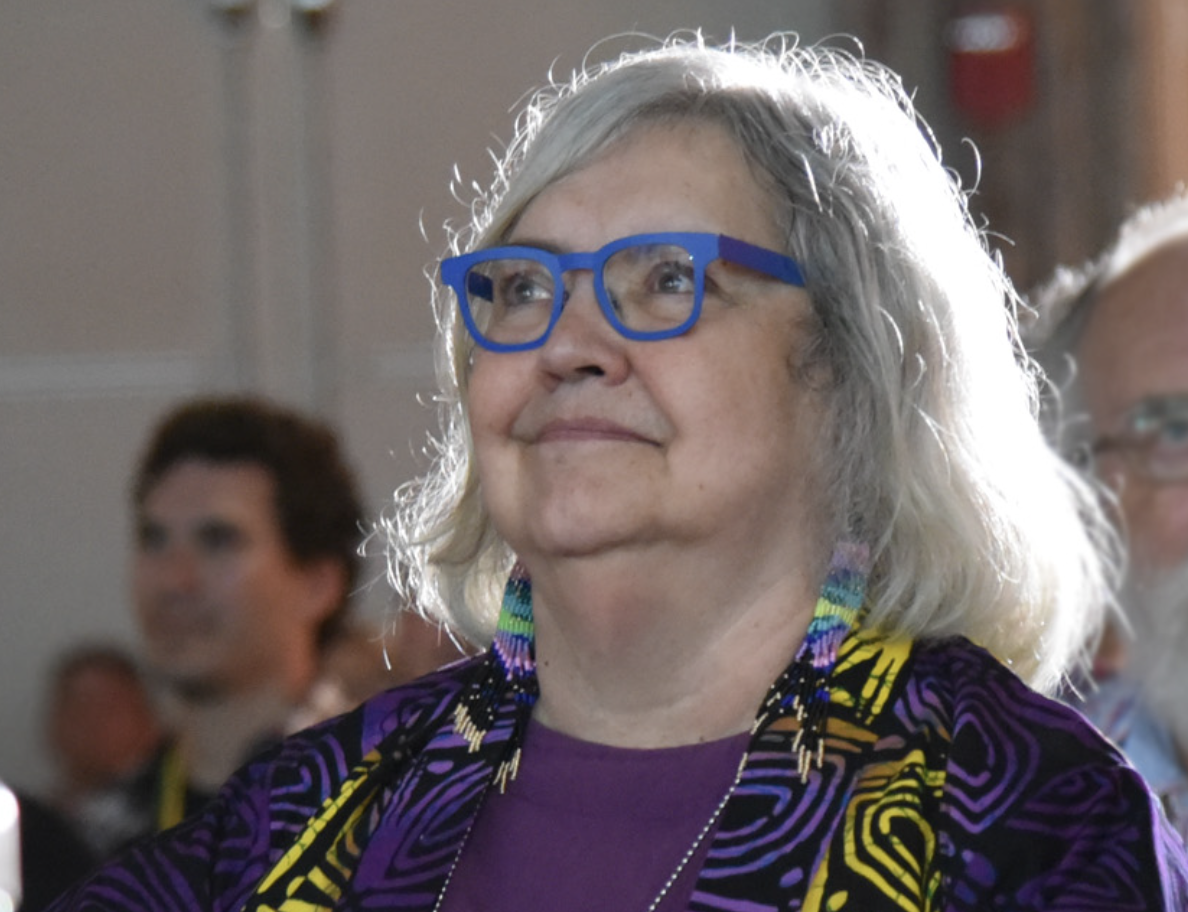
In the farewell tribute and celebration of outgoing national bishop Susan Johnson at the national convention of the ELCIC last week, a speaker and close friend of Susan’s, Willard Metzger from the Mennonite Church and current director of the Citizens for Public Justice (CPJ) talked about the strengths in Bishop Johnson’s ministry (www.elcic.ca).
He spoke about how Bishop Susan knows who she is. She is strong in her personal identity. In other words, she has an abiding love of self despite all the challenges she had faced, both personally and professionally, in her 18 years as bishop.
Willard went on to say that our love for God is affirmed when we love ourselves. Why? Because God created each of us. Each individual is created out of the love of God. It is fundamentally crucial as Christians to continually work at loving ourselves because God created you, made you, fashioned you in God’s image. We would then compassionately correct any messages we might tell ourselves, or the world might tell us, to the contrary.
Here’s another voice, another way of interpreting the Gospel. What shall we call this character? The Lover? It’s not about whether it’s better to be active and serving, attending to others and being hospitable in practical ways. Neither is it better to be contemplative, and reflective and sitting at Jesus’ feet. It’s not either/or.
It was that Mary knew who she was, was strong in her own identity, and loved herself enough to know that she just needed to do the one thing she was about and be who she was, at that point in time. The “better part” that she had chosen was that she chose to be herself without trying to be someone and do something she was not. She didn’t need to please someone else or fulfill their expectation of her. Jesus said it: Who she was and what she was about could not, “will not be taken away from her” (Luke 10:42).
This year, the national church has embarked on a restructuring process. During the convention the facilitators of the restructuring process engaged convention delegates, visitors and staff in an activity which I would like to practice here today, with you.
To begin with, the activity had us pair off. So before doing anything, turn to one person sitting beside or close to you and introduce yourself to them. It’s best to break the ice before diving in to do this exercise. If you are watching online with another person, you can do this with them at home.
The aim is to tell a story, together. I’ll start you off by saying, “Once upon a time ….” Then one of you will start telling your story by saying just one word. Then the other person will respond, but with just one word. And back and forth you go, taking turns but with just one word at a time.
Before you begin we need a general theme that will govern all our stories. So, what country or place in the world would you like to visit? …. What activity would you like to do there? ….
Ok, the story you will create together with your partner will be in this place and revolve around this activity. But remember, you say just one word when it’s your turn. I’ll give you a couple of minutes to do this, ok? Ready? “Once upon a time …” Go!
Time’s up! What was one challenge you may have encountered in the exercise? You may have had an idea about where the story should go. But then your partner would say a word that totally threw you off. They, obviously, can’t read your mind. And they might very well rather take the story in a different direction.
For the exercise to be productive, both partners need to get past themselves, listen carefully, and join together in telling a story that emerges from both, without preconception. You are co-creating in the moment. And hopefully having some fun along the way.
The exercise taught me that there is a difference between my story, and a story. There’s a difference between my story, and our story. And it’s not that my story is bad, or lacking, or not good enough. Refer to my earlier point about loving ourselves.
Each of us is beloved and has value and worth and beauty. You and I need to know who we are as individuals. We need to rejoice and celebrate in our particular, unique gifts that each person brings.
At the same time, we need to share and engage each other in relationship, and work together, respecting each other’s gifts. We co-create a new story, an emerging story. This can be exciting, and scary at the same time.
However your close relationships are organized, however community happens for you, despite and maybe because of our differences, the family still gathers around the table, as we will at the Holy Meal shortly. We reach out to make meaningful connections.
And perhaps this is the grace. Even though the people sitting around the proverbial table may be very different in their outlooks and interpretations and politics, we still gather and hear each other out. We practice being in community. And God continues to love each one of us, and the church.
Let us rejoice and give thanks in the story that God tells through us.
Thanks be to God!
 Raspberryman