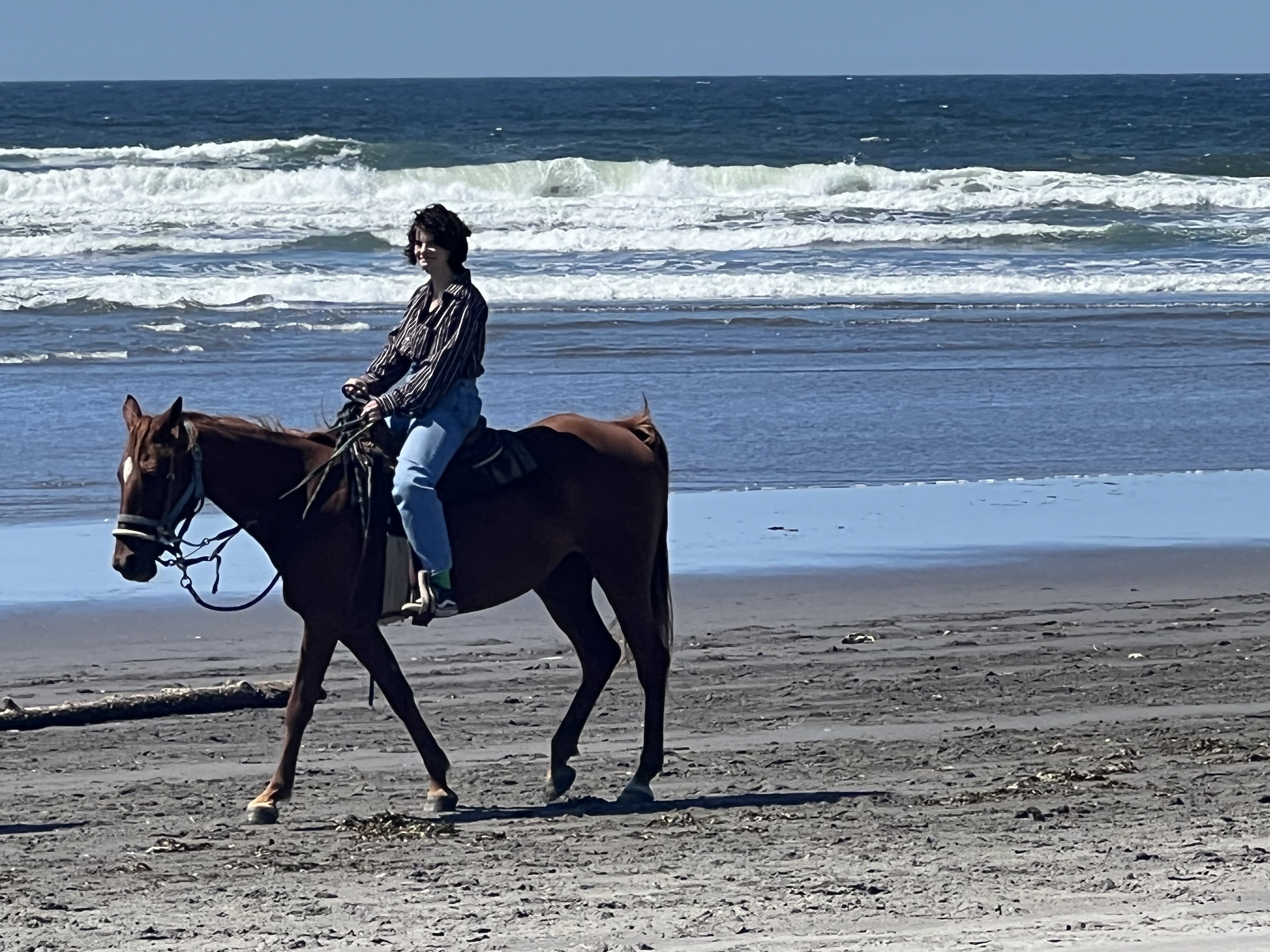
Candleholders

We ran into a crisis that, in the end, wasn’t a crisis. In fact, it could not have conveyed the meaning of today more appropriately.

It was the crisis of the candles. Every year, weeks before All Saints Sunday, we do an inventory of the candles that we light in memory and in celebration of the saints we name today. Of course, every year there is a different number of people we remember, and therefore a corresponding number of candles. And sometimes, depending on our stock, we might need to order more.

So, there is a bit of stress, especially if we need to order more and time becomes a factor. This year, our dedicated altar care group assured me that we had enough candles.

But, there was a catch. We had used them before, probably during All Saints Sunday worship last year. Though these candles were all uniform and about the same length, they were not new out of the box. Pause.

When we discussed the situation, I wondered out loud about this belief we have when it comes to celebrations – that every individual deserves their own, unburned candle. It’s like the fact that many people, like myself, share a birthday with someone else in the family. Don’t we deserve our own day? “It must be tough,” some have commiserated with me, “sharing the limelight with someone else!”

Indeed, we tend to centre meaning on the individual. That’s a whole lot of pressure we put on ourselves – to make it or break it! We therefore value self-reliance and seek reward for our individual achievements and successes.

When our faith is dependent on ourselves, individually, we at the same time create a culture in which people have a hard time asking for help. We resist relying on and learning from others. We see that as weakness.

This is one of the lingering legacies of the Reformation. While Martin Luther brought the bible to the people and encouraged a personal engagement with scripture and sacrament, his legacy also individualized faith. The lasting consequence was to leave us believing everything important hangs on the balance of individual decisions.

Consequently our sense of community erodes and our connection weakens not only with each other on earth but with the “mystical union” (Prayer of the day, n.d.) we have with all the saints in heaven, in Christ.

When you grieve the loss of someone special in your life, for example, what do you believe about your connection with that loved one right now? To what degree is the relationship over? And, if you believe it isn’t over, how has that relationship changed?

On All Saints Sunday we counter the tendency to individualize everything, and affirm instead that we stand on the shoulders of those who have gone before us. We light candles that have already burned before! In our baptism we unite with all the saints on earth and heaven. As Luther famously said, we belong to the priesthood of all believers, in every time and every place. Each of us belongs to and is part of something much bigger than ourselves.

The foundation of our faith is not our individual decision to follow Christ but rather our confession of being held in the communion of all the saints whose foundation is Jesus Christ. Our faith is not alighted on the merit of our own individual efforts. Our faith is lighted up because the flame has always been shining and showing us the way, going before us all.

My brother tells of a recent mystical experience of connecting with our dad who died five years ago. His telling of the story is published in the recent edition of “Eternity for Today” (Malina, 2024):

“I was going through a rough week,” he writes, “questioning a lot of things. It was two o’clock in the morning, and I had been tossing and turning in bed for hours. Just as I was finally drifting off, there he suddenly appeared before me, unquestionably my dad. I jolted in surprise. His smiling and jovial face had never seemed so vivid and warmly familiar.

“And he told me something I so needed to hear, words which not only encouraged me, but also affirmed my faith in an inter-connected universe where the eternal and material dimensions weave together in undetermined ways, where God’s love in Jesus binds us all in heaven and on earth: ‘Be at peace. Don’t be afraid. Just keep going. One step at a time. I am with you. God is with you’” (p. 30).

Even and especially when we grieve our losses, we discover other ways we are connected. We may even be able to affirm that the relationship is not over, it has only changed. And maybe then we discover new roles and new ways of being in relationship.

In their book, “Beyond Saints and Superheroes”, authors Allen Jorgenson and Laura MacGregor challenge readers to re-envision our identity in community to be like candleholders rather than trying to be the light ourselves (MacGregor & Jorgenson, 2023).

So, we hold others, especially those unlike us with needs different from our own. And we empathize with them. But true empathy is “not about imagining how you would think or feel in the given situation. Rather, it is about imagining how someone else feels in the situation they are in” (Morris, 2018, p. 171).

This shift in thinking moves us out of our individual self-preoccupation to an other-centred way of thinking. To do this, we first practice simply—but perhaps not easily—just being with another rather than compulsively doing for another. When we can simply hold space with others, the tiny flame has oxygen to breathe, so the light of Christ can shine brightly for the world to notice.

When we practice just being with someone else, we love them by meeting them where they are at. When they have that sense of being seen, that they matter. In that space of grace, then, we recognize the light of Christ which, although it may appear fragile and small, actually gives enough light in the night for all to see.

Listen to the words of Professor Jorgenson who wrote this poem called “Candleholders” :

“Yesterday was All Saints’ Sunday at church and candles lumined the nave to honor the departed, the beloved, the beleaguered.

“We were invited to light one for a soul deep in our heart, and I walked to the altar and lit a candle in honor of you… sadly missed…

“The candles were variously held by brass, by glass holders. Some votives sat free. I took one of these and tipped it toward the Christ light. As it flamed, I breathed a prayer of thanks. I set you – on fire – into a bed of sand, imagining holding your hand once again, but no, you were grasped by grains of sand without number.

“I pondered you then, with all the saints: each one different, each one the same, each one broken, each one whole – together a circle of support.

“As I made my way back to the pew, I thought I heard you say:

“Today is All Saints Sunday, but each day is holy, as are we, as we hold each other and so the Christ” (MacGregor & Jorgenson, 2023, pp. 110-111).
References:

MacGregor, L., & Jorgenson, A. G. (2023). Beyond saints and superheroes: Supporting parents raising children with disabilities: A practical guide for faith communities. Mad and Crip Theology Press.

Malina, D. (2024, October 22). My dad in my dreams. Eternity for Today: Daily Scripture Reading for Reflection and Prayer, 60(4), 30. Evangelical Lutheran Church in Canada.

Morris, S. (2018). Overcoming grief (2nd ed.). Robinson.
Wahrnehmen: What do you do when the past visits you?

You will know the truth, and the truth will set you free (John 8:32).

In an online forum, fans of Leonard Cohen debate the title of his song, “One of us cannot be wrong” (leonardcohenforum.com). The song seems to be about a failing romantic relationship.

The term has also been used as a joke between two people who disagree on something. Any argument, it seems, presumes that someone must always be right. And, therefore, someone else must also always be wrong.

Saint Paul in his letter to the Romans throws a wrench into this kind of dualism. “For all have sinned and fall short of the glory of God” (Romans 3:23). Therefore, no one is right. And no one is wrong. No one, ultimately, can claim higher moral ground.

In today’s Gospel reading for Reformation Sunday, Jesus says, “Everyone who sins is a slave to sin” (John 8:34). In other words, human beings – we are all in the same boat. And, therefore, we need to learn to co-exist, peaceably, even with our enemies.

But only the truth will “set you free” (John 8:32).

Ok. So, what is truth? Pilate asked Jesus this question (John 18:38). It’s normal to go into our heads to figure that one out. In today’s Gospel, those who believed in Jesus misinterpreted his teaching by thinking they didn’t need to be made free because they were not slaves, literally.

We can, and have to this day two thousand years later, argued and debated what this truth is. Martin Luther in the 16th century, who launched the Reformation, offered his interpretation by focusing theological truth on the unconditional grace of God, which implies accepting, loving, and caring for everyone unconditionally.

But not every Christian feels comfortable with that message. We’d rather slip back into that comfortable dualism of believing “one of us cannot be wrong.”

Maybe the way to knowing the truth starts by examining how we receive the truth. Perhaps we first need to set the context for that truth giving and receiving. How is it given? Who is there? What’s going on?

In Martin Luther’s mother tongue, the German language, the word truth is “Wahrheit”. But German offers a helpful nuance by introducing a verb, an action word, for the word truth: “Wahrnehmen” loosely means perceiving, or as I’ve already mentioned, truth-receiving.

Truth is about how we receive it. It is not just a thought, or doctrine floating up here somewhere. It is contextual. It’s on the ground, in our lives. It is integral to what we do as much as what we think.

I can hear the wheels turning in your heads. You might argue with me here, saying the main theological point of Martin Luther’s Reformation is that we are made right with God not by doing good works. We are made right, or justified, with God by God’s grace alone. We can’t earn God’s favour because even the good we try to do has a downside. Nothing we do is a perfect thing with 0-negative consequence. We are truly dependent on God’s grace.

But because our actions – all of them – yield at least some negative consequence, doesn’t mean we remain passive or don’t try. Recognizing our sinful nature doesn’t translate to inactivity based in fear of making a mistake – because we will anyway no matter what we do! Proclaiming the primacy of God’s grace in everyone’s life doesn’t mean we don’t reach out, take risks, and express our faith in loving deeds.

It takes practice. Luther did say, “Sin boldly! But trust in God’s grace even more!” Wahrnehmen.

Mother Theresa said, “Love cannot remain by itself – it has no meaning. Love must be put into action, and that action is service” (Dyer, 2010, p. 99). In other words, love, compassion, mercy and forgiveness – all these grace-words mean absolutely nothing if we let them remain only in our individual lives, or only in our heads. Wahrnehmen.

What Jesus did for us on the cross and empty tomb was that he led the way for us, showed us the way and modelled for us the pattern, the way to follow. What Jesus did for us is not just for our intellectual benefit, not just for disputation in order to arrive at some level of doctrinal purity.

We are created and called for a purpose: To follow faithfully despite the mistakes we are bound to make on the way. It takes practice and exercising our spiritual muscles. Early in any exercise regime, it feels awkward.

In her book on overcoming grief, Sue Morris (2018) suggests writing with your other hand (pp. 26-27). Try writing your name and address with your non-dominant hand. Write as neatly as you can.

How does it feel? How does your writing compare to when you write with your dominant hand? Did you have to concentrate more? Did it feel strange?

“Being able to write effectively with your other hand would require a lot of practice … Even after many years of experience, writing with your non-dominant hand may never feel as effortless as writing with your dominant hand” (pp. 27-28).

A similar thing happens in grief, after a loved one has died. Even though you know how to live just like you know how to write, your life now feels awkward and unfamiliar. It takes more concentration, effort and energy. Any transition in life, even positive ones, involve loss and change. Transitions involve new learning and a period of adjustment.

As we practice, nevertheless, we can experience God’s loving presence. In the receiving of grace, we discover a deep source of strength flowing through us. We discover that in giving we begin to receive even more.

In practising faith, the truth frees us from the prisons of our own compulsive self-centredness. In practising faith, we learn again that, though the results are never perfect and even though our actions are always flawed, the truth of God’s grace is realized in deeds of love, serving others unconditionally, and courage to try something new.

And when we arrive one day at heaven’s gates, one thing we can be certain of: God will never fault us for loving too much, caring too much, showing mercy and compassion too much.

Thanks be to God, for the truth in Christ, who indeed sets us free.

Martin Luther, in his words, offers a blessing to us: “May God, who has led and called you to a knowledge of the truth, strengthen and preserve you to his praise and glory. To him and to his grace I commend you. Amen” (Owen, 1993).

Blast from the past: Ottawa Lutherans celebrate 500 years of Reformation in 2017

References:

Iazariuk. (2007, December 25). I think the title gives the interpretation, but I may be wrong [Comment on the online forum post One of us can’t be wrong – interpretations please.]. leonardcohenforum.com. https://www.leonardcohenforum.com/viewtopic.php?t=9931

Dyer, W. W. (2010). The shift: Taking your life from ambition to meaning. Hay House, Inc.

Morris, S. (2018). Overcoming grief (2nd ed.). Robinson.

Owen, B. (Ed.). (1993). Daily readings from Luther’s writings. Augsburg Fortress.

Holding space for another

Jesus came not to be served but to serve (Mark 10:45). A relationship, any relationship, based on serving another affects the power dynamic. Changing the relationship from “What is in it for me?” to “What is in it for us”?

There is a term called “holding space for people” (Plett, 2015). Have you heard of it? Holding space for another basically means offering unconditional support and letting go of judgement and control. Holding space for another means we are willing to come alongside another person in whatever journey they are on without judging them or making them feel inadequate, without trying to fix them or trying to impact the outcome. Holding space.

Jesus holds space for James and John. Jesus lets James and John, the sons of Zebedee, take the lead. Jesus does not take the command-and-control role of an army general and pander to their desire to simply do what they are told. And so, he asks of them: “What is it you want me to do for you?” (Mark 10:36). Holding space.

James and John take a huge risk, one that Jesus invites them to take. James and John become vulnerable to Jesus. Jesus wants them to be honest. And they are.

And when we take the risk of holding space for another, when we take the risk of being honest and vulnerable sometimes the answer to our questioning and its consequences do not make us feel good and may even create more problems, as it did for James and John. Now the other disciples are upset with them. So, Jesus takes a great risk with them. And with us.

Why does Jesus act this way? He is, after all, the Son of Man. Why, of all people, does he come to serve?

Because Jesus has faith in them. And Jesus has faith in us. Jesus perceives something far beneath the surface of our ego thrashing about that is holy and good.

The question is, will we accept Jesus’ answers to our questions? Will we accept the sometimes-difficult journey of growth and maturity, which includes making mistakes? And, will we trust Jesus who has more faith in us than we do in ourselves?

One thing Jesus will not do: Jesus will not pander to our childish cravings for immediate gratification. Jesus will not pander to our childish compulsions to be told. Rather, Jesus waits for us to take the risk, to declare what we want, to be open and honest and vulnerable with our deepest desires and secrets of the heart, to be willing to take that difficult first step on our journey of transformation to new life in Christ.

When you came in this morning, did you notice the two-story stone house on the corner just beside the parking lot to the church? This house used to belong to Faith Lutheran Church. It was the parsonage, where among other purposes, pastors and their families lived since the 1960s till 2004 when the church sold it to its current owners Anya and Mihailo. Last April, their house was designated a City of Ottawa Heritage Building.

Northern Lights over 43 Meadowlands (photo by Anya Mihailovic, October 2024)

Anya recently told me the story of the last pastor who lived in the parsonage with his family, Pastor Bill Riekert. Shortly before he died, he visited Anya and Mihailo after they had renovated most of the house.

When Pastor Riekert stood at the base of the staircase in their main room and looked up, he paused and surveyed all the original woodwork. And he said in awe: “Was all this here the whole time!?”

You see, until Anya and Mihailo renovated, what covered the floors, the walls and staircase railings was a whole lot of wall-to-wall carpet and paint. The paint and carpets covered up what lay underneath. He couldn’t believe the beauty of the original structure and woodwork of the floors, walls and staircase that had lain there hidden underneath since the house was built over a hundred years ago.

In the book of Hebrews, we read that “Every High Priest chosen from among mortals is put in charge of things pertaining to God on their behalf” (Hebrews 5:1). But, the writer goes on to say, “one does not presume to take this honour, but takes it only when called by God” (5:4). When we hold space for another, and indeed with God, we do not presume to be in charge. We do not presume to know it all, and what is best for the other as if we are the one to judge ultimately these questions.

Instead, we listen for God. We listen to each other. And in all humility we trust this: That someone else sees in you what you may not see in yourself. We trust that someone else can hone-in on something we have neglected to appreciate buried deep within us, even for a very long time, covered up by the trappings of ego. We trust that whatever needs to be uncovered and exposed—good and bad—is held in loving embrace by God in Jesus Christ who gave his life for us. Jesus holds space for us, to be who we are, openly and honestly, so we can hold space for another.

And Jesus waits. Waits for us to commit to this journey of growth which is long, sometimes tiresome, often difficult but will ultimately lead to new life and indescribable joy. That is the promise of faith in Jesus.

References:

Plett, H. (2015, March 11). What it means to ‘hold space’ for people, plus eight tips on how to do it well. Heather Plett. https://heatherplett.com/2015/03/hold-space/

Pass the salt, please and thank you

With gratitude to Diana Butler Bass, this sermon’s words are in large part borrowed and adapted from her September 29, 2024, blog: Sunday Musings entitled “Grateful – and salted”.

At this time of year, the gardens are being cleared. And the very last of the Fall flowers still blooming, like our marigolds at home, are giving their final, glorious bow.

Marigolds bowing out
(photo by Martin Malina 11 Oct 2024)

Autumn is a time for thanksgiving.

Paths of gratitude (photo by Martin Malina 30 Sept 2016 in the Arnprior Grove)

Thanksgivings are usually said at table. In the kitchen at home and at the altar for the holy meal in church. Indeed, the very word, Eucharist, means thanksgiving. Good food tends to make one’s heart thankful, eh?

I like to cook. But I don’t watch any cooking shows. American theologian and writer, Diana Butler Bass, however, confesses in a recent blog that she’s a cooking show fanatic. She loves Top ChefChopped, and pretty much everything on the Food Network. She even likes Halloween Baking Championship. Do you watch any of these?

She claims one of the things that frequently happens on these shows is that the judges will criticize chefs for not putting enough salt on their food.

Judge Geoffrey Zakarian will say, “This needs salt, man.” Or Top Chef host Tom Colicchio says, “There’s not enough salt. You need to learn to season your food. That’s basic.”

You might recall the Gospel text from a couple of weeks ago, when Jesus encouraged his disciples to be like salt (Mark 9:50). Now, please notice Jesus didn’t say or mention pepper. No. Not pepper. Be like salt.

Because pepper is a spice.

When you put pepper on a chicken breast, you’re not getting the taste of the chicken breast. Instead, you’re getting the oil from the cracked pepper on top of the chicken breast. Pepper adds pepper flavor to enhance or complement the chicken. That’s how spices work. They add their flavor to ingredients.

But salt is not pepper. Because it is not a spice. Salt is a mineral. It’s found all over the world, at the edge of the sea, in caves where there was once water. When this mineral — salt — is added to food, something extraordinary happens. Almost like a miracle.

When salted, food undergoes a number of chemical reactions that change the texture and flavor of the food from within. Pepper adds spice on the outside but salt changes the food from the inside out.

We often think of spiritual practices like gratitude — or meditation or prayer — as if they are pepper. Maybe you already have a pretty good life, generally happy, successful, or healthy. We are blessed. Spiritual practices, we presume, give some additional flavor. Value added.

Peppering gratitude is little like sprinkling thanks on top of our blessings. We add a bit of extra spice to give those good things a bit more flavor, an extra kick.

But that’s not what spiritual practice aims at doing, at least not according to the Gospel.

In recent years, science has discovered that practising gratitude is not like seasoning life on the outside. Instead, genuine gratitude, deep gratitude, is more like salt. It changes us from within.

Diana Butler Bass cites a headline from the Washington Post some years back: Can gratitude help you recover from a heart attack? The article said absolutely yes. Indeed, gratitude will actually change your heart.

The piece reported that if people who had heart episodes practiced gratitude through or in advance of that heart event, those patients had better outcomes than people who weren’t practicing gratitude. Medical researchers, psychologists, and social scientists have studied gratitude in relation to heart attacks and a number of other conditions and diseases — and they’ve found that gratitude is not only good for your heart but pretty much every other part of you, too …

Gratitude is really, really good for us.

Scientific studies have shown that gratitude blocks toxic emotions, envy, resentment, regret, and depression. If you have a strong sense of being grateful, it changes the way your brain functions.

Practicing gratitude strengthens empathy, courage, and compassion. It strengthens resilience and gives us a greater capacity to connect with others in community. This is life-changing stuff. Not just religious window-dressing. Thankfulness is not a flavor we add to life.

Rather, gratitude is like the salt of spiritual practice. Gratitude comes from within and changes you from within. We humans possess, yes, have a capacity for an innate inclination to say thank you, to recognize the giftedness of life.

But that innate sense gets clogged up by other things. By cultural biases, negative experiences, worries, and our own doubts and fears. All kinds of stuff spoils innate thankfulness.

And so, we need to practice gratitude — pay more attention to it, be more intentional about gratefulness, purposefully add it to our lives. Gratitude is like salting food, bringing what is deep inside to the surface, intensifying the best flavors of our lives … Everything gets tastier.

Jesus said, “Have salt in yourselves and be at peace with one another” (Mark 9:50). That relationship between a heart of gratitude and healthy relationship is deeply and profoundly true. If we live a life that is salted with gratitude, it opens us toward the world and toward one another in peace.

Brother David Steindl-Rast, a 98-year-old Benedictine monk, gave a TED talk on gratitude that has been viewed almost 10,000,000 times, making it one of the most watched talks ever recorded. His wise words amplify those of Jesus — Have salt in yourself and be at peace with one another.

Brother David said,

If you’re grateful, you’re not fearful. And if you’re not fearful, you’re not violent.
If you are grateful, you act out of a sense of enough and not a sense of scarcity, and you are willing to share.
If you are grateful, you are enjoying the differences between people and are respectful to everybody.

And that changes the power pyramid under which we live.

I think that’s exactly what Jesus says in the Gospel for today. The power pyramid under which we live is the thing that makes us anxious and ungrateful. It is what embitters our souls. “Is not life more than food, and the body more than clothing? … Consider the lilies of the field … Yet I tell you, even Solomon in all his glory was not clothed like one of these” (Matthew 6:25-29). Fear, worry, scarcity, and bigotry sap the flavour from life — as we try to survive in what is really a truly unfair, unjust, and cruel world.

“But strive first for the kingdom of God” (Matthew 6:33). And where is that kingdom of God? Later in the Gospel, Jesus says that the kingdom of God is within you (Luke 17:21). Gratitude draws out the good that resides within us. The gift of God.

Deep inside, we are profoundly aware that God has gifted the whole of the universe, that this life is a gift, and our lives are surrounded by gifts. This is the kingdom of God. And that changes everything.

With gratitude for what we have received, we look to the hunger needs around us. In 2023, the number of people in this city visiting the Ottawa Food Bank nearly doubled since 2020 (Ottawa Food Bank, 2024). These statistics describe in no uncertain terms Ottawa’s food security crisis. Gratitude flowing from our hearts leads us to feed the hungry and the poor, being therefore at peace with everyone.

We are doing our small part, here from Faith Lutheran, by our Faith Garden. Today we give thanks for this garden and its faithful stewards. A couple of our members who have worked in the garden this year will now share some brief words witnessing to the saltiness in their lives.

Courtesy of Faith Ottawa Lutheran, 2024

Have salt in yourselves. Be at peace with everyone. And live in hope. Thank you.

References:

Butler Bass, D. (2024, September 29). Grateful – and salted. Sunday Musings. https://dianabutlerbass.substack.com/sunday-musings/grateful-and-salted

Ottawa Food Bank. (2024). Charity intelligence [website]. https://www.ottawafoodbank.ca/hunger-in-ottawa/charity-intelligence/

Building relationship

Meeting a horse (photo by Martin Malina 7 Aug 2022 Long Beach WA)

Because I don’t have a pet, I learn by the witness of others who do. And I recently read someone, named KC, reflect on their first experience of getting a pet. When KC was seven, her mom took her to the animal shelter and told her she could pick out a cat.

She walked straight to the back of the rows of cages and found the rattiest little cat you’ve ever seen in your life. Her tail had been severed after she was hit by a car and her rear was oozing from fresh wounds and ointments. Without even looking at the other cats KC announced to her mother that she wanted that one. KC took her home and cared for that cat.

KC got to know her, and she became her friend. But not because this cat appeared worthy. But simply because KC decided to care for her (Davis, 2022, p. 84).

Maybe you wonder like me, how can KC want to care for such a mangy creature? Yet, something about her story reminded me of God. How God is with us.

In order for Adam not to be alone, God created animals in addition to a human partner (Genesis 2:18-24). Creation communicates the message that none of us were meant to be alone. We were created for relationship – including non-human creatures.  Saint Francis of Assisi understood that. And that is why, near the feast day of Saint Francis (Time and Date, 1995-2024), we make time today to reflect on and honour all our relationships, and especially today with the non-human world.

The story of KC choosing her pet suggests nevertheless that getting know one another means, likely, a life-long work of seeing beyond the surface of things. Getting to know another is about going deeper.

Let’s have some fun with that. I have an exercise I invite you to do with me now. It’s a mind game that involves speculation. I will give you a series of clues – they are objects, items – and then I’ll ask you to offer a series of guesses as to what they ultimately represent, what they ultimately are about (Sperry & Sperry, 2020, p. 39). Ok? Ready?

The first two objects you are given are an iPod and a phone charger. What is their link, or commonality? What do these items ultimately represent? … (Electronic devices?)

But then, you are given a book of crossword puzzles. Now, finding a common link with the first two objects is a bit more challenging, isn’t it? What do you think all three objects ultimately represent? … (Things that entertain and pass the time?)

Next, you receive a map and a bottle of water. Now the task has become much more difficult. Any guesses? What do all five objects represent? … (Inanimate objects?)

Then, these two clues are given: two parents and three children. Now, what do all these items represent? Perhaps a concept that links all these items together is a family trip? Wait, though. We need to verify our tentative guess.

Ten other clues are given next, including snacks, sunglasses, and hand wipes. Each of these subsequent clues adds to the common meaning of all these items suggesting you are correct, indeed.

We are talking here not about electronic devices, ultimately. We are not talking ultimately about things that pass the time, nor are we ultimately talking about inanimate objects. Ultimately, we are talking about a family trip.

Taken together, all these items are necessary to get the true picture of what is actually happening. It’s not that our earlier guesses were false per se. But those conclusions were based on a small sample size of objects. We would be in error to announce too soon what it’s all about. We need to dig deeper in order to unveil the truth, to truly know someone.

So, how do we start?

Why do so many adore their pets? I am told dogs and some cats, too, will often approach their human counterparts with unconditional positive regard. They approach relationship with an openness sadly not often matched in human relationships.

We all need unconditional positive regard from each other. That’s what draws anyone to join any groups and social gatherings. Because they are received first and foremost with an unconditional positive regard from those they meet there. Curiosity. Acceptance. Love.

No wonder Jesus’ closing, summary statement from today’s Gospel is the challenge to receive the love of God as a child (Mark 10:13-16). Without our adult ways getting in the way. Without our adult ways of first scrutinizing a situation or person, without first judging them. They say the longest leap in the world is to jump to a conclusion.

How do we train our minds and hearts to suspend our usual launch into pre-conceived, critical, judgemental interpretations?

Father Ed, the priest who helped Bill Wilson start up Alcoholics Anonymous over a century ago said, “Sometimes Heaven is just a new pair of glasses” (Lamott, 2017).

There is so much more to a person than just the first thing you notice during a brief encounter. Looking upon the heart calls for patience and a willingness in all humility to learn more, ask more, about that person. It’s about relationships that go far beneath the surface. And developing those relationships.

When God guided Samuel to choose the next King of Israel, the Lord said to Samuel: “Do not look on his appearance or on the height of his stature, because I have rejected him; for the Lord does not see as mortals see; they look on the outward appearance, but the Lord looks on the heart” (1 Samuel 16:7).

Alongside the challenge in this word, we can also be comforted knowing that what lies on the surface of our lives need not define us. For example, our challenging circumstances need not define us. What first we notice there, on the surface, is real and requires loving care and attention, to be sure.

At the same time, the Lord looks upon and loves what is on our hearts, what is true there, what is good there. And maybe, what mortals cannot initially nor easily perceive. Except, perhaps, some of our dear animal friends.

Let’s put on that new pair of glasses. And let us pray our vision expands to perceive the dignity God sees in everyone. Because there is something beautiful in everything, everyone, every creature God created.

References:

Davis, K. C. (2022). How to keep house while drowning: A gentle approach to cleaning and organising. Penguin.

Lamott, A. (2017). Hallelujah anyway: Rediscovering mercy. Riverhead.

Sperry, L., & Sperry, J. (2020). Case conceptualization (2nd ed.) Taylor & Francis.

Time and Date. (1995-2024). Feast of St Francis of Assisi 2024 in Canada [website]. https://www.timeanddate.com/holidays/canada/st-francis-assisi-feast