
“Increase our faith!” the disciples ask Jesus (Luke 17:5). Perhaps they in so doing expose their underlying belief that they are not good enough at practising their faith. “Increase our faith!” is their prayer.
And perhaps yours, too.
What does it mean, to have more faith? What does that look like?
When my beef tomato plant yielded hundreds of blooms early in the summer my hopes soared. But as the blooms turned into tiny green golf-balls, then turned yellow and grew finally into the large, red ripened tomatoes, the vast majority of them had a problem.
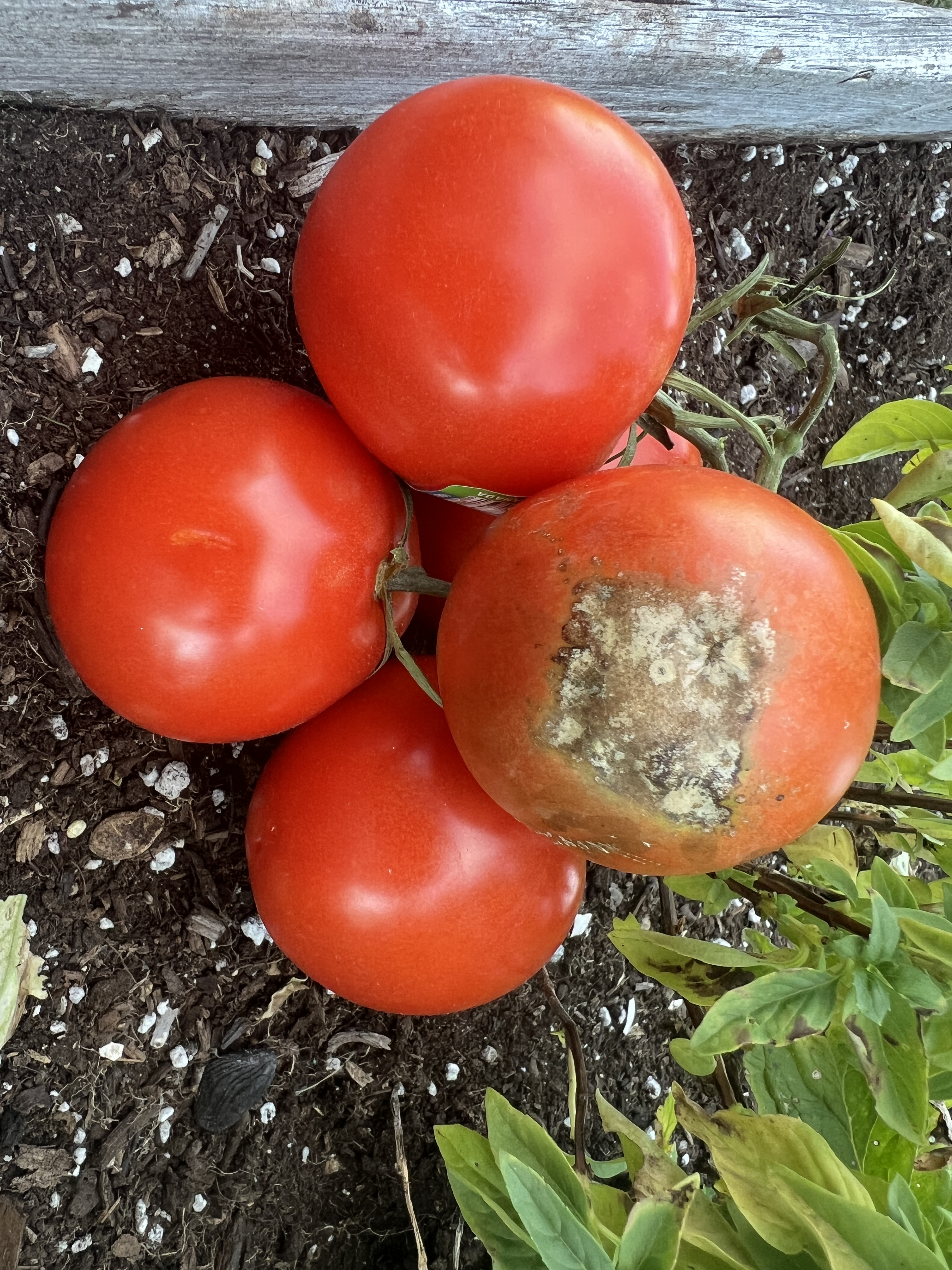
Even in the premature, un-ripened stage all of them with very few exceptions showed signs of rot, starting from the bottom up. Many of these rotten tomatoes didn’t even have a bottom. It looked like someone had sliced off the bottom half which was flat and blackened.
At a critical stage early in the plant’s development, the tomato plant did not get what it needed. When I looked up this problem, the experts suggested this plant did not receive the requisite amount of calcium. The soil, in other words, did not provide this plant with the needed nutrients mediated by regular watering.
But it was not just about what was missing, but when. As soon as I noticed the first tiny green tomato with the rot back in July, and did my research, I started watering the plant, even soaking the ground, every evening. But it was too late. I’d missed that critical stage in its development. Early on in its growth, that is when the watering and soil treatment should have happened.
“Increase our faith!” The disciples asked Jesus to strengthen what they probably perceived to be their weak faith. They had just heard Jesus’ difficult teaching on the need to forgive others who have hurt them (Luke 17:1-4). They likely felt unable to do this and concluded that they didn’t have enough faith. They may even have gotten down on themselves. Not having enough faith translated into being a bad person.
Jesus responds with a parable to temper their expectations. To sum it up, I can hear Jesus ask them a rhetorical question: “Who do you think you are, God?”
As far as gardening goes, I felt like a failure.
A couple of things I need to remember regarding my disappointing tomato plant experience: First, we did get a few, really good, juicy-sweet tomatoes from it. It wasn’t a total loss.
Second, I might do well to recall my part in its growth. And this ties in with the act of blessing, which we have engaged in this morning. Because when we give a blessing, how are the blessing’s gifts realized? After all, the blessing’s benefits must be received in order for the blessing to be fulfilled. It’s not just the giving but the receiving as well.
The action of blessing our pets is a good exercise of faith for us today, because, of course, we have little way of verifying scientifically that our blessing confers anything of value on our pet. They can’t even say, “Thank you, I feel better already.” But we still do it, faithfully if imperfectly. And that is the important piece.
Is it not the same relating with human beings? In our stuffed-up pride, we may like to believe that our caring and our words and our blessing actions must have a positive effect on those whom we bless when we can see and verify it by their changed behaviour, or whatever. The value of our prayers, our service, our words become contingent on a verifiable result. And when we don’t have that result immediately, we may lose faith in ourselves and in God.
My gardening failure, taken as a metaphor to failing at all my righteous attempts to do good, doesn’t mean I’m weak in my faith or not praying hard enough. When you experience failure, it doesn’t mean your faith is deficient.
The paradox is that for anything great to happen, for any wondrous change to occur for the better, we first must accept ourselves as we are, with all our limits and weaknesses. Whenever we avoid, mask, pretend and think more and expect more from us than what is, we often run into trouble and bring about the opposite of what we seek.
After the first week of training and orientation at my practicum site last month, I felt I had a tentative and yet untested grip on all the policies, procedures and digital charting protocols. I was just beginning to understand how things operated in the office, receiving referrals from the doctors and using the proper charting process, never mind the actual practice of counselling clients.
There are, including me, four psychotherapists in our department. On one day in the second week, it so happened that the other three were not in the office. For the whole day, I was it, the only therapist on site.
I wondered, at first, why I had been left all by myself. There were still things I wasn’t sure about. But I managed through all the hiccups and logistics that challenged me that day. I figured out solutions, if only temporary. As the day wore on, I found more confidence in myself and found an unexpected pride in occupying that space and role for the day.
Later I reflected how important that experience was for me not to lean on the crutch of more experienced professionals at my beck and call to help me. I appreciated the faith my colleagues had in me to leave me alone in their office and on their computers. It was, in truth, an important part of my learning.
They had faith in me! God has faith in me, and God has faith in you!
The prayer to God, “Increase our faith” is learning to trust the faith that God already has in us especially when things are stressful, tense and not going our way – when we’re not on our game, when we are suffering, grieving, losing.
Let me repeat: Increasing our faith looks more like the practice of receiving and trusting in the faith of God in us, when we are not at our best.
This Gospel is about God validating the faith already in us, never mind how strong or weak it is. The real question is – Do we trust the incredible faithfulness God has in us? Do we trust God’s faithfulness in us,
enough faith to let us make our own mistakes,
enough faith to let us make our own decisions with the resources we already have,
enough faith to let us meet those tough days without giving up,
enough faith to let us use what we already have for good,
enough faith to meet our seemingly insurmountable challenges with courage,
enough faith to trust we are never out of the reach of God’s love, mercy, grace and forgiveness.
Our new national bishop of the Evangelical Lutheran Church in Canada (ELCIC), the Rev. Bishop Larry Kochendorfer, said recently: “We do not fully know the future, but we have what we need. We have bread and wine, we have the scriptures, we have each other … Jesus comes alongside. Love is at our side.”
The blessing we receive from God is God’s faith in us. The blessing is the gift of accepting that God believes in us because God loves us. And this is the blessing we give to others.
When we bless others, we have faith in them, in their abilities to meet their own challenges with the resources, and the God-given capacities they have, to grow and flourish.
“Increase our faith, Lord. Help us lean on the faith you have in your creation. Help us trust you have given us enough of what we need to live by your grace and love.”
Amen.
 Raspberryman