
This year is the 80th anniversary of the death of Dietrich Bonhoeffer. After spending two years in prison, he was executed on April 9, 1945, just days before the end of the 2nd World War, for playing a key role in opposing the Nazis under Hitler.
Bonhoeffer’s life and death bear witness to the Cross. During this coming Holy Week we focus on the passion of Christ. And Bonhoeffer, like few other Lutherans in the last century, bears witness to the truth that we must first endure the cost of following Jesus to the Cross before celebrating the resurrection joy.
Bonhoeffer writes in A Testament to Freedom: “… if we would have a share in [the] glory and radiance [of Christ’s resurrection], we must first be conformed to the image of the Suffering Servant who was obedient to the death of the cross. If we would bear the image of his glory, we must first bear the image of his shame” (Barnhill, 2005, p. 107).
In other words, it costs something to be Christian in Canada. What is that cost? Perhaps the cost is our privilege, for the sake of one who is marginalized. Or maybe our pride, for the sake of respecting and dignifying another. Or our energy, for the sake of doing the right thing in the right moment. Our comfort, for the sake of exposing a harsh truth. It costs, to follow Christ.
One take away from our Sunday reflections throughout Lent about spiritual gifts and growth in faith, is that in order to develop our gifts so they can be a blessing for others, we need to cross to the other side – literally and symbolically. It’s easy to slip sideways on the pretense of growth. But for real growth to happen, we need to get out of our comfort zone and try something we’d sooner not.
The message of faith, nevertheless, is that the cost is worth it. Whatever it takes. Because the resurrection promise motivates us, inspires us, encourages us, and supports us. Because there is always grace, love, forgiveness. We believe in a God of second chances. We believe in a God who will never forsake us even in our moment of greatest need. Bonhoeffer hung on to that truth. It empowered him.
During Holy Week, we celebrate the persistence of God’s mercy despite stubborn obstacles. A major source of those obstacles resides in ourselves. Despite the self-incrimination of the convicted criminal hanging beside Jesus, Jesus’ final words to him, and the last words Jesus speaks to another human before he dies, is a word of mercy and promise (Luke 23:43): “Today you will be with me in paradise.”
God’s grace and mercy is our fuel for living. We need it. Because we will never get it right. We will miss the mark. We will stumble. But God does not give up on us. Despite all our mistakes, missteps, failures and self-doubt, God continues to nudge us forward through all the discomfort, risk-taking and vulnerability that we experience in being faithful servants of Christ. God’s grace and mercy is our energy source.
And that is why the Eucharist, the Holy Communion, is central to our Holy Week pilgrimage. It is at the table, the holy meal which we celebrate today and later this week on Maundy Thursday, when we affirm our deep and enduring connection with the living Lord Jesus.
And this connection is not just figurative or symbolic. But real, as well. This real connection gives us strength to carry on.
In 2019 a study published in Smithsonian revealed that some seeds discovered in Eastern France dated to Roman times, including the time not long after Jesus lived, in the 2nd century. It was discovered that these seeds had the same DNA as some types of contemporary wine grapes (Coman, 2024 December 10).
In other words, some wines we drink today contain grapes with the same DNA as grapes in Jesus’ day when “on the night before he died” he took a cup and blessed it for his disciples to drink. This connection is real.
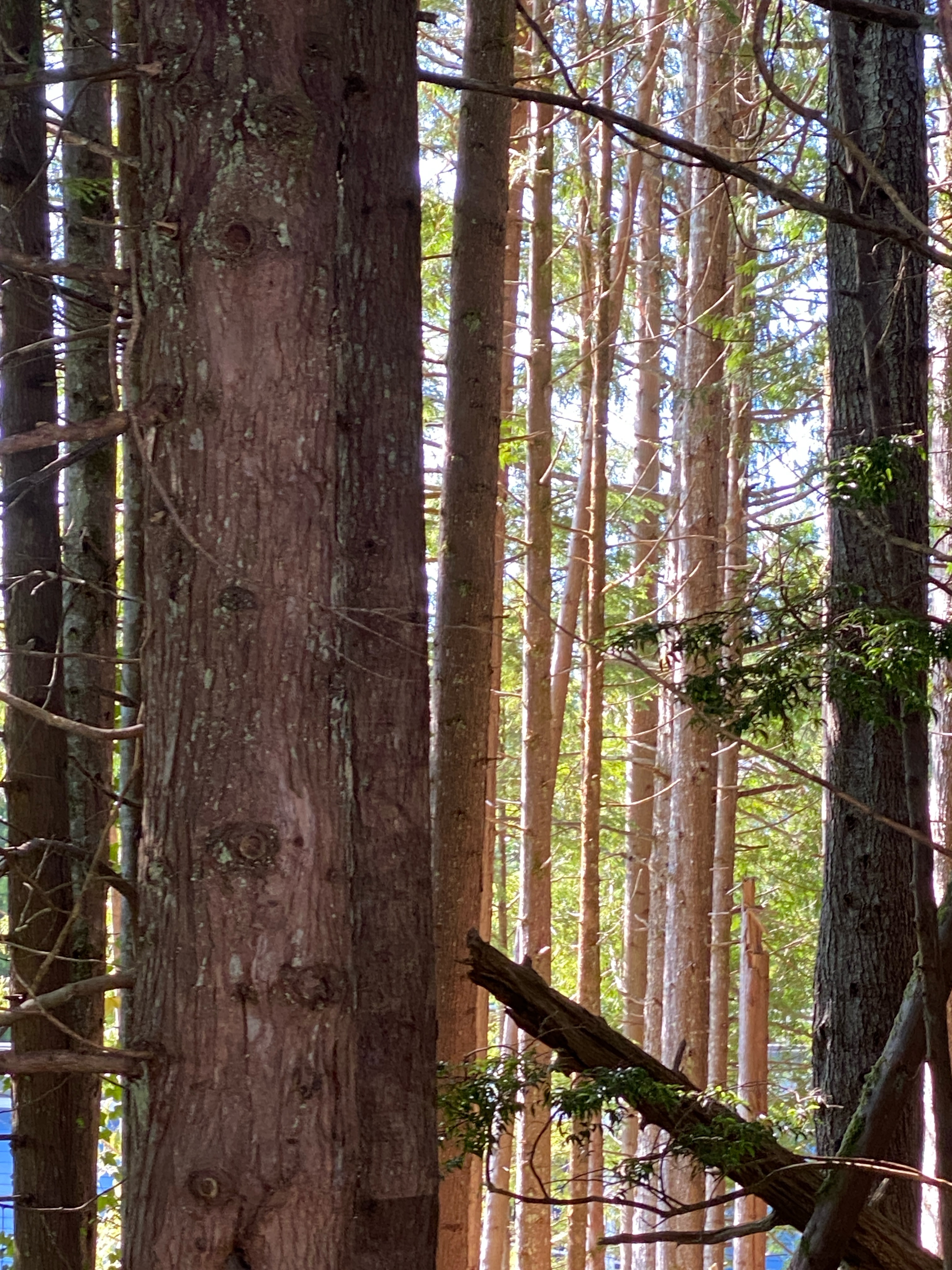
The cross, which now becomes our focal point in the days ahead, was made of wood and therefore is often referred to as ‘the tree’. In these last days we make our final leg of the Lenten pilgrimage where we will stop at the foot of the tree on Good Friday.
There is a Roman era tradition, in which to honour a special tree, wine was poured on their roots. It is no wonder then that in some legends the tree of crucifixion was a rowan tree whose berries look like droplets of blood (Mahany, 2023, pp. 45-47). The very fuel, energy source, is Christ’s blood shed for us.
We are connected, in a real sense, to Christ’s life source. We are connected through earthly elements that nourish, sustain and empower us to live and follow Jesus right to the very end. In following Christ’s mission on earth, we have what it takes.
Thanks be to God.
References:
Barnhill, C. (Ed.). (2005). A year with Dietrich Bonhoeffer: Daily meditations from his letters, writings, and sermons. Harper One.
Coman, S. (2024, December 10). Seeds of hope. Lutherans Connect. https://lcseedsofhope.blogspot.com/2024/12/day-9.html
Mahany, B. (2023). The book of nature: The astonishing beauty of God’s first sacred text. Broadleaf Books.
 Raspberryman