
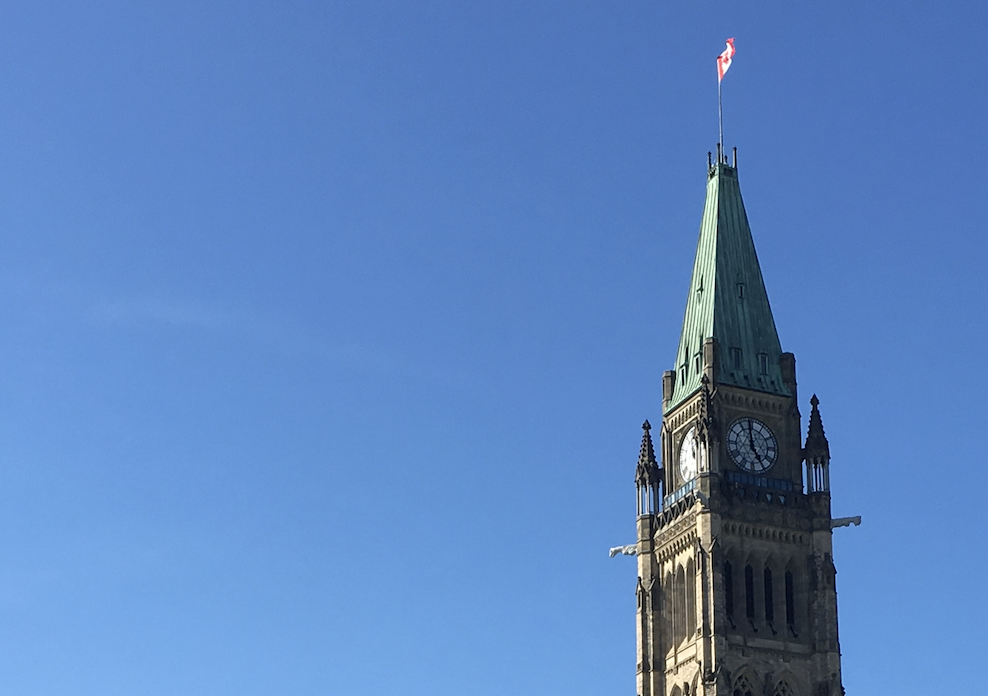
About once a month I have lunch at Denny’s on Merivale with a dear friend of mine. His name is Jack Murta. He is a retired politician. He was a Member of Parliament from Manitoba in the late 1980s. A member of the Progressive Conservative Party, Jack served as the Minister of Tourism in the Brian Mulroney government.
Today, he sits on the Board of the Mission in downtown Ottawa and leads Christian Meditation groups there for people who are homeless. Jack and I spend a lot of our time talking about politicians and how they related with one another back in the day. Indeed, much of our conversation recalls the past.
In the Gospel reading for today (John 2:1-11), guests to a wedding party in Cana, Galilee, meet most likely in a garden setting, to celebrate a joyous occasion.
Certain clues in the story attract our attention. I’d like to point out, first, the empty jars normally filled with water used for the Jewish rite of purification. People engaging this rite did not drink the water. It stayed on the outside of their bodies when they immersed themselves in the bath.
The jars in this story direct peoples’ attention to their past, their Jewish tradition and ritual. The garden also was the usual setting where Jewish weddings took place, a reference to the Garden of Eden in the first book of the bible – Genesis (Shaia, 2021). The jars and garden are indicative of tradition, the past, the way things had always been done.
And not only does the Gospel look to the past, it points us to the future as well. “My hour has not yet come.” Jesus hints to Mary about his future path, when Jesus’ purpose will be fulfilled on the cross and by the empty tomb.
But it’s the present moment where the miracle—the sign—happens. It’s into the present moment that the Gospel ultimately draws us. “You have kept the good wine until now.” The steward recognizes Jesus’ act of bringing an unexpected gift for the guests.
And Jesus’ action in the present does more than merely get the bridegroom out of an embarrassing social faux pas. The unexpected gift is good wine, not normally offered late in the party. It’s in the present moment, even in an unpleasant situation, when people enjoy themselves.
Brain studies have examined where most of our time is spent thinking. They show that we spend most of our time thinking either about the past or the future; and, between these two, most of it is about the past. In other words, being fully present in the moment is not where we spend most of our time. And this is true even among young adults (Bellana et al., 2017).
Our thinking, entrenched in the past or fantasizing about the future, is also closely related to speech. Thoughts and words go hand in hand. Talking a lot is related to thinking a lot (about the past).
But in the Gospel, it’s more about what is not said that draws my attention. Mary does not tell Jesus what to do. She merely points to the problem. And leaves it up to her son.
The head steward didn’t know where the wine came from, but the servants knew because they drew the water for the jars as per Jesus’ instruction. How did they know it had turned to wine? Did they taste it, before and after? If it were left up to the dialogue alone, what was said out loud, we would be missing important pieces. There would be gaps in the story filled in only by observing behaviour.
As much as 80% of what is communicated takes place on the nonverbal level: our tone of voice, our body position and movement, our facial expressions, the direction of our eyes (Mehrabian, 1972).
What is more, if you want to be friendly, or hostile, your body language is over 12 times stronger in getting the message across than anything you might say (Argyle et al., 1971). What we do and how we do it speaks volumes. Words are important but have power only when anchored in the present reality. Simply pointing to the reality without judgement nor instruction, without any hint of direction nor evaluation, Mary said to Jesus: “They have no wine.” Fact.
Events and situations that bring us into the present reality are often not initially pleasant. We resist the present moment because we may be afraid of what we encounter there.
From the garden to the hospital. There aren’t other settings that bring us, force us, to the present moment more as in the hospital. When we are sick or visiting someone who is ill, or working in the hospital setting as a nurse, PSW, doctor – being there makes us grapple with the sometimes-harsh realities of the present moment.
And in that present moment, very few words are necessary when it comes down to it. The past, the future, these are all important and good. But when it comes down to it, presence is all we need in the present moment.
My friend, the retired Member of Parliament, Jack Murta, was also good friends with one of Speakers of the House of Commons at the time. And when you think about it – a politician Member of Parliament and a Speaker of the House – you can imagine the jokes about them entering a bar: There would be a lot of words spoken to say the least! Even the name – “Speaker” of the House – evokes images of a whole lot of verbiage. Words. Words. Words!
And yet, at the end of his long life, when this Speaker of House was dying in the hospital, he indicated he wanted to see Jack one last time. So, Jack drove to the hospital. And at this point the Speaker was no longer saying much of anything. But when Jack sat down beside him, the Speaker reached out and Jack took his hand in his own. And for many minutes they just sat there without saying a word. The touch of his hand was all the Speaker wanted and needed in that moment.
What mattered, what really mattered, was not the past on earth nor the future on earth. What mattered, what really mattered, was not saying a whole lot of words anymore. Because the joy of living even in that desperate moment, the true joy was found in the simple touch of another in the present moment.
I mentioned the water for the purification rite. It stayed on the outside of the human body. We don’t normally drink our bath water. Jesus performed a miracle of transformation: from water to wine.
When we celebrate Holy Communion, wine is offered. Jesus transformed an understanding of religion from external ritual to internal reality. We don’t wash our bodies with wine. We drink it. We bring it inside of us. We consume it. We digest it. It becomes part of us.
Holy Communion invites us to be present in the moment. To touch. To feel. To drink. To taste. To eat. Let this sacrament in which we participate weekly give us an occasion to practice being present to the holy Presence of God in Christ Jesus. So, with Christ’s presence in us now, we can be God’s loving presence in the world by what we say and what we do.
Behold, now is a very acceptable time; Behold, now is the day of salvation (2 Corinthians 6:2).
References:
Argyle, M., Akema, F., & Gilmour, R. (1971). The communication of friendly or hostile attitudes by verbal and nonverbal signals. European Journal of Social Psychology, 1, 385–402.
Bellana, B., Liu, Z. X., Diamond, N. B., Grady, C. L., & Moscovitch, M. (2017). Similarities and differences in the default mode network across rest, retrieval, and future imagining. Human Brain Mapping, 38, 1155-1171. https://doi.org/10.1002/hbm.23445
Mehrabian, A. (1972). Nonverbal communication. Aldine.
Shaia, A. J. (2021). Heart and mind: The four-gospel journey for radical transformation. Quadratos.
 Raspberryman