
You are enjoying today a service full of singing. And, since today is the fifth day of Christmas, all the songs are intentionally and exclusively Christmas carols. And hopefully, you are singing some of your favourites.
When I hear you share their favourite memories of Christmas, often those memories include singing Christmas carols. Indeed Christmas is a time for singing.
What you are doing today is the heart of worship. And you are in good company. Singing was the primary mode of praising God since ancient times. The Psalms formed the first songbook for people of faith in the centuries before Christ. That is why we normally sing the Psalms in worship.
The tradition of singing comes from scripture itself. In the Christmas narrative, the angels sing “Glory to God in the highest” in the brilliant skies over Bethlehem. And, from last Sunday we read and sung the Magnificat.
The Magnificat is a Latin word meaning, “My soul magnifies.” Of course, it is the Song of Mary, a canticle she sung to magnify the Lord, to sing God’s praises at receiving the news from the angel Gabriel that she would bear the Christ child.
From early Christianity on, this text was associated with the Christmas celebration, but not just at this time of year. According to the lectionary, the Annunciation falls on March 25 every year, which is exactly nine months prior to Christmas.
The date of March 25 was then recognized as the historical date of Christ’s death. This is significant because, according to ancient Jewish mythologies—as well as very often in Christian traditions—great prophets died on the same day as their births or conceptions. This forms a strong symbolic connection: Jesus was conceived on March 25, was born on December 25, and died on March 25 exactly 33 years later. Interesting, eh?
But that’s not the only curiosity surrounding the Magnificat. From a literary perspective, the form of the Magnificat – this beautiful poetry—resembles the Song of Hannah, from 1 Samuel 2.
Hannah was the mother of Samuel who we meet in the scripture for today. Samuel was a young boy still wearing the linen garment or apron called an ephod. We know Samuel will become one of Israel’s great prophets.
What’s remarkable in the stories about young Samuel, are the similarities between the Song of Hannah and the Magnificat.
Some background: Hannah and her husband Elkanah have not been successful in having a child. Hannah continually prays to the Lord for a child, and she is distressed because for the longest time, it’s not working out. She persists in prayer, offers more sacrifice in the temple and expresses her longing.
Finally the Lord “remembers” (1 Samuel 1:19) her, and Hannah conceives and bears a son, who is Samuel. The Song of Hannah is her response in thanksgiving to God for giving her a son.
The phrasing in Hannah’s song echoes the words in the Magnificat: “My heart exults in the Lord” in the opening line; “The bows of the mighty are broken, but the feeble gird on strength”; “He raises up the poor from the dust; he lifts up the needy from the ash heap, to make them sit with princes …”
And then in the readings today we note how both the young Samuel with his parents Elkanah and Hannah, and the young Jesus with his parents Mary and Joseph, make their annual pilgrimage to the temple. Fascinating to notice the similarities and compare those texts – one from the Hebrew scripture and the other from the Gospel yet both from the bible.
While on my annual retreat this week, I make it a point to read through my journal from the past year. I figure, as we turn the calendar to a new year in a couple of days, it’s an appropriate time to look back.
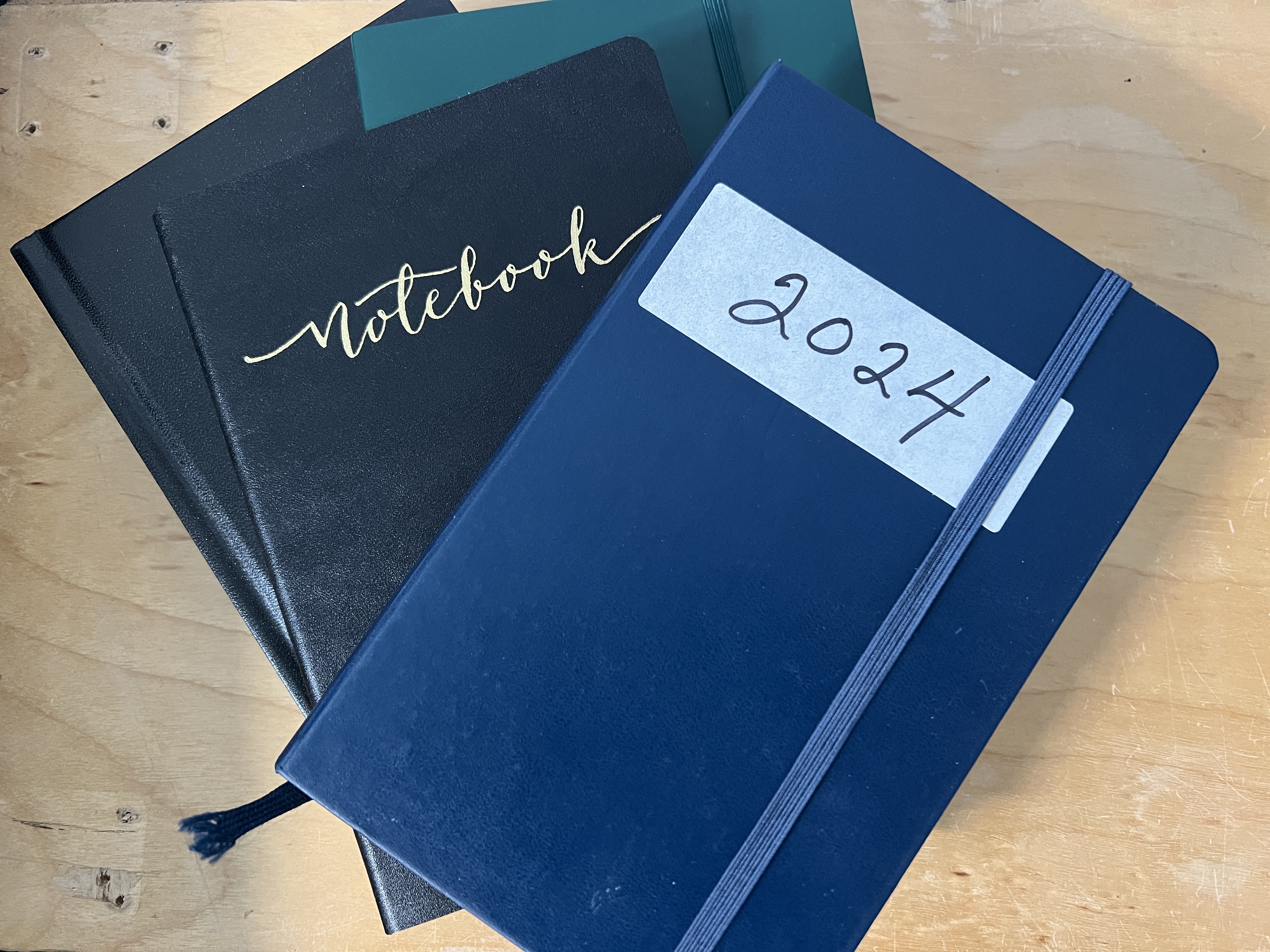
My journal contains first drafts of some of my sermons, quotes that have inspired me, thoughts and aha moments I had for different reasons wanted to write down, prayers, key learnings from my studies, etc.
It’s an important exercise for me to look back and review my journal. It is just as important for us to review our history and see those connections between past and present. Reading through I notice the changes in myself. Sometimes I laugh at myself and sometimes I am embarrassed for having thought certain things. Other times I’m impressed by the way I’ve expressed a thought. It’s inspiring to do this. And it builds hope, courage and confidence.
In a yearly review, I can note the progress, the change, the growth in perception, in life. And through it all, I am encouraged that despite the challenges we all must face, God delivers. God responds. And while some doors close, God opens others, makes stuff happen that is good, and worthy of our attention and faithful response.
Participating in worship at Christmas is a way to remember the story of Jesus’ birth and early life. It is also a way to remember the stories that preceded Jesus. When we gather in the name of the triune God, these holy stories are “re-storied in us” (Coman, 2024)!
So let’s live out the sacred story. Let us, like Mary and Hannah before her, sing God’s praises and give thanks for the gift of divine grace, the gift of Christ’s presence, and the love that holds us all.
Happy New Year!
References:
Coman, S. (2024, December 11). Seeds of Hope: Day 10. Lutherans Connect.
https://lcseedsofhope.blogspot.com/2024/12/day-10.html
 Raspberryman