
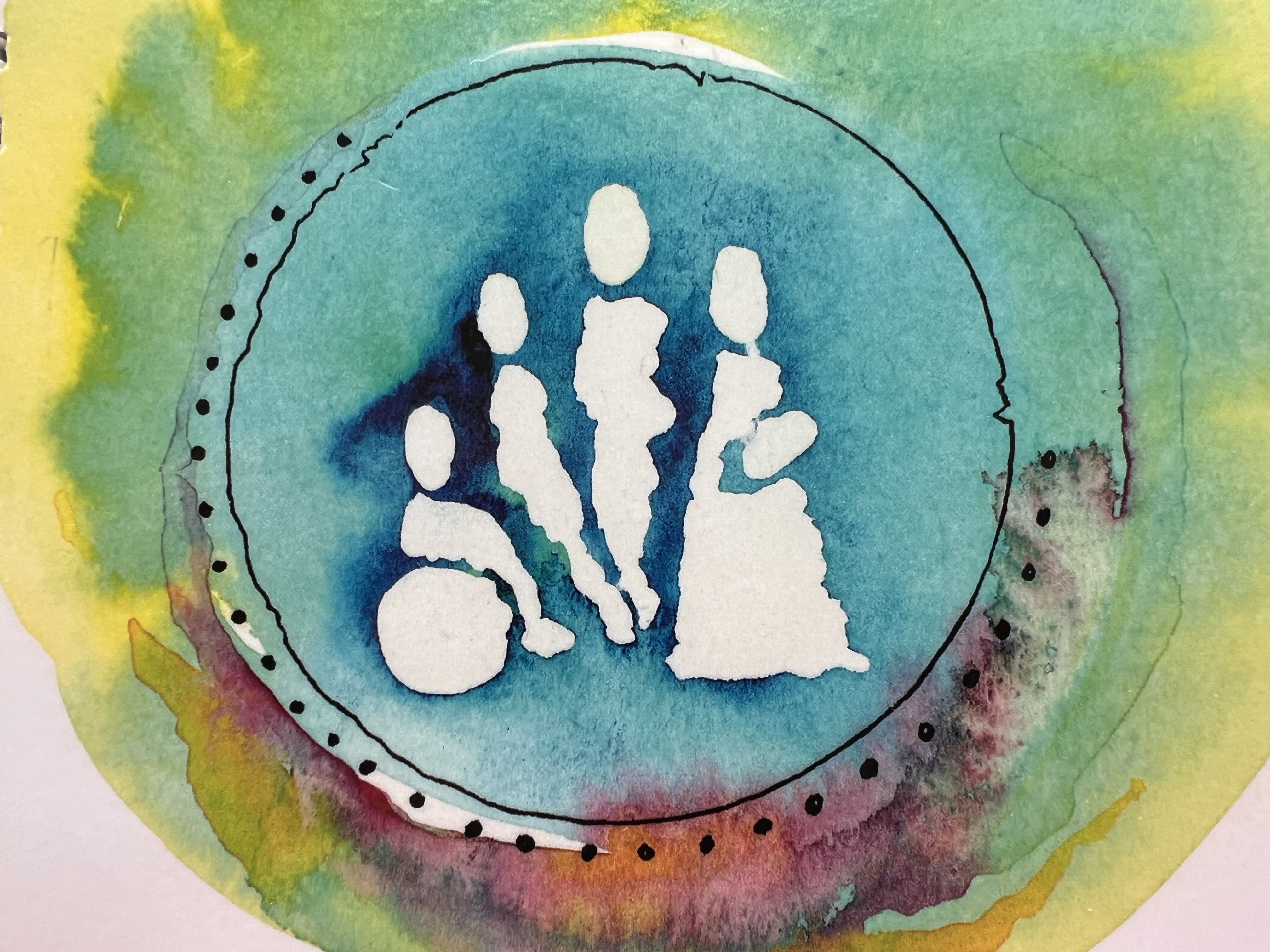
(published by Mad and Crip Theology Press, 2023)
The stories of healing in the Gospels show Jesus in action – doing what he has been called by God to do. But compared to the other Gospels in the New Testament – Matthew, Luke and John – the narrative that Mark writes to describe Jesus’ activity goes along at a hurried clip. Mark’s story-telling style sails along quickly.
In today’s reading from Mark (Mark 7:24-37) we witness two healings which are told one after the other in Mark’s compressed and concise manner:
First, a young girl is healed, the daughter of the Syrophoenician woman – a Gentile. Then, giving us time only to take a quick breath, Mark tells of a deaf man being healed – a man from the Gentile region of the Decapolis near the Sea of Galilee. Jesus, it feels, is on pace for logging in another eighty-hour work week.
But lest we get side-tracked by Mark’s style or distracted by our fascination of and fixation on the miraculous in these accounts, notice today the pains Mark takes to convey the details of identifying who these people are that Jesus heals. Mark had to be intentional in noting their identity, otherwise he would not have tolerated such excessive verbiage in his brief, succinct script. He wanted to emphasize an important aspect of God’s mission in Christ Jesus.
But it’s not the individual names of the woman’s daughter and the deaf man that Mark shares. It’s where they are from. That’s the point. Mark wants the followers of Jesus to get very clear on the social group, the cultural identifier to which these individuals belong.
Belong. Belonging.
The new school year brings to focus how we belong. After emerging from a summer break marked by individual endeavours and pursuits, summer jobs, private family gatherings, vacations and trips, going to school brings everyone together. Going to school highlights our collective being and our socialization. For many of us, it was schooling that first introduced us to the notions of belonging or not belonging.
It is our experience in school where we learn the criteria, said or unsaid, for what it means to feel part of a community. Do we measure up? Are we good enough? Do we pass the grade, socially and academically? Is our voice heard? Where do we fit, jocks or nerds, science geeks or social rebels, artists or conformists?
How do we belong? Unfortunately, school can create not just positive but also negative experiences about how we belong.
Deacon Michelle Collins in the ELCIC writes that it is possible to belong based on personal initiative, worth, performance, joining a group through membership or application (Collins, 2024). This is the way of the world, isn’t it?
But belonging, according to the Gospel, goes in another direction. Collins (2024) writes that belonging, according to the Gospel, happens because someone is chosen to belong. Belonging is initiated by the chooser and is not contingent on the merit or initiative of the chosen. Belonging, first and foremost, is a gift. Belonging is a particular kind of gift.
Jesus showed no favouritism in his healing ministry. In the second reading from James (2:1-10), Christians are instructed – using the very words from the Gospel, to love others as you love yourself – to show no favouritism. And, James is particular about how we do good works according to the Gospel.
Because Jesus showed no partiality in loving people. Wherever he travelled throughout Palestine, he engaged people in life-giving ways. Jesus shared God’s love to everyone he encountered, even those deemed outsiders or non-deserving. Jesus, by his actions, demonstrated that everyone belongs to God’s community. Without exception.
God chooses you and not because you’ve done well to prove yourself worthy according to our human criteria, conditions, biases, perceptions, achievements or values. God chooses us; therefore, we belong.
Dr. Temple Grandin was born with autism. She didn’t speak until age 4. Her neurodiversity may have been considered a handicap, a negative. As a result of this kind of negative thinking by others, she may have experienced being excluded, marginalized, not belonging.
But her talents and abilities were recognized and supported, thankfully. She is credited for inventing a special livestock restraint system. Her design aimed to calm the cattle down before slaughter, thus making the whole process more humane. Today, Temple Grandin teaches at Colorado State University and makes meaningful contributions to society (Grandin, 2024).
The purpose of the Gospel is to remind all who read and hear it that they are chosen unconditionally by God. Because we belong to God, our relationship with the world is reoriented. We have been changed by being chosen. The reality of unconditional belonging releases us from seeking to belong based on performance or merit. We don’t have to win anyone’s approval because we are already God’s beloved. And we can accept others without condition because they, too, are God’s beloved. Their voice, too, needs to be heard.
Thanks be to God!
References:
Collins, M. (2024, August 26). Belonging as gift. Eternity For Today, www.eft.elcic.ca
Grandin, T (2024). Temple Grandin is the 2024 lifetime achievement award winner. RDC Design Group, www.templegrandin.com
 Raspberryman